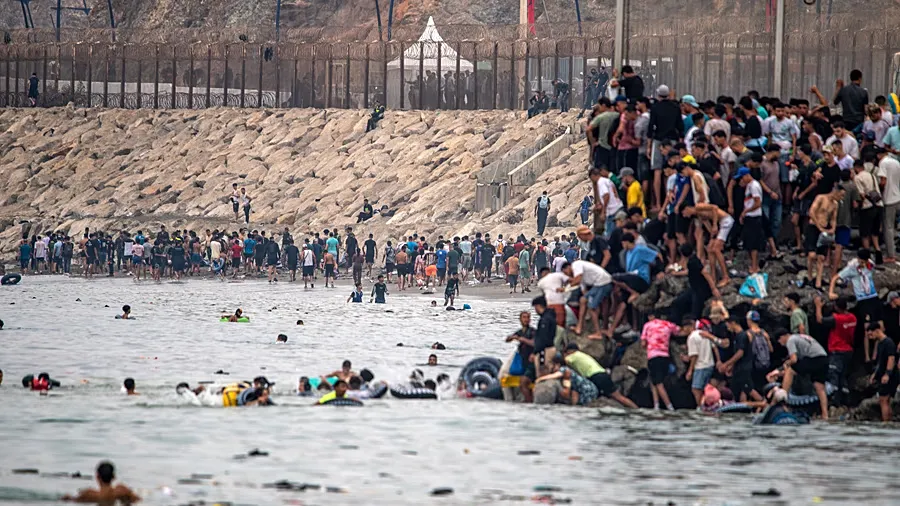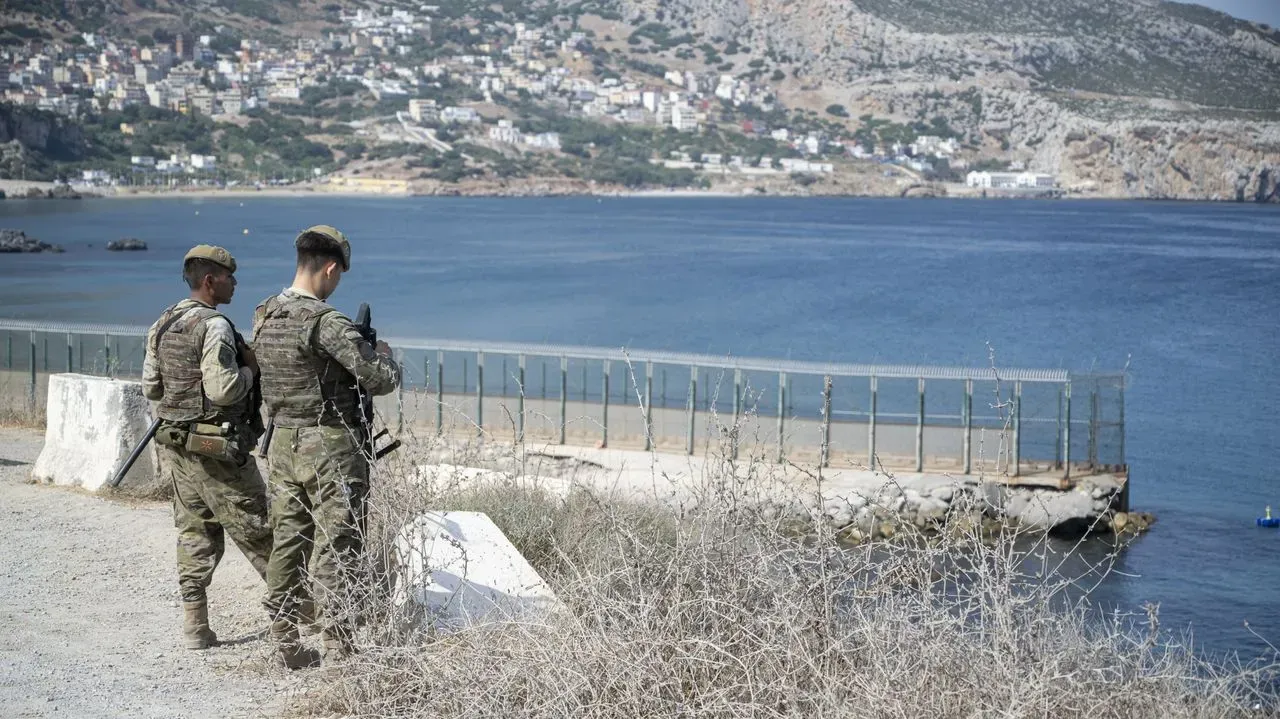

In a significant escalation of diplomatic tensions, Morocco has officially expressed its stance regarding Spain following the mass assault on Ceuta that occurred on July 30 and 31. The Moroccan Ministry of Foreign Affairs issued a rare statement warning that Spain's "strategic blindness" could transform their relationship from one of neighborly cooperation into a chronic source of distrust and recurring tensions. The statement, which notably criticized the Popular Party (PP) for its irrational and populist rhetoric, categorically denied any Moroccan involvement in the influx of thousands of people into Ceuta. Morocco called on Spain to repatriate all individuals residing illegally in the city, particularly minors, so they can be reunited with their families. The Moroccan government accused certain Spanish political and media sectors of leveraging the situation for their internal disputes.
Morocco emphasized the foundation of its relationship with Spain, which is built on four pillars: good neighborliness, political understanding, economic partnership, and security cooperation. The origins of this renewed phase are traced back to the joint declaration made on April 7, 2022, after the meeting between King Mohamed VI and Spanish Prime Minister Pedro Sánchez, which concluded one of the most significant diplomatic crises in recent history. Since that time, Morocco has argued that both countries have successfully navigated their shared interests and managed their differences through dialogue, distancing themselves from any tendencies to impose unilateral facts. Furthermore, Morocco highlighted that Spain has become its primary economic partner, with the kingdom ranking as Spain's second-largest trading partner outside the European Union. Special attention was drawn to the police, counter-terrorism, and migration cooperation, which Morocco claims has saved lives and dismantled criminal and terrorist networks, sometimes at the cost of Moroccan lives and resources.
However, the tone shifted when discussing the events of July 30. Morocco acknowledged that the "regrettable events" necessitate a thorough investigation to clarify what transpired, assign responsibility, identify potential external influences, and ensure that such an episode does not recur. Following this acknowledgment, Morocco directed a series of pointed questions at Spain. It questioned why accusations against Morocco continue without any evidence or reports demonstrating Moroccan authorities' involvement. Additionally, it inquired why Spain has not yet repatriated all irregular migrants, asserting that the Moroccan government has officially committed to accepting them. The same reproach was made regarding unaccompanied minors, with Morocco claiming to have persistently requested their return and questioning why those eligible for reunification with their families remain separated.
Morocco's statement also delves into Spanish politics, expressing disappointment that certain political and media circles continue to exploit Morocco to further internal agendas. It expressed particular disillusionment with long-established political parties that, despite their governance experience, have entered a realm where irrational escalation and populism overshadow common sense. Although the statement refrained from naming specific parties, it is widely interpreted as a direct reference to the PP, which has led the charge against the Spanish government’s policies towards Morocco in recent weeks, demanding accountability for Rabat's actions during the Ceuta assault and pushing legislative initiatives regarding the crisis. The document contrasts the behavior of these experienced political parties with the longstanding institutional relationship developed between Madrid and Rabat.
Moreover, Morocco criticized Spanish legislative and judicial institutions for promoting "unfortunate initiatives" that pave the way for discord, a remark that coincides with the ongoing investigation by the Spanish National Court into the events of July 30, which could be classified as an attack on Spanish sovereignty. The court's recent decisions regarding sensitive matters, such as Western Sahara, have further strained relations. Morocco's Ministry of Foreign Affairs warned against the dangers of letting fear-driven strategies overshadow rational discourse and objective analysis, stating that it refuses to be used as a "commercial asset" in the lead-up to elections or a "scapegoat" for resolving internal Spanish issues.
The recent statement from Morocco marks a qualitative shift in its response to the crisis, transitioning from public remarks by government officials, including those made by Minister Nizar Baraka, to a formal, articulated position from the Ministry of Foreign Affairs on the entirety of the situation. This statement came shortly after the Spanish government released declassified documents regarding the days surrounding July 30, which complicate one of Morocco's central claims. Although these reports do not definitively attribute responsibility to the Moroccan state, they include analyses from Spanish intelligence suggesting passivity, negligence, and even active involvement from Moroccan forces during the concentration and movement of individuals towards Ceuta. The Spanish intelligence agency sent an "early warning" to Moroccan intelligence services regarding planned attempts to access Ceuta by sea and land during the Throne Day celebrations.
The Spanish National Court has taken a more definitive stance in its preliminary assessment, with Judge María Tardón indicating that the mass entry was not a spontaneous phenomenon, citing evidence of a planned operation and noting indications of active guidance by Moroccan agents towards specific routes. The investigation is now tasked with uncovering who orchestrated this mobilization and the extent of any state structures' involvement.
As reported by lavozdegalicia.es.