Morocco has made a compelling call for a significant transformation of Africa’s approach to counterterrorism, urging the continent to transition from predominantly military responses towards a more comprehensive strategy that encompasses security, development, governance, and technology. This shift is deemed essential as extremist groups increasingly exploit advancements in artificial intelligence, encrypted communications, and various digital platforms to further their agendas. During a recent ministerial meeting of the African Union Peace and Security Council, focused on combating terrorism and violent extremism, Moroccan representatives highlighted the urgent need for a strategic evolution in response to the rapidly changing tactics employed by armed groups operating across the Sahel. These groups are not only adapting but are also demonstrating a capacity to transcend national borders, rendering traditional security measures inadequate.
Mohamed Arrouchi, Morocco’s Ambassador and Permanent Representative to the African Union and the UN Economic Commission for Africa, articulated the necessity for collective African responses to evolve in tandem with the increasingly sophisticated threats posed by terrorist organizations. He emphasized that while military operations are vital, they must be complemented by policies that address the underlying structural factors contributing to terrorism and violent extremism, such as weak governance, economic hardship, and social marginalization. Arrouchi proposed that prevention should become the cornerstone of Africa’s counterterrorism framework, advocating for enhanced early-warning systems, improved anticipation mechanisms, and a greater reliance on artificial intelligence to assess risks and detect extremist online content prior to the occurrence of attacks.
This proposal by Morocco aligns with a broader global recognition of the changing landscape of extremism, where groups now significantly depend on encrypted messaging platforms, digital propaganda, and online recruitment strategies rather than conventional command structures and physical training camps. Moroccan officials assert that this transformation necessitates the development of new technological capabilities within intelligence services while also strengthening regional cooperation to address threats that can easily traverse porous borders. Arrouchi underscored that counterterrorism efforts must be intertwined with policies that foster human development, good governance, and resilient communities, which serve as foundational elements of Morocco’s own strategy under the leadership of King Mohammed VI.
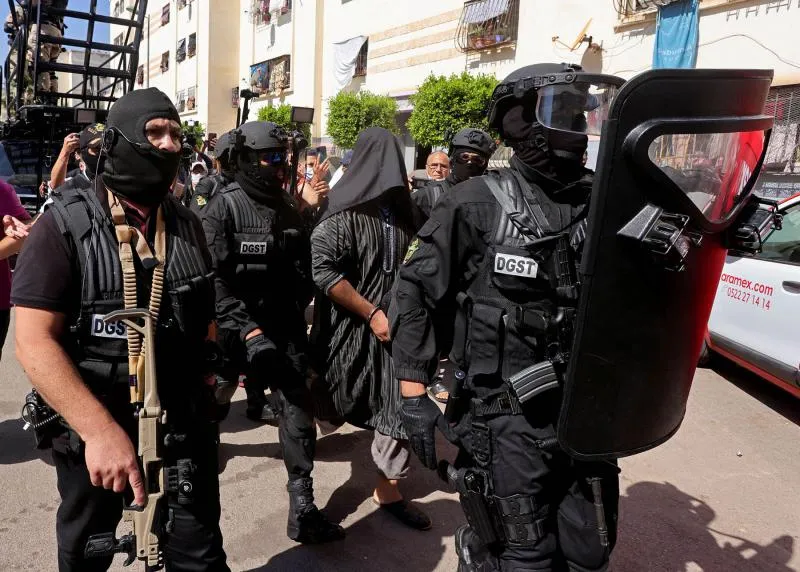
These remarks come in the context of ongoing operations by Moroccan security services aimed at dismantling suspected extremist networks linked to Islamic State (ISIS) cells in the Sahel. Recently, Moroccan authorities announced the successful dismantling of a ten-member militant cell spread across seven cities, believed to have connections with the Islamic State’s Sahel branch and plans for attacks targeting public security and state institutions. This operation follows a series of investigations conducted by Morocco’s Central Bureau of Judicial Investigations, which, with intelligence from the General Directorate for Territorial Surveillance, thwarted what were described as highly dangerous plots orchestrated by a senior ISIS figure based in the Sahel.
Security analysts have noted that such operations reinforce Morocco’s longstanding warnings about the growing instability in the Sahel, which has emerged as one of Africa’s most pressing security challenges, with significant implications for North Africa and Europe as state authority continues to deteriorate in many areas. Mohamed Tayyar, head of the National Observatory for Strategic Studies, remarked that recent security operations highlight the seriousness of the threats originating from the Sahel region. He pointed out that security vigilance has led to the foiling of plots linked to ISIS in the Sahel, reflecting the heightened danger posed by both ISIS affiliates and the al-Qaeda-linked alliance Jama’at Nusrat al-Islam wal-Muslimin, which has expanded its influence in parts of Mali, Burkina Faso, and Niger.
Tayyar also noted that extremist organizations have significantly advanced their digital recruitment strategies, increasingly relying on online platforms to attract new members, coordinate activities, and secure financing, despite ongoing international efforts to disrupt terrorist funding networks. He emphasized that ISIS has gradually shifted its strategic focus from the Middle East to the Sahel, taking advantage of weak state institutions and persistent instability in the region. Moreover, he indicated that the group has modified its operational tactics by encouraging some recruits to remain in Morocco instead of traveling to militant strongholds in the Sahel, thereby enabling them to plan domestic attacks.
Among the most pressing security challenges, Tayyar identified the increasing availability of safe havens in the Sahel, coupled with a growing reliance on encrypted communications and cryptocurrencies for instructions and financial transactions. These developments necessitate ongoing investments in surveillance capabilities and emerging technologies. Morocco has further urged African governments to bolster deradicalization initiatives, address the underlying causes of extremism by linking peace, security, and development policies, enhance the participation of women and youth in prevention efforts, and establish continental guidelines for the utilization of artificial intelligence in countering terrorism.
In a parallel effort, Ismail Chekkori, Director of Global Affairs at Morocco’s Ministry of Foreign Affairs, advocated for a stronger voice for African victims of terrorism in international forums and emphasized the need for greater acknowledgment of African initiatives aimed at supporting victims and their families. His comments reflect Morocco’s broader strategy, which integrates humanitarian considerations with security, intelligence, and developmental policies. Additionally, Morocco’s proposals resonate with growing international concerns surrounding the misuse of artificial intelligence by extremist groups. A recent report by the R.O.C.K. Institute for Geopolitical and Security Studies warned that AI could significantly enhance the capabilities of terrorist propaganda, recruitment, and operational planning, urging a balanced approach that fortifies counterterrorism capabilities while protecting fundamental rights and freedoms.
Morocco’s proactive stance indicates a significant shift in African perspectives on counterterrorism strategies, moving from reactive measures post-attacks to the establishment of preventive systems capable of identifying and disrupting threats before they materialize. As terrorism becomes increasingly intertwined with organized crime, irregular migration, cyber threats, and transnational trafficking networks, Rabat posits that safeguarding Africa’s stability necessitates an integrated continental strategy. This strategy should treat security, technological innovation, intelligence cooperation, and sustainable development as mutually reinforcing pillars rather than isolated policy tracks.
As reported by thearabweekly.com.