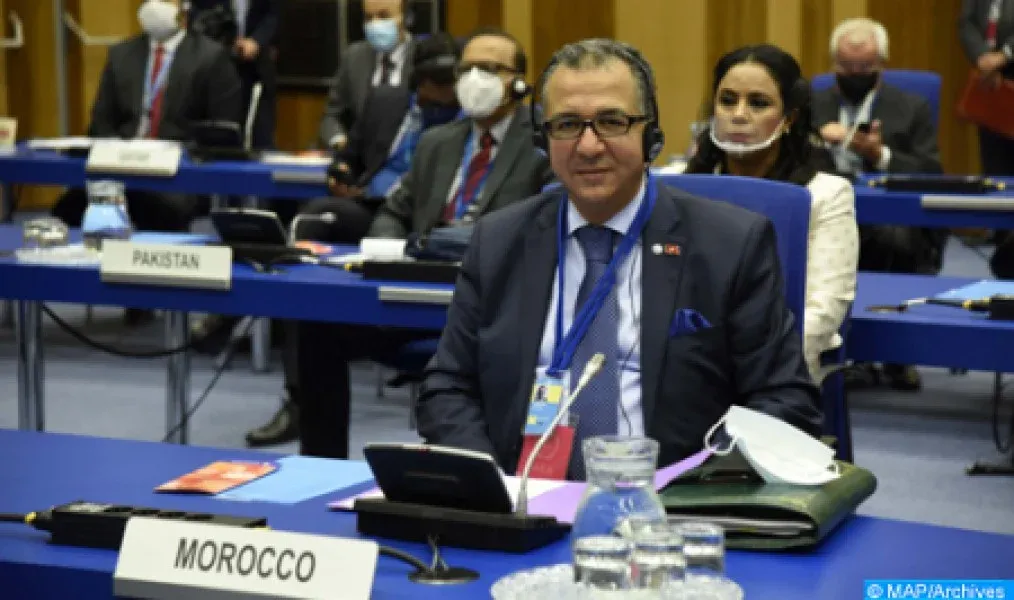

On Tuesday, Morocco made a compelling appeal for a unified and enhanced collective response to the escalating global drug crisis. This call to action was articulated by Morocco’s Permanent Representative to the United Nations Office in Vienna, Azzeddine Farhane, during the general debate at the 69th session of the Commission on Narcotic Drugs, which took place from March 9 to March 13.
Farhane expressed Morocco’s belief that the global drug issue is a collective responsibility among nations, necessitating a coordinated approach bolstered by robust sub-regional, regional, and international cooperation. He underscored the importance of mutual trust, the exchange of information, and operational coordination, referencing the political frameworks established in Vienna since 2009. The diplomat cautioned that without such cooperation, the fight against cross-border drug trafficking would lack the effectiveness and efficiency required to tackle this complex problem.
In preparation for the upcoming ministerial conference set for 2029, Morocco has proposed three concrete strategies aimed at enhancing international collaboration in combating drug trafficking. The first strategy emphasizes the need for improved international monitoring and anticipatory capabilities to address emerging threats, particularly those posed by synthetic drugs and new psychoactive substances. This includes enhancing early warning mechanisms and promoting a more vigorous exchange of scientific and operational information.
The second strategy advocates for a balanced, person-centered approach to drug issues by reinforcing prevention policies, improving access to treatment and addiction care services, and developing comprehensive rehabilitation and social reintegration strategies for individuals affected by drug dependency. The third avenue focuses on adapting international cooperation frameworks to meet the evolving realities of drug trafficking, particularly the challenges posed by the increasing use of digital technologies by criminal organizations and the need to enhance coordination in combating illicit financial flows associated with drug trafficking.
Farhane noted that these proposed strategies could foster a collective reflection within the Commission regarding the gaps and challenges that undermine effective international cooperation against the dynamic threats posed by the global drug crisis. He emphasized the necessity of a responsible and collaborative approach, free from narrow ideological and political biases.
Furthermore, Farhane reaffirmed Morocco's commitment to actively participating within the Commission and collaborating with all member states to address the changing challenges of drug-related issues. He highlighted the importance of diagnosing drug-related trends ahead of the 2029 conference, aiming to renew and solidify international consensus around a comprehensive, evidence-based, and human rights-respecting approach to tackle global drug challenges more effectively.
Morocco remains steadfast in its commitment to the implementation of the three international drug control conventions and continues to pursue a comprehensive national anti-drug strategy that balances demand reduction, supply control, and socio-economic development. On the demand reduction front, Farhane pointed out the adoption of a National Plan for the Prevention and Management of Addictive Disorders for 2024-2030, which aims to enhance prevention programs, improve access to specialized care, and support the rehabilitation and social reintegration of individuals struggling with addiction.
Moreover, the recent passage of legislation concerning alternative sentencing represents a significant advancement, allowing for rehabilitation-focused approaches to minor offenses related to drug consumption. In terms of supply reduction, Morocco has maintained its vigorous efforts to combat drug trafficking and dismantle criminal networks involved in this illicit trade. Farhane revealed that drug seizures in 2025 included substantial quantities of cannabis resin, cannabis herb, cocaine, heroin, and psychotropic pills, primarily intercepted along the borders of Morocco’s eastern region.
Additionally, the diplomat reminded attendees of Morocco's adoption of Law 13-21, which regulates the legal uses of cannabis, encompassing the cultivation, production, industrialization, transport, and marketing of cannabis and its derivatives exclusively for industrial, medical, and scientific purposes.
As reported by northafricapost.com.