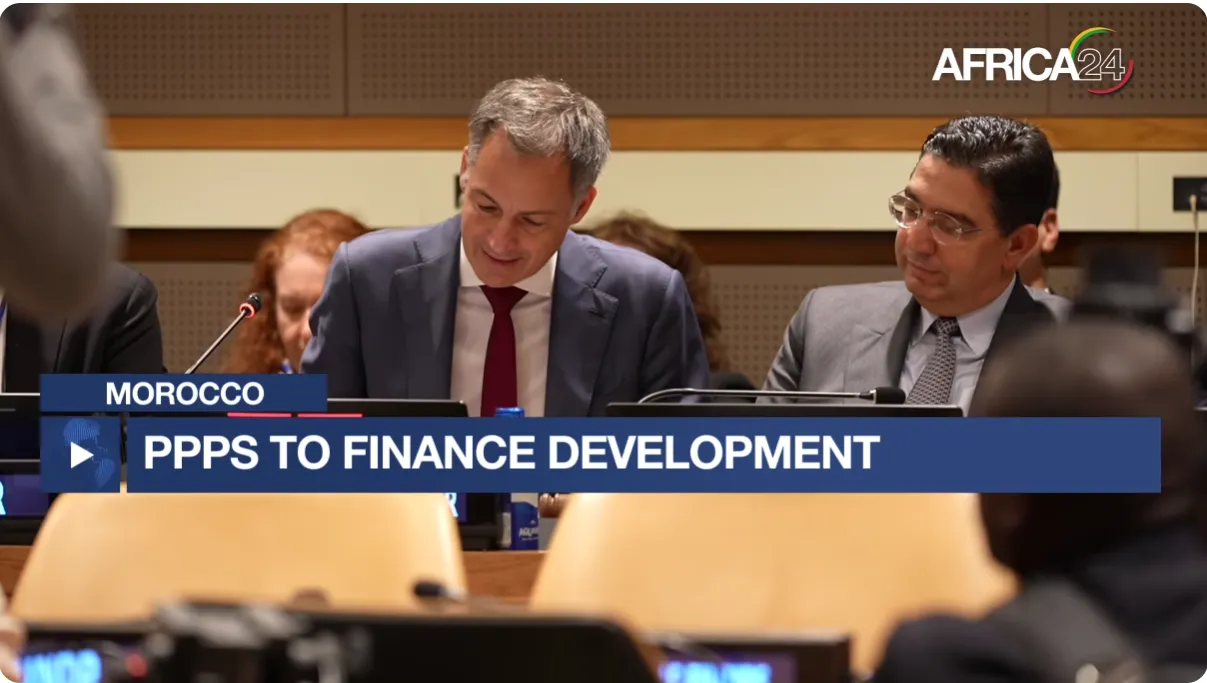

During the 81st United Nations sessions held in New York, Morocco's Foreign Minister, Nasser Bourita, emphasized the urgent necessity for increased mobilization of private capital to address the escalating financing needs for development, particularly in Africa. The staggering figure of $4.3 trillion represents the annual funding gap for the Sustainable Development Goals, highlighting the insufficiency of public resources alone in meeting these challenges. In response to this pressing issue, Morocco, in collaboration with the United Nations Development Programme (UNDP), is committed to prioritizing the mobilization of private investment across the continent.
Minister Bourita championed the establishment of innovative partnerships that can effectively blend public resources with private capital, innovation, and expertise, thereby positioning the private sector as a pivotal force in development financing. He articulated Morocco's commitment to sharing its valuable experiences, stating, "The experience of the Kingdom of Morocco shows that public-private partnerships can serve as a powerful lever for economic transformation and development. It is this experience that Morocco intends to continue sharing and placing at the service of its partners through South-South or triangular cooperation based on solidarity, development, and mutually beneficial partnerships." This vision aims to increase the private sector's contribution to nearly two-thirds of national investment by the year 2035.
Moreover, Rabat seeks to extend this model throughout Africa, where the annual funding requirements for infrastructure are estimated to be between $181 billion and $221 billion until 2030. This perspective resonates with several African nations also represented in New York, which are pursuing strategies to diversify their funding sources. Sering Modou Njie, The Gambia’s Foreign Minister, highlighted the significance of this initiative, stating, "It is a very important initiative, and I believe we are at a moment where we can rethink our approach and refocus our attention on how to establish viable financing mechanisms to support our development goals and ambitions." Additionally, Souleymane Diarrassouba, the Minister of Planning and Development from Côte d’Ivoire, underscored that promoting public-private partnerships necessitates a robust institutional framework that enhances predictability and credibility for state-led projects, along with mobilizing blended finance mechanisms to advance these initiatives amid the limited fiscal space of various states.
Despite these funding strategies, the overarching challenge remains the transformation of African projects into tangible investments. Consequently, delegates from various states, international institutions, and private investors in New York are striving to harmonize their approaches toward a singular objective: translating the continent's development necessities into actionable projects capable of attracting sustainable capital.
As reported by africa24tv.com.