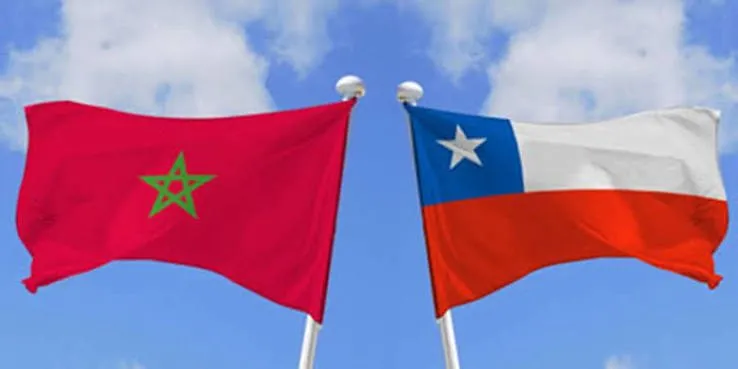

New Trade Pathways Between Morocco and Chile
The initiation of trade negotiations between Rabat and Santiago marks a significant milestone in Morocco's strategy to diversify its commercial partnerships. Beyond the anticipated agreement, the key objective is to establish a more structured access to the Latin American market, thereby reinforcing Morocco's role as a pivotal platform connecting Africa, Europe, and South America.
Morocco and Chile have officially commenced discussions aimed at finalizing a bilateral trade agreement. This process was formally initiated with a joint declaration signed in June 2026 by the trade officials of both nations. Should these negotiations succeed, the resulting agreement would represent the first free trade accord that Chile has established with an African nation.
For Morocco, this agreement would signify a substantial advancement in fortifying its commercial ties with Latin America. The primary aim is to create a modern legal framework for the exchange of goods and services while promoting reciprocal investments. These discussions are occurring at a time when Rabat is actively seeking to broaden its international market access.
The Kingdom already boasts an extensive network of trade agreements with the European Union, the United States, Turkey, the United Kingdom, as well as several Arab and African nations. The pursuit of new markets therefore reflects a strategy of diversification rather than merely seeking new partnerships. For Moroccan businesses, Chile can serve as a gateway to South American markets.
Conversely, Chilean operators will find in Morocco a privileged access point to the African market and European trade networks. The potential for complementarity spans various sectors, including agriculture, agri-food products, services, infrastructure, mining, industry, and logistics. Moreover, the geopolitical and strategic dimensions of this initiative are equally noteworthy. In July 2026, the Moroccan and Chilean parliamentary friendship groups reinforced dialogue between the two countries in Rabat.
Chile has also reaffirmed its position supporting Morocco's territorial integrity, providing a depth to the bilateral relations that transcends mere commercial interests.
Ensuring Benefits for Exporters
However, the negotiation process will be crucial. A trade agreement yields results only if businesses can effectively utilize the tariff preferences and new market access opportunities it provides. Therefore, Morocco must advocate for its export sectors while safeguarding sensitive industries.
Central to the negotiations will be issues concerning rules of origin, sanitary standards, technical barriers, and logistics. For Moroccan SMEs, the cost of accessing the Chilean market must also be taken into consideration. Consequently, the objective should not solely be to increase trade volumes, but rather to enhance value addition, investments, and industrial partnerships.
Thus, the Morocco-Chile relationship could evolve into a testing ground for a new era of Moroccan economic diplomacy: one that is less focused merely on exchanges and more oriented toward value chains, investment, and the pursuit of new markets. The true challenge will commence once the agreement is finalized, transitioning businesses from commercial diplomacy to contract execution.
As reported by industries.ma.