
Strengthening Bilateral Relations Amid Strategic Challenges
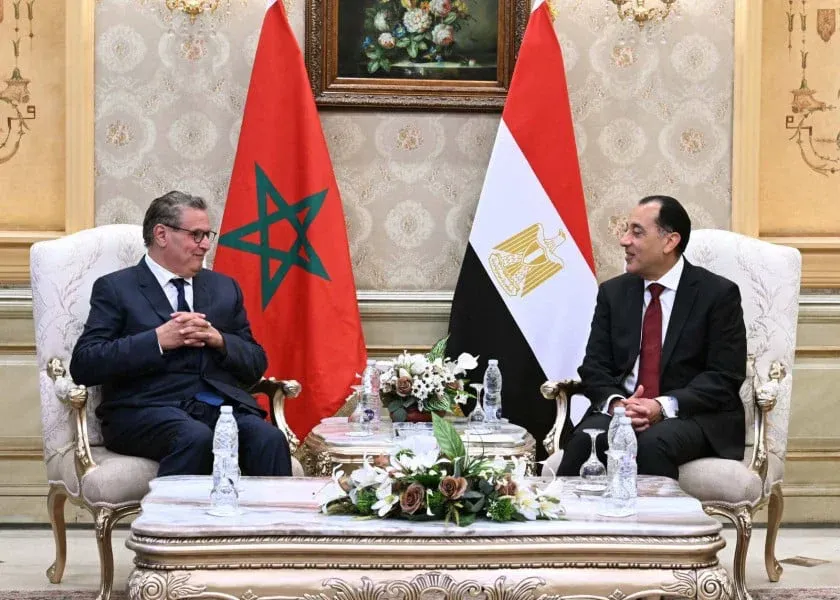
The recent high-level meeting between Morocco and Egypt marked a significant step towards revitalizing their bilateral relations. Conducted in Cairo, this meeting was characterized by direct communications from Rabat concerning both strategic issues and the persistent trade imbalance that heavily favors Egypt. Morocco's Prime Minister, Aziz Akhannouch, emphasized the need for a "strategic partnership" grounded in "pragmatic orientations." He called for concrete economic integration to enhance both nations' positions as key regional hubs.
Akhannouch further highlighted the political dimension of their bilateral relationship, stressing that the strength of their relations hinges on the clarity of their stances regarding strategic matters affecting both countries. This urgent need for clarity comes in the wake of recent tensions, particularly after Egyptian media outlets aired supportive statements for the Polisario Front, raising concerns about Cairo's control over narratives that diverge from its official stance.
Despite these strains, a joint communiqué released after the high-level commission reaffirmed Egypt's support for Morocco's autonomy plan for the Sahara, a position that has been consistently reiterated by Egyptian authorities. This affirmation signifies a complex balancing act as both nations navigate their diplomatic landscape amidst external pressures.
Addressing Trade Imbalances and Strengthening Economic Ties
Economically, Akhannouch pointed out the critical necessity of correcting the trade imbalance between the two nations. He urged for a balanced increase in the volume and value of bilateral trade while advocating for the full utilization of the legal framework established since 2004. The call to action included the removal of administrative hurdles to ensure smooth trade flows and foster investment between the two countries.
Morocco and Egypt, alongside Tunisia and Jordan, have been signatories to the Agadir Agreement since 2004, aimed at creating a free trade zone among these four states. However, Moroccan exporters have long complained about a structural trade deficit, which has reportedly worsened over the years despite the agreement. In a stark illustration of this imbalance, State Secretary for Foreign Trade, Omar Hjira, noted that Moroccan exports have significantly declined, while imports from Egypt have surged.
This issue of trade imbalance was at the forefront during a Moroccan delegation's visit in May 2025, led by the Minister of Industry and Trade, Ryad Mezzour. Although this visit resulted in pledges of cooperation, Morocco's decision to impose anti-dumping measures on certain Egyptian products in early February marked a more aggressive stance, reflecting Rabat's growing impatience regarding the lack of progress toward an equitable trade relationship.
In addition to trade matters, the Moroccan government has underscored the importance of expanding cooperation into logistics and maritime connectivity. The proposed development of a logistical link between Tanger Med and Port Said, integrated with the Suez Canal, aims to position both countries as a joint platform for accessing African, European, and Asian markets. Furthermore, Akhannouch stressed the need to update the legal framework governing their bilateral relations to adapt to the rapidly changing global economy.
Underlying these discussions is a new point of contention: the military rapprochement between Morocco and Ethiopia, following a military agreement signed between their armed forces. This development raises concerns for Cairo, particularly given the sensitive geopolitical dynamics surrounding the Nile.
As reported by yabiladi.com.