
A Modern Partnership: Morocco and France's New Friendship Treaty
Morocco and France are currently finalizing the details of a new Friendship Treaty that is set to govern their bilateral relations for the coming decades, emphasizing a modern and equal partnership. This upcoming treaty aims to replace the La Celle-Saint-Cloud Agreement, which was signed on November 6, 1955, in France and served as the foundation for Morocco's independence from French protectorate status, officially achieved on March 2, 1956. Under the auspices of this agreement, France facilitated the return of Mohammed V to the Moroccan throne, the grandfather of the current monarch.
Since that pivotal moment, the dynamics between the two nations have evolved significantly, rendering the postcolonial relationship established by the previous agreement obsolete. The new treaty is expected to foster a framework of bilateral relations based on equality between two countries with a shared historical background, aiming to strengthen their economic and strategic alliance in the contemporary geopolitical landscape. Insights into this evolving treaty have been provided by the Moroccan media outlet Assahifa English, shedding light on ongoing negotiations between the two nations.
Key Pillars of the New Friendship Treaty
According to Assahifa, the primary objective of the treaty is to modernize relations between Morocco and France, elevating them to a status of equality. This transformation would position Morocco as France's chief strategic partner outside the European Union, while France would emerge as Morocco's most significant long-term ally. The new Friendship Treaty is structured around four main pillars: economy and industry; security and military; culture and Francophonie; and political and geostrategic cooperation.
The economic aspect of the treaty emphasizes France's commitment to making substantial investments in Morocco's industrial sector, particularly in automotive (currently the most vital sector in Morocco's economy), railways, defense, and maritime transport. The goal is to modernize these industries with cutting-edge technologies and bolster export capabilities. In return, Morocco is expected to provide preferential access to its market for French companies engaged in infrastructure development, maritime and rail transport, renewable energy, and defense-related industrial projects. Furthermore, these sectors would benefit from a series of tax incentives designed to enhance the competitiveness of French businesses compared to those from other countries.
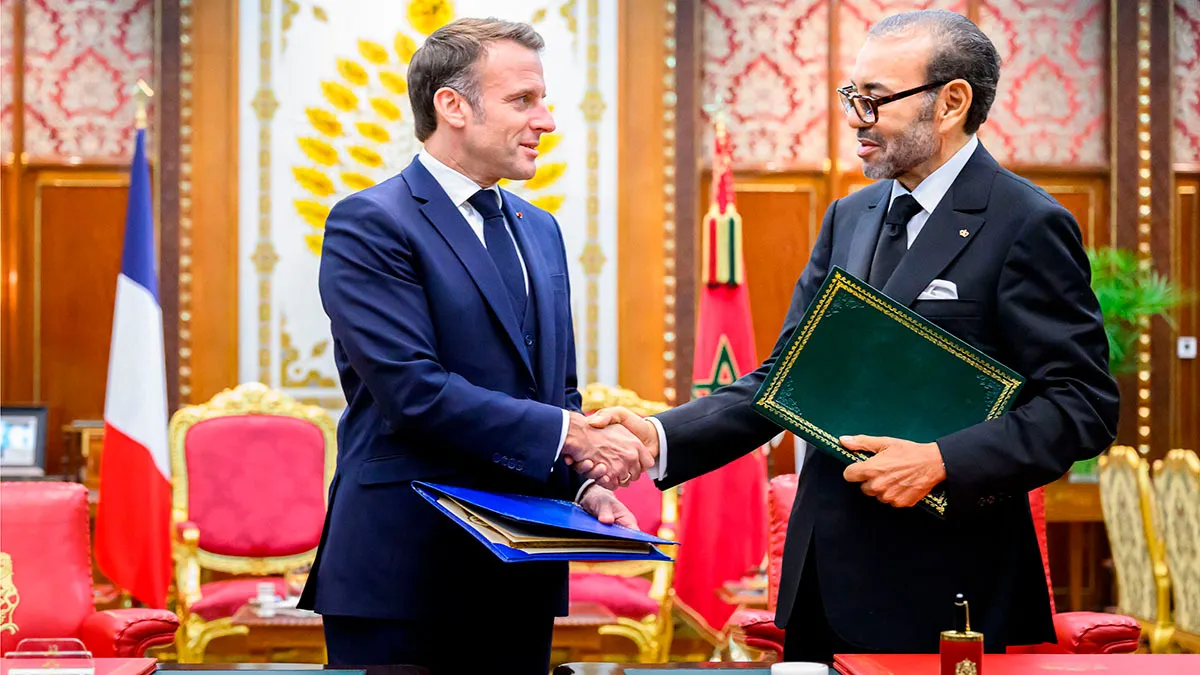
The second pillar focuses on enhancing defense and security cooperation between Morocco and France, a critical area reflecting the renewed trust in their bilateral relationship, particularly following President Emmanuel Macron's significant state visit to Morocco in October 2024. The treaty is expected to include the transfer of military technology from France to Morocco, with the long-term aim of transforming Morocco into a regional hub for the production of both light and heavy military equipment, including aviation, munitions, military vehicles, and armored systems. Additionally, the treaty would expand joint military training programs and enhance coordination in security and intelligence to tackle regional security challenges, including issues affecting the Sahel countries.
Culturally, the treaty underscores France's determination to maintain the privileged status of the French language within Morocco's educational system, administration, and economic sector, ensuring it remains the primary language of business amidst the rise of English. This linguistic legacy is a critical aspect of the shared history between the two nations and serves as a powerful tool for cultural influence and strategic presence that France is unwilling to relinquish. France aims for the Moroccan political elite to continue using French, although this has become a point of contention, as Morocco seeks to embrace English as an international business language, recognizing the predominance of English-speaking markets, including significant partners like the United States and economic powers such as China.
To bolster Francophonie, France plans to facilitate greater access for Moroccan students to French universities, where many of Morocco’s elites have traditionally been educated. The treaty also aims to expand the network of French cultural institutes across Morocco, enhancing the existing network of 12 institutes in various cities and establishing new centers affiliated with the Alliance Française, which operates over 800 centers in 130 countries. At the foundational education level, France seeks to expand its network of international French schools in Morocco, both at the primary and secondary levels, particularly in southern provinces.
The fourth pillar involves France's support for Morocco's sovereign interests in the United Nations Security Council, especially concerning the autonomy plan for Western Sahara, a crucial issue in Moroccan foreign policy. Beyond this support, the Friendship Treaty also encompasses France's diplomatic backing for Morocco within European Union institutions, defending Moroccan interests in sectors such as agriculture and fisheries, as well as in bilateral and multilateral cooperation frameworks.
As the negotiations near completion, it is anticipated that the new Friendship Treaty will be officially signed during the highly anticipated official visit of King Mohammed VI to France later this year, a visit expected to mirror the significance of President Macron's visit to Morocco in October 2024. This treaty is poised to establish a robust communication and understanding bridge between Mediterranean and Atlantic leaders, fostering collaboration between cultures and enhancing the partnership between Morocco and France as they navigate the complexities of the modern world.
As reported by atalayar.com.