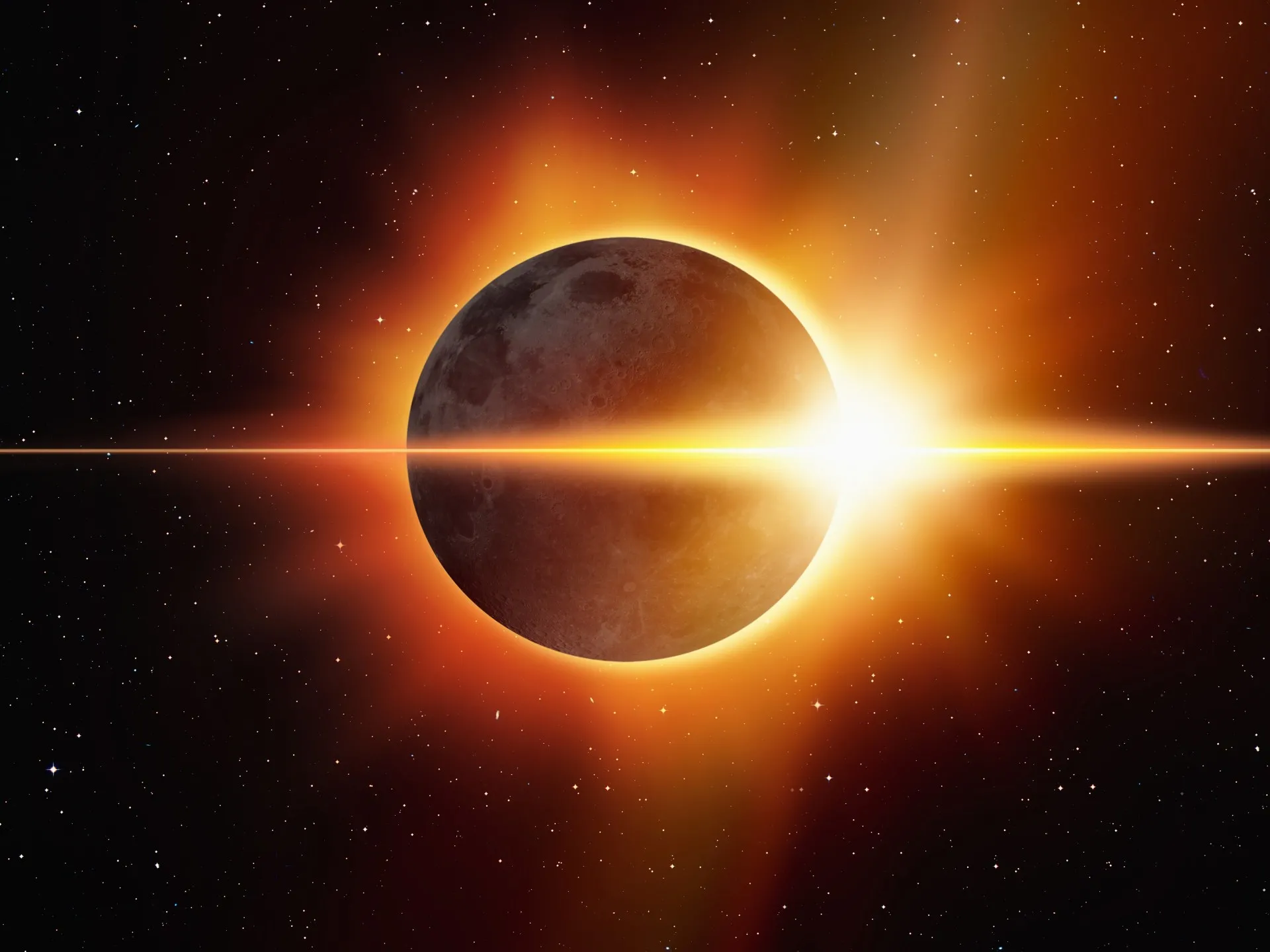

On Wednesday, August 12, 2026, Morocco is set to witness a remarkable astronomical event: a deep partial solar eclipse, which is expected to be visible across various regions of the kingdom, particularly just before sunset. This natural phenomenon has captured the attention of both astronomy enthusiasts and the general public alike.
According to available data, the eclipse is anticipated to commence in Marrakech around 6:42 PM, reaching its peak shortly before sunset. At this time, approximately 83% of the sun's disk will be obscured, creating a striking visual spectacle, provided that weather conditions are favorable.
Varying Obscuration Rates Across the Kingdom
The percentage of the sun's obscuration will vary from one region to another, increasing as one moves northward. In the capital city of Rabat, for example, the obscuration is expected to reach around 88%, while areas in the northeastern part of the country may experience up to 92% obscuration. This geographical disparity makes the event particularly unique, especially as some Moroccan regions will witness significant obscuration just before sunset.
Islamic Authority Clarifies Religious Stance
In conjunction with this celestial event, the Ministry of Awqaf and Islamic Affairs has announced that there will be no eclipse prayer held in mosques. They clarified that the timing of the eclipse coincides with the period after the Asr prayer, which is considered an undesirable time for performing voluntary prayers according to the Maliki school of thought practiced in Morocco. Instead, the ministry encourages the public to engage in prayer and seek forgiveness during the eclipse, as these actions are traditional practices associated with such phenomena.
As interest in observing the eclipse grows, experts have issued important warnings regarding eye safety. They strongly advise against looking directly at the sun during the eclipse, as this can cause severe damage to the retina, even if sunlight appears less intense due to significant obscuration. Regular sunglasses do not provide adequate protection for viewing the eclipse. Individuals wishing to observe the event should use special eclipse glasses that meet the international safety standard ISO 12312-2. Additionally, it is recommended to avoid pointing smartphone cameras or digital cameras directly at the sun for extended periods to prevent potential damage to the sensors.
The eclipse on Wednesday promises to be a spectacular astronomical occasion for sky-watchers, particularly in areas where high levels of obscuration are forecasted. Adhering strictly to safety guidelines is essential to ensure a safe and enjoyable experience while observing this fascinating celestial event.
As reported by marrakechpost.com.