
Enhanced Security Measures Ahead of Anticipated Migrant Crossings
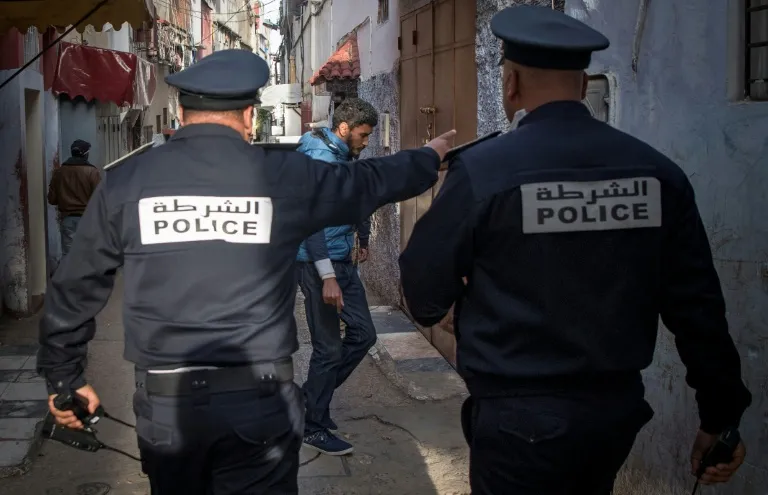
In a proactive response to heightened concerns regarding potential migrant crossings, Morocco has mobilized hundreds of riot police and intensified naval patrols in the vicinity of Ceuta. This operation is particularly focused on the period surrounding August 15, a date that has seen increased calls on social media platforms such as Facebook and WhatsApp for young Moroccans and migrants from various African nations to converge at the borders of Ceuta and Melilla. Spanish broadcaster _laSexta_ documented the security measures, revealing a significant presence of Moroccan officers equipped with shields and riot gear near the Benzú section of the border, alongside eight Moroccan Navy vessels conducting patrols along the coastline near Fnideq, a city adjacent to Ceuta.
The assembly of police forces appeared to be more of a training exercise rather than a permanent deployment, as officers had vacated the Benzú area by Thursday morning. However, naval patrols and surveillance measures continue to be actively enforced, with physical barriers remaining intact. Spanish security officials have assessed the situation, acknowledging the legitimacy of concerns surrounding another potential mass crossing attempt, although specifics regarding the scale of such an attempt and the individuals orchestrating the online mobilization remain ambiguous.
Reports indicate that some social media groups involved in promoting this planned movement have amassed hundreds of thousands of members, prompting authorities to caution against the potential for misinformation and the exploitation of vulnerable young individuals by migrant-smuggling networks. This situation is compounded by the aftermath of a previous migration crisis that unfolded in late July, during which approximately 72,000 individuals reportedly entered Ceuta from Morocco over a span of several days. While Morocco's official figures are lower, the discrepancy has further fueled ongoing debates regarding the management and scale of such crises.
Morocco's Role in European Migration Control
The current security mobilization underscores Morocco's critical role in European migration control strategies, serving as both a country of origin and a key transit point for migrants from various regions of Africa aiming to reach Europe. The Moroccan Interior Ministry has reported that in 2025 alone, the country thwarted 73,640 irregular migration attempts, dismantled over 300 migrant-smuggling networks, and rescued nearly 13,600 individuals at sea. These statistics reflect a slight decline from the previous year, as changing migration routes have diverted traffic to other departure points in West Africa and the southern Mediterranean.
Additionally, the socio-economic factors driving migration remain complex, with conflicts in the Sahel, unemployment, political instability, and the adverse impacts of climate change on agriculture pushing many toward North Africa and, ultimately, Europe. Consequently, Morocco's geographical positioning has rendered it an essential partner for the European Union, which has committed substantial financial resources—€234 million between 2015 and 2021—to bolster migration-related programs in the country. Following the recent crisis at the border, European Commission President Ursula von der Leyen proposed an increase in support for Morocco to mitigate the likelihood of similar large-scale crossings in the future.
The migration dynamics involving Morocco and Spain are deeply intertwined with broader territorial disputes over Ceuta and Melilla, which, although geographically located in Africa, are administered by Spain. This duality complicates diplomatic relations, with Morocco asserting its claims to these enclaves while Spain maintains a firm stance on its territorial sovereignty. The strategic importance of Morocco to both Spain and the EU is evident, as European nations rely on Moroccan law enforcement and naval resources to manage one of their few land borders with Africa, while Morocco seeks to further its diplomatic and territorial interests.
As reported by africa.businessinsider.com.