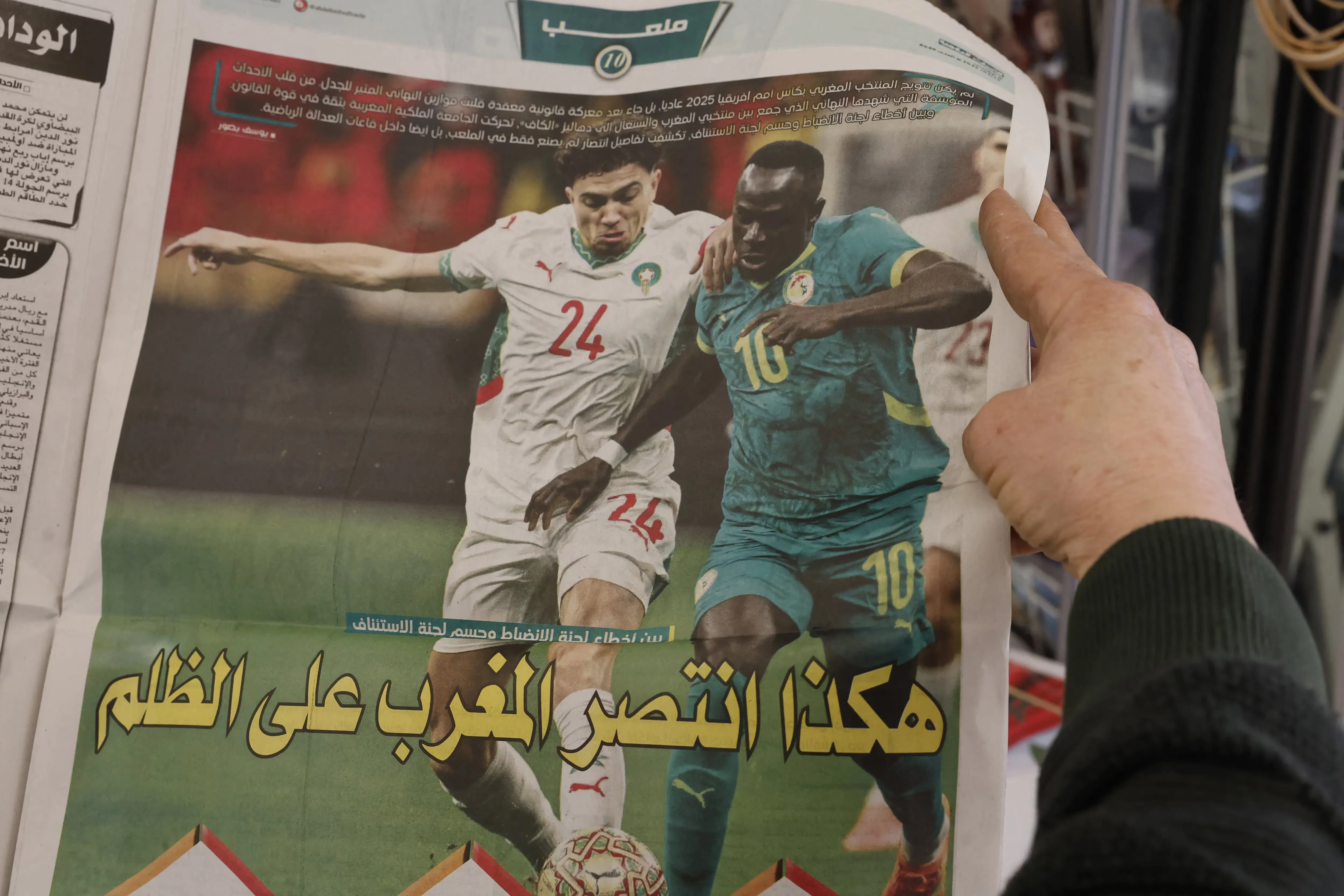
In a surprising turn of events, the Moroccan football team has been declared the winner of the 2025 Africa Cup of Nations (CAN) by the Confederation of African Football (CAF) after Senegal's withdrawal. This decision has not only sparked celebrations among Moroccan fans but has also ignited a broader discussion about the implications of such rulings in the realm of sports and beyond. While the legal framework supports Morocco's claim, many feel a sense of incompleteness regarding the legitimacy of the title, leading to a politically charged narrative surrounding the event.
The announcement came on March 17, unexpectedly shattering the festive atmosphere of Aïd-el-Fitr celebrations with a legal ruling that reverberated through the streets of Rabat and the headlines of newspapers. The verdict, which declared Morocco the rightful winner, was viewed as a necessary enforcement of the rules of the game. Journalist Adil Azeroual encapsulated this sentiment by stating that the CAF's decision emphasizes the importance of adhering to regulations regardless of external pressures or contexts. The ruling is seen as a clear demarcation: football can only thrive if its rules are respected.
The Royal Moroccan Football Federation (FRMF) has welcomed this strict application of the competition's regulations, clarifying that their actions were not aimed at undermining the performance of other teams but rather at ensuring compliance with the established rules. This perspective has been echoed by various media outlets, including Médias24, which argue that the CAF's decision sends a strong message: no external context or emotional pressure can justify ignoring the laws of the game. Legal experts, like Me Mourad El Ajouti, have reinforced this argument, asserting that the CAF's ruling represents a definitive application of regulatory legality, resulting in an objective sanction in favor of Morocco.
While this legal victory is significant, the narrative surrounding it remains contested. Observers point out that this situation may set a precedent for future cases, highlighting the necessity of justice in sports. Journalist Sara Ibriz notes that similar cases have begun to emerge globally, indicating a potential shift in how sports regulations are interpreted and enforced. However, as Médias24 aptly summarizes, possessing legal correctness does not automatically translate into public acceptance or legitimacy.
The debate quickly transcended the confines of sports, with some commentators perceiving the controversy as indicative of deeper societal issues. Karim Boukhari, in his column for Le360, emphasizes that the regulatory framework must be upheld, while also condemning the anti-Moroccan sentiments being expressed in various media. Tarik Qattab echoes this sentiment, suggesting that the political climate has escalated tensions, turning a straightforward regulatory decision into a matter of national pride and hostility. He posits that the regime in Algeria may wish to exploit this situation to incite discord between Moroccans and Senegalese.
Amidst rising tensions, calls for restraint have emerged, with journalists emphasizing that mutual respect and moderation are essential. This situation not only affects the trophy at stake but also impacts the broader image of African football as a whole. The discussions surrounding the treatment of coach Walid Regragui have further complicated the narrative, as he has faced intense scrutiny despite achieving remarkable success with the national team. Some commentators argue that there is a tendency to hastily judge and condemn without considering the accomplishments and contributions of individuals like Regragui.
Ultimately, Morocco's legal victory in the football realm does not fully assuage the discomfort surrounding the situation. Yassine Majdi of TelQuel candidly notes that while the team has rightfully claimed the title, the process through which it was awarded, occurring in a courtroom rather than a vibrant stadium, casts a shadow on the achievement. The timing of the decision raised questions, suggesting that the verdict should have been reached much earlier, thereby allowing a different narrative to flourish. The overarching lesson remains clear: merely being right is insufficient for public recognition and acceptance, both in football and politics.
As reported by lepoint.fr.