
Morocco Distances Itself from Migrant Crisis at Ceuta
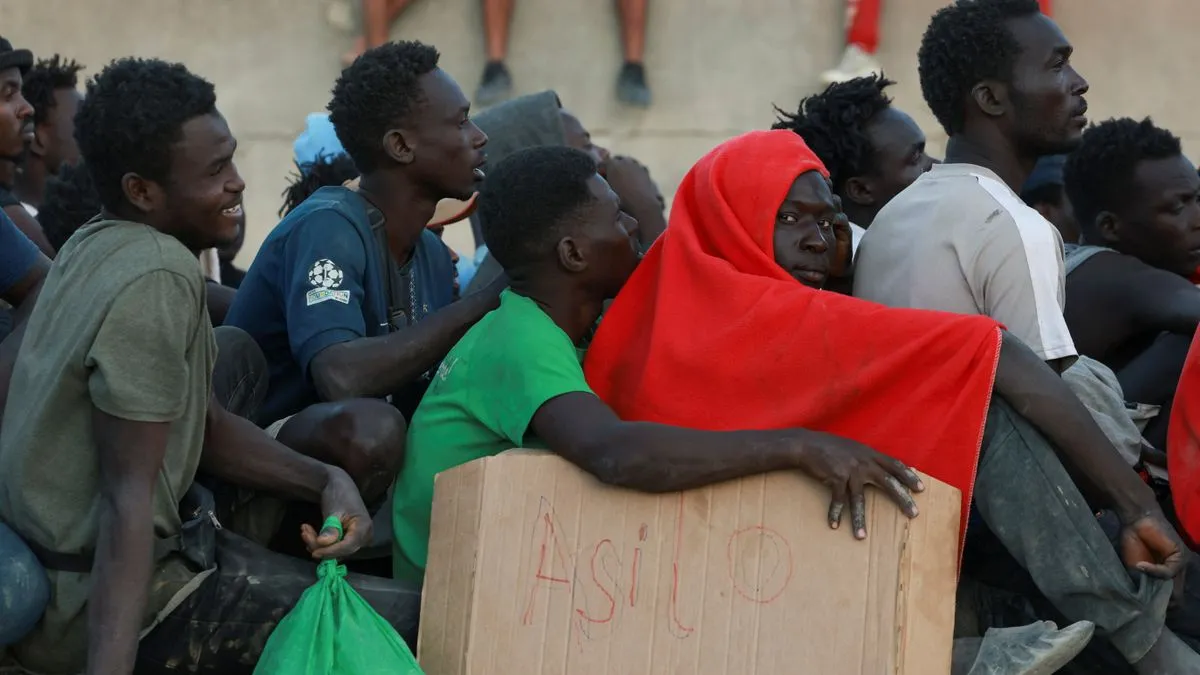
The recent influx of thousands of migrants into the Spanish enclave of Ceuta has sparked a heated debate regarding accountability. Following the arrival of approximately 60,000 migrants, Morocco has vehemently denied any responsibility for the situation. A high-ranking official from the Moroccan government, who wished to remain anonymous, stated that the sheer volume of individuals attempting to cross into Ceuta overwhelmed Moroccan security forces, making it impossible for them to manage the situation effectively at one point. The official emphasized that it would be overly simplistic to suggest that Moroccan authorities could have simply used force to halt the migrants' advance.
The Moroccan government's stance is that addressing the migration crisis is not solely their responsibility. They pointed out a ruling from a Spanish court that prohibits the immediate deportation of migrants arriving by sea, arguing that this legal framework has contributed to the challenges both countries are facing. The official further highlighted the need for Spain to take responsibility in managing the situation, citing the difficulties arising from the court's decision.
Contrasting Perspectives from Spain
The Spanish government has contested Morocco's narrative, insisting that they were not forewarned about the magnitude of the crisis. A spokesperson for the Spanish administration stated that there had been no prior indications or reports that would have prepared them for such an unprecedented event. Spanish Prime Minister Pedro Sánchez has suggested that the surge of migrants was fueled by misinformation disseminated by human traffickers on social media platforms, which distorted the facts surrounding the legal situation. Initially, Morocco appeared to support this interpretation but has since shifted its position.
In the aftermath of the migrant surge, reports indicated that 72 individuals had tragically lost their lives while attempting to reach Ceuta. While many of those who arrived have returned to Morocco, it is estimated that around 2,500 remain in the enclave as of Monday. Speculation arose suggesting that Morocco might have allowed the migrants to cross intentionally, possibly in response to political tensions with Spain, particularly following Sánchez's recent visit to Algeria. The long-standing conflict between Morocco and Algeria over the Western Sahara region remains a significant geopolitical issue, further complicating the dynamics of migration in the region.
As reported by spiegel.de.