
In the wake of a massive influx of migrants into the Spanish enclave of Ceuta, a senior Moroccan government official has categorically denied any responsibility on the part of Morocco for the situation. The official, speaking anonymously, emphasized that the recent surge was significantly influenced by a Spanish court ruling rather than any inadequacies in Moroccan border control.
The official pointed out that the number of migrants seeking to enter Ceuta, which borders Morocco, had swelled to such an extent that Moroccan security forces reached a point where they could no longer manage the situation effectively. "It is too simplistic to suggest that Moroccan security forces could have simply used force to stop them," the representative remarked, highlighting the complexities involved.
Furthermore, the official stressed that it is not solely Morocco's responsibility to address this issue. He referenced a Spanish court ruling that prohibits the immediate expulsion of migrants arriving by sea, suggesting that this legal framework has contributed to the challenges faced by both Morocco and Spain. He noted that the Moroccan government had warned Madrid that the court's decision would lead to complications—"and it has indeed caused problems." The onus, he argued, is on Spain to find solutions to the challenges arising from this ruling.
Spanish Prime Minister Pedro Sánchez has suggested that the mass arrival of migrants may have been influenced by misinformation spread by "human traffickers" on online platforms, who misrepresented the court ruling's implications.
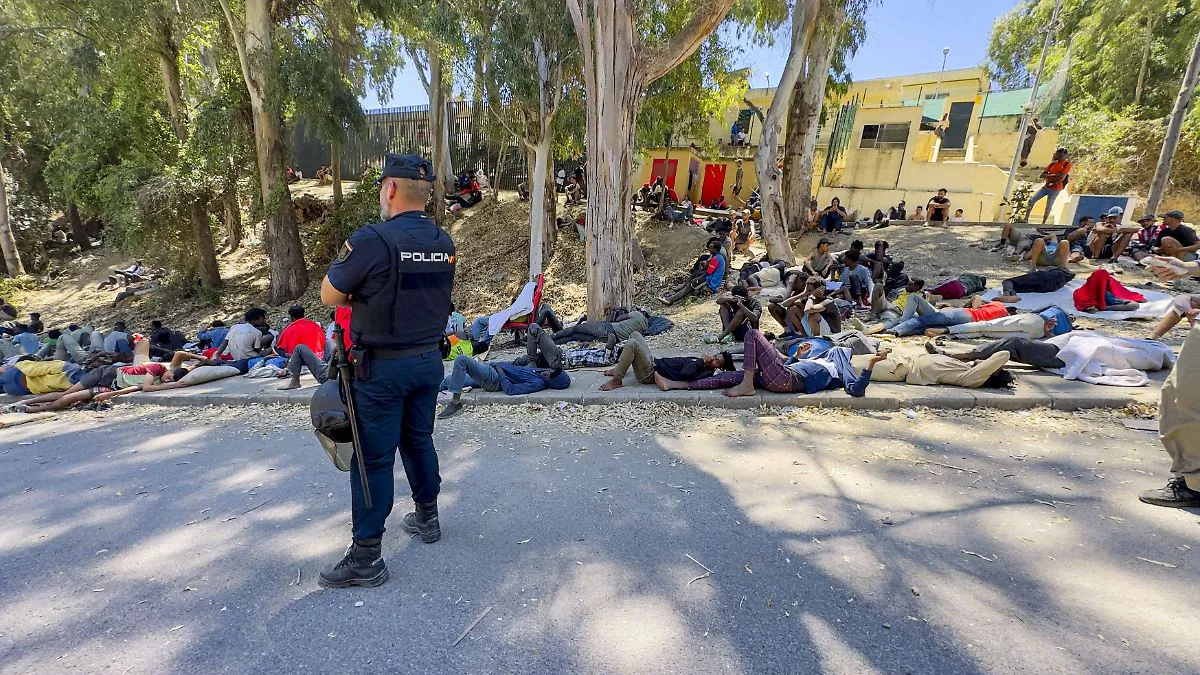
Last week, approximately 60,000 individuals—some arriving by swimming—reached the enclave of Ceuta, with Spanish officials reporting that 72 people lost their lives in the attempt to reach the territory. Most of the migrants who initially entered Ceuta have since returned to Morocco, with estimates indicating that only around 2,500 remained in the enclave as of Monday.
The recent events have sparked speculation that Morocco may have deliberately allowed the migrants to cross, possibly in response to a visit by Prime Minister Sánchez to Algeria, which is a point of contention between Morocco and Algeria due to their longstanding dispute over Western Sahara. Morocco claims the region and received backing from the UN Security Council for its claims last year, while Algeria supports the independence movement Frente Polisario.
In 2022, Spain shifted its long-standing neutral stance on the Western Sahara issue to support Morocco, and observers believe that Sánchez's recent visit to Algeria may have caused frustration within the Moroccan government.
As reported by n-tv.de.