Morocco's Growing Role in the Global Automotive Industry
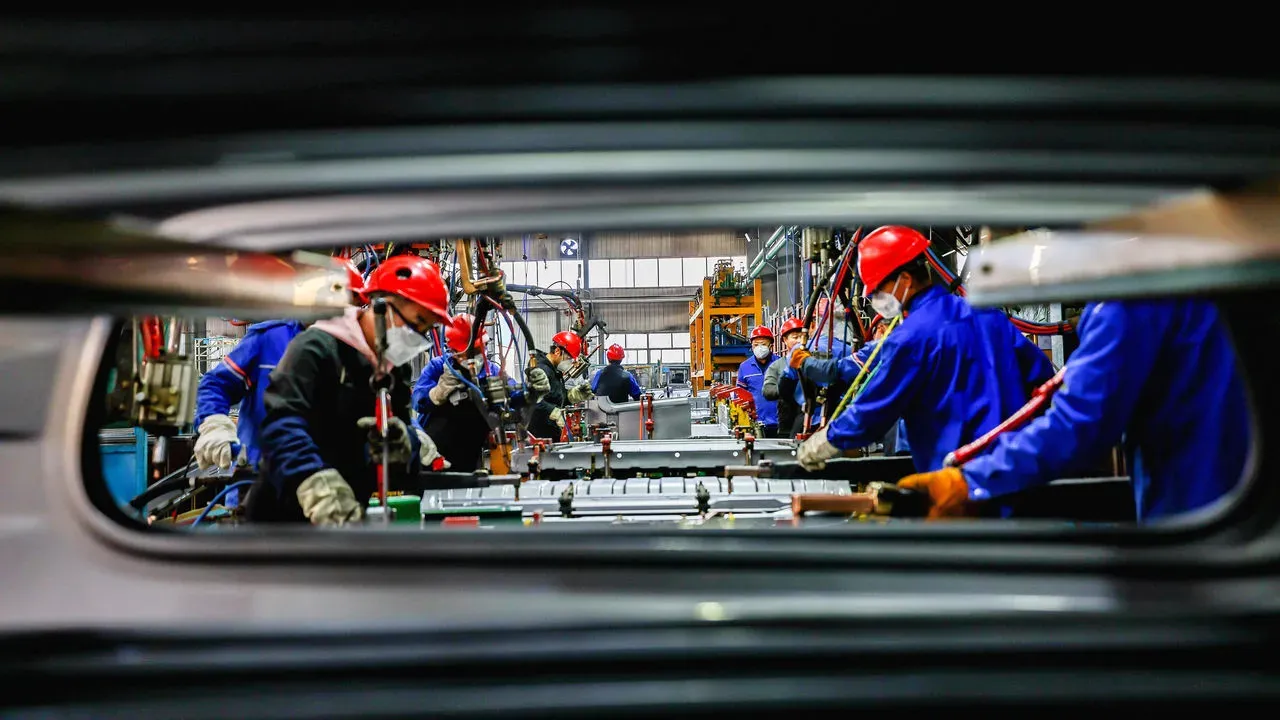
Recent developments in Morocco's automotive sector indicate a significant shift as major Chinese companies increasingly invest in the local manufacturing ecosystem. This trend is part of a broader restructuring of the global electric vehicle (EV) and battery production landscape. Stretching along the Atlantic coast from Tangier in the north to the industrial free zone of Rabat-Salé-Kénitra, the automotive landscape is no longer dominated solely by French automotive giants Renault and Stellantis. Instead, prominent Chinese firms have begun to enter the market and invest in local industrial infrastructure.
According to a report by the French newspaper, "Le Monde," Morocco attracted nearly half of the new Chinese investments in the automotive sector across the Middle East and North Africa (MENA) region between 2023 and 2025. This placed Morocco ahead of competitors like Egypt and Algeria, as stated in a memorandum from BMI Fitch Solutions, a leading economic analysis agency. The country successfully secured 23 out of 45 projects announced by Chinese companies in the region during this period.
Among the most notable investments is a project from Gotion High Tech, the sixth-largest battery manufacturer globally, which initiated the establishment of a massive battery plant in Kénitra in 2024, with an initial investment nearing 12.8 billion dirhams (approximately 1.2 billion euros). The total projected investment for this facility could reach about 65 billion dirhams. Additionally, another industrial project from CNGR Advanced Materials, specializing in battery components, aims to set up a plant for producing anodes and cathodes in the Jorf Lasfar area, approximately 200 kilometers south of Casablanca.
Strategic Advantages for Chinese Investors
Experts suggest that these investments align with a larger strategy by China to redistribute production sites for electric vehicles. By relocating a portion of EV manufacturing to countries like Morocco, Chinese companies aim to mitigate the high tariffs imposed by the United States and the European Union on Chinese products. The United States imposes tariffs that can be as high as 100% on electric vehicles and batteries, severely limiting their market presence, while the European Union applies tariffs up to 35% on cars and spare parts, in addition to a basic rate of 10%.
In light of these trade restrictions, Morocco has emerged as an attractive gateway for Chinese firms targeting Western markets. The country benefits from free trade agreements with both the European Union and the United States, which took effect in 2000 and 2006, respectively. Analysts believe that Chinese companies are looking to replicate the industrial model established in Mexico, which involves setting up manufacturing facilities in countries that have free trade agreements with Western markets, thus enabling them to export their products under more favorable tariff conditions.
Moreover, Chinese investors in Morocco gain from a well-developed automotive industrial ecosystem that has been in place since the early 2000s, notably with the establishment of Renault in the country. This ecosystem comprises a vast network of local suppliers and a skilled workforce, alongside advanced logistical infrastructure. Analysts indicate that Morocco now possesses an industrial system capable of producing most automotive components, complemented by a sophisticated transportation network that facilitates product exports to global markets, particularly via the Tangier Med Port, one of the world's crucial container shipping ports.
Another strategic factor is Morocco's significant global phosphate reserves, which account for approximately 70% of the world's supply of this essential material used in LFP (lithium-iron-phosphate) batteries. This battery technology is gaining prominence in the electric vehicle sector due to its lower cost compared to other battery types. Predictions from BMI Fitch Solutions, as reported by Le Monde, suggest that Morocco could evolve into a global center for LFP battery production by the mid-2030s, primarily driven by increasing Chinese investments in this sector.
As reported by assahifa.com.