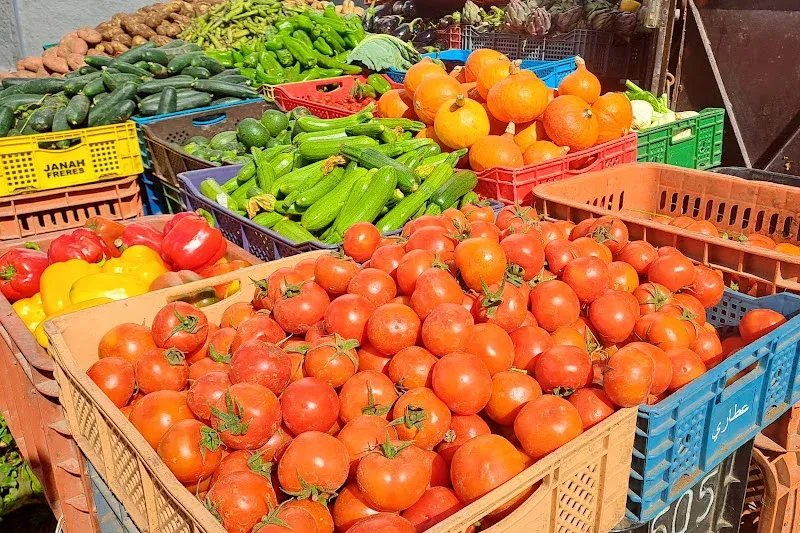

Morocco Tops Spain's Fruit and Vegetable Imports
Recent data released by the Spanish Federation of Associations of Producers and Exporters of Fruits, Vegetables, Flowers, and Live Plants, commonly known as "FEPEX," has revealed that Morocco has secured its position as the foremost supplier of fruits and vegetables to Spain in terms of value. The total worth of Moroccan imports has reached approximately €710 million in the first quarter of this year, marking a significant annual increase of 5.6% compared to the same period last year.
In the rankings of fruit and vegetable suppliers, Peru follows in second place with an import value of €183 million, while Costa Rica comes in third at €113 million. Notably, Brazil recorded the highest growth rate in terms of value, experiencing an increase of about 17.5%, amounting to €87 million in imports.
Import Volumes and Trends
When analyzing import volumes, France continues to lead as the primary supplier of fruits and vegetables to Spain, contributing over 494,000 tons. Morocco follows closely, with Spanish importers receiving more than 232,000 tons, while Costa Rica provides 141,000 tons. The Netherlands and Peru round out the list, delivering 105,000 and 94,000 tons, respectively. Overall, Spain's imports of fruits and vegetables from third-party countries outside the European Union have seen a volume increase of around 9% and a value increase of 7% during the first quarter of this year, with total imports valued at €1.518 billion, comprising over 917 tons.
According to FEPEX data, Spanish imports of fresh fruits and vegetables have shown growth of 6% in volume and 4% in value up to April, achieving a total of 1.7 million tons worth over €2 billion. This growth is primarily attributed to purchases from countries outside the EU, which have strengthened their role in Spain's external supply chain.
The Spanish professional body further emphasized that non-EU countries accounted for 72% of the total value of Spain's fresh fruits and vegetables imports during the first four months of the year, compared to 28% from EU member states, indicating a shift where imports from non-EU countries represented 52% of total imports, exceeding those from EU nations which constituted 48%.
Overall, the data indicates that countries outside of Europe are gaining additional weight in the market, as purchases from non-European external markets exceeded 895,000 tons, reflecting a year-on-year growth of 6.5% and generating over €1.5 billion, a 9% increase over the figures recorded during the same period last year. The trend suggests a robust expansion of Morocco's agricultural exports, reinforcing its critical role in Spain's fruit and vegetable supply chain.
As reported by hespress.com.