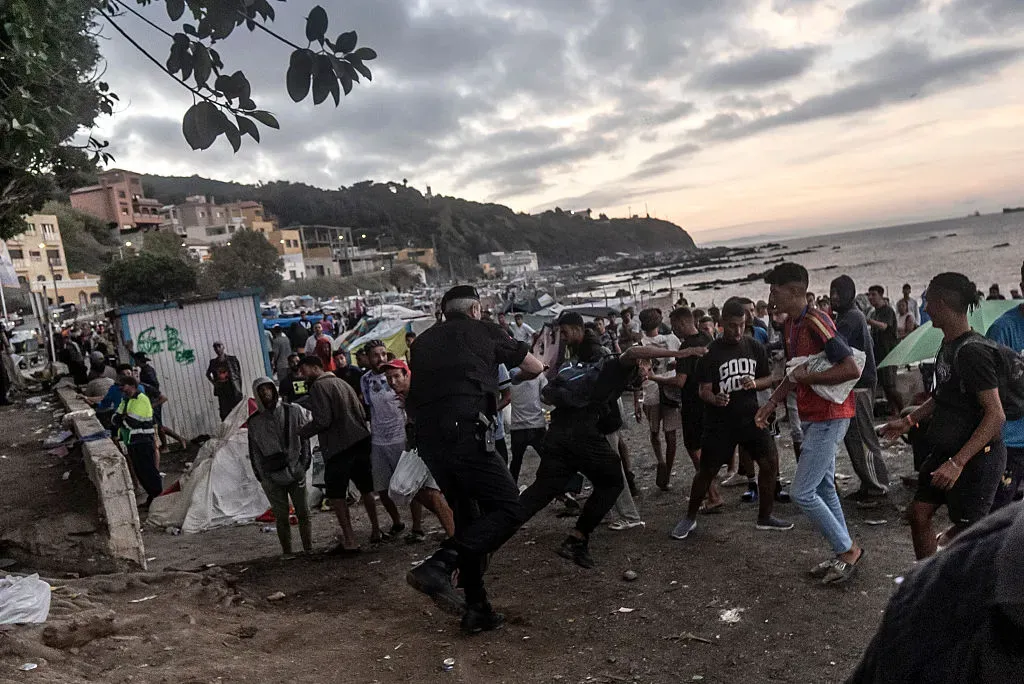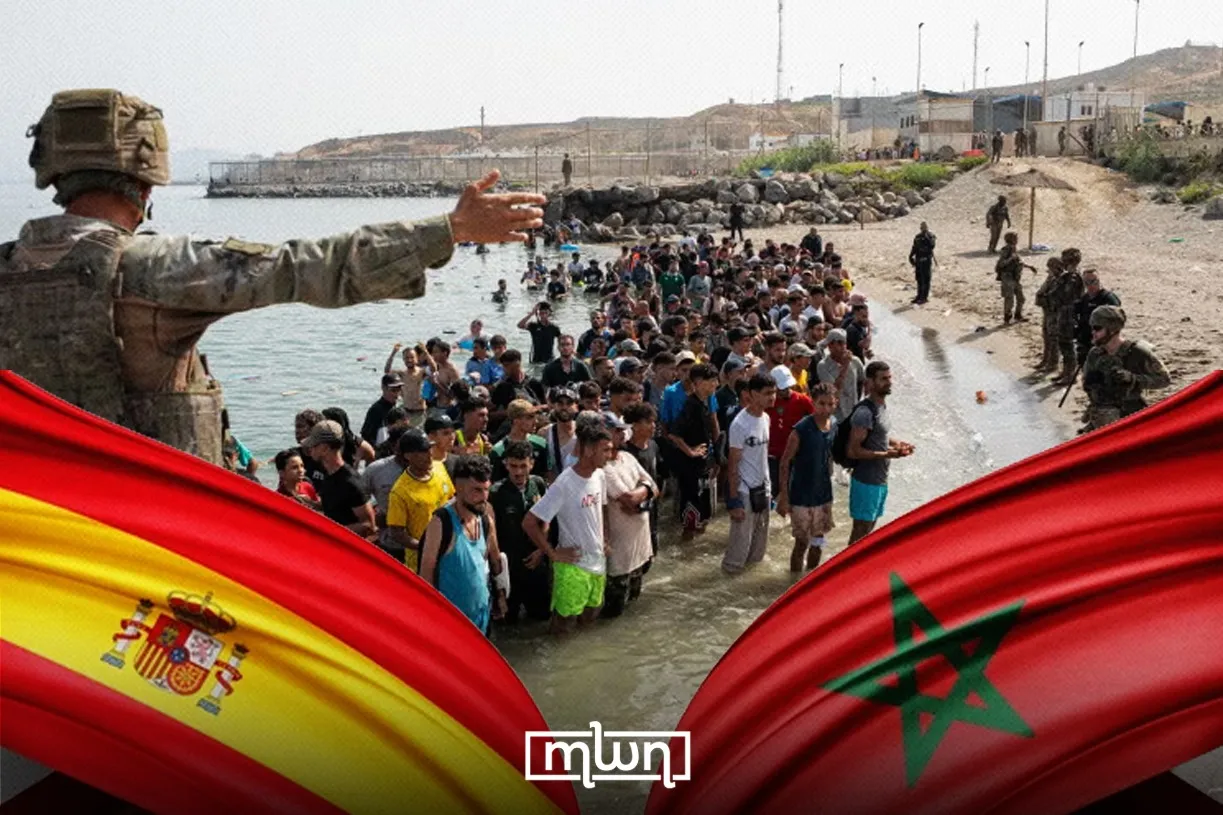

Recent reports from Spanish media have shed light on Morocco's proactive measures to tackle the ongoing migration crisis affecting the Spanish enclave of Ceuta. This surge in security efforts comes in the context of a backdrop of increasing anti-Moroccan sentiment, particularly emanating from Spain's far-right Vox party and the Popular Party (PP), the main opposition party.
According to a report by the Spanish news agency EFE, Morocco has significantly bolstered its security presence along the Fnideq border with Ceuta. The report indicates that multiple police and gendarmerie checkpoints have been established along the route connecting Tangier to Fnideq, a distance of approximately 80 kilometers. These checkpoints are strategically designed to deter migrants from making their way to Ceuta, even though small groups were observed attempting to approach the border recently.
The rise in anti-Moroccan rhetoric has been fueled by notable figures within the PP, including Deputy Secretary Alma Ezcurra, who has publicly stated that Morocco bears responsibility for the current situation in Ceuta. Initially, the PP's criticism was directed toward the government of Pedro Sanchez, with Secretary General Miguel Tellado labeling the Prime Minister as the principal architect behind the mass migration incidents that occurred in late July.
Both the Vox and PP parties have accused Morocco of facilitating mass crossings to exert pressure on Spain. Nevertheless, Spanish authorities and government officials have consistently acknowledged Morocco's cooperation since the onset of the mass crossings on July 30. In a collaborative effort, Morocco and Spain have also initiated a mechanism to address the migration crisis, which includes an agreement focused on the return of migrants.
Estimates from Spanish sources suggest that between 70,000 and 80,000 individuals entered Ceuta, while Moroccan assessments indicate that approximately 40,000 migrants made their way to Ceuta, along with over 1,000 heading to Melilla. Most of those who entered the enclaves have since been returned, and Morocco has been pressing Spanish authorities to expedite the repatriation process for all migrants, including minors.
Morocco has further called upon Spanish authorities to acknowledge their shared responsibility in this migration issue, asserting that addressing the challenges of migration requires a collective effort from all involved parties. It is important to note that Morocco's response to the crisis is not confined to a specific timeframe, as the country has fortified its security measures along its northern border in anticipation of new social media campaigns encouraging further crossings, particularly in the approaching days.
As reported by moroccoworldnews.com.