
Proactive Measures in Climate Monitoring
In light of the pressing global climate challenges, Morocco has taken significant steps to bolster its weather monitoring and alert systems. On March 23rd, coinciding with the World Meteorological Day, the nation emphasized the critical role of meteorological data in understanding weather patterns and safeguarding lives and property. Hussein Youabed, head of communication at the General Directorate of Meteorology, articulated that meteorology transcends mere weather forecasting; it encompasses a comprehensive understanding of climate evolution and preemptively addressing hazardous weather phenomena. This proactive approach is foundational for protecting lives and ensuring the welfare of future generations.
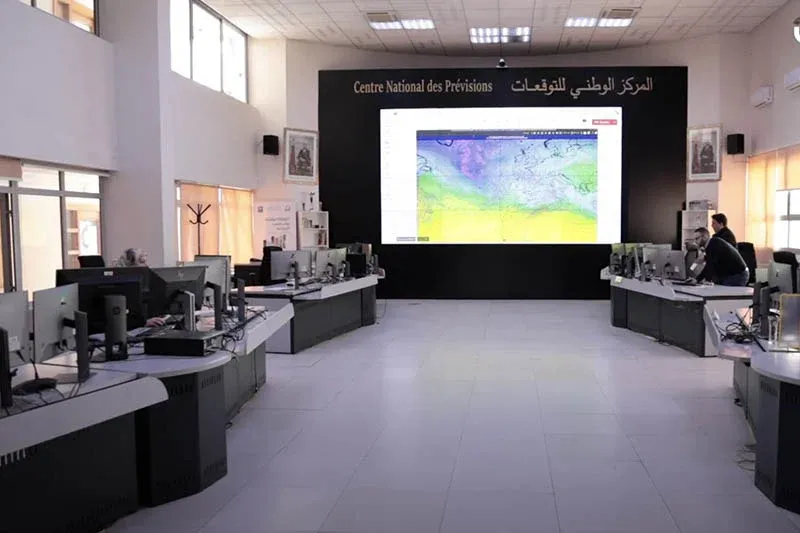
The Moroccan experience in weather monitoring has evolved significantly over the years, marked by the implementation of an advanced and integrated weather and climate monitoring system. This system features an extensive national network comprising over 433 automatic stations, along with eight modern radars, six marine radars, lightning detection systems, and five atmospheric data measurement stations. Furthermore, the integration of third-generation satellite data enhances the accuracy and timeliness of weather information dissemination.
Youabed pointed out that this sophisticated system enables the collection of precise data almost in real-time, forming the backbone of reliable weather forecasts and effective early warning systems. Morocco is actively participating in international dynamics, particularly through the World Integrated Global Observing System (WIGOS) and the 'Early Warning for All' initiative, positioning the country among those rapidly enhancing their capabilities in this crucial sector, supported by advancements in artificial intelligence and high-performance computing. These developments have a direct impact on the daily safety of citizens, as the dense monitoring network and precise numerical models lead to more accurate and timely weather alerts, empowering authorities to take preemptive measures against risks, especially in flood-prone areas or regions susceptible to heavy snowfall or extreme weather events.
Understanding Weather Forecasting and Climate Projections
Professor Mohamed Said Qrouq, a climatology expert, highlighted March 23rd as a significant date to underscore the vital roles played by the World Meteorological Organization and national meteorological services worldwide in forecasting and monitoring to protect citizens. He noted that the slogan "Monitoring Today for Protection Tomorrow" is a powerful call to action for professionals in the field to enhance their monitoring processes to ensure community safety. In Morocco, the General Directorate of Meteorology is fulfilling this mission with high standards and advanced technologies.
Qrouq emphasized the distinction between 'weather monitoring' and 'climate anticipation.' Weather monitoring, conducted by meteorological specialists, can be likened to 'engineering the atmosphere,' relying on current conditions and historical data to predict weather for the next three days (72 hours), a timeframe during which forecasts are reliable. Beyond this period, the focus shifts from weather forecasting to climate anticipation, which studies past occurrences to understand the Earth’s overall status using qualitative rather than quantitative methods.
The climatological study hinges on central data, primarily solar radiation, the Earth's position, and its components as a planet spinning on a tilted axis. However, the immediate concern is how the Earth's surface transfers energy to the atmosphere, with oceans serving as the largest reservoir of stored energy and the primary driver of atmospheric dynamics. Morocco's climate is closely linked to the Pacific and Atlantic Oceans, particularly the equatorial region, where the tropical chimney pushes air masses and energy towards higher latitudes.
As Qrouq explained, the energy released from the oceans significantly influences the Azores High, the primary atmospheric pressure system governing Morocco's climate. Current forecasts indicate a need for preparedness as the climatic data for March 2026 suggests the development of the El Niño phenomenon in the Pacific and Atlantic Oceans, which could stabilize the Azores High and shift North Atlantic Oscillation to a positive phase. These conditions may hinder rainfall in Morocco in the coming period, necessitating that Moroccan authorities prepare and adapt in terms of water resource management and usage strategies, optimizing the available meteorological and climatic data.
As reported by hespress.com.