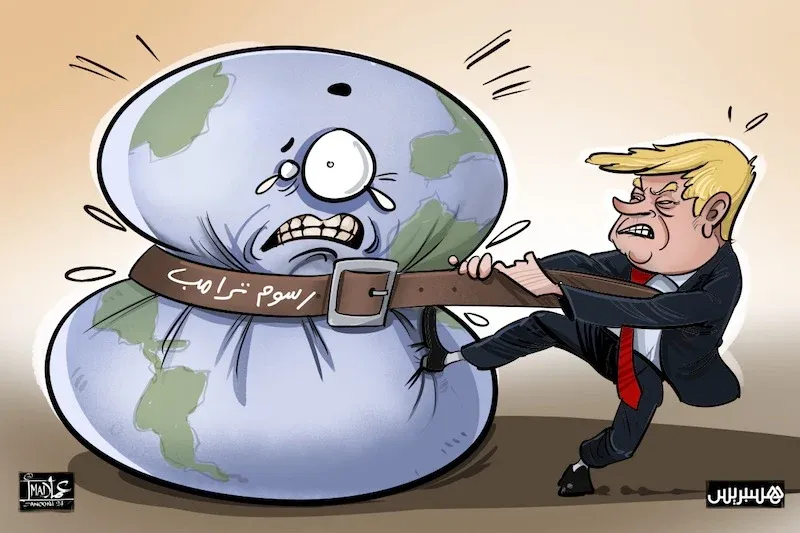

The Moroccan exports heading to the United States have entered a new phase of challenges with the introduction of fresh customs duties and competitive pressure. This shift follows the announcement by President Donald Trump's administration regarding the implementation of a new tariff known as the "Forced Labor Duty," which is set at 12.5% for Morocco among a list that includes 38 other countries, affecting a total of 60 economies, including China and the European Union. This decision, which signals a potential decline in the competitiveness of Moroccan products within the American market, was reported earlier by the electronic newspaper Hespress. The new tariffs officially came into effect at 12:01 AM on Friday, July 24, 2026, Eastern Time, right after the temporary global tariffs of 10% expired.
On the morning of the announcement, Hespress was unable to obtain an immediate comment from any sources within the Moroccan Confederation of Exporters (ASMEX), an organization that encompasses thousands of Moroccan stakeholders and companies active in various export sectors. According to documents reviewed by Hespress from the Office of the United States Trade Representative (USTR), Morocco is included in a list of 60 economies that investigations by Washington have found to have failed in banning and imposing significant restrictions on imports produced through forced labor, as outlined in a previous report from the office.
The current Trump administration bases its new actions on Section 301 of the Trade Act of 1974, which addresses unfair trade practices, accusing 60 trading partners of "failing to enforce a ban on forced labor." The new tariffs cover approximately 99.4% of total U.S. imports and represent the latest efforts by Trump to reconstruct the comprehensive tariff system after his administration faced setbacks in February when the U.S. Supreme Court struck down previously imposed "reciprocal" tariffs ranging from 10% to 50% under the National Emergency Act.
U.S. Trade Representative Jameson Greer stated in a related announcement, "The United States has enforced a ban on the importation of products made with forced labor for nearly a century and does so rigorously. It is time for our trading partners to follow suit," asserting that these measures will help rectify what constitutes a violation of human rights and a distorted trade practice. He clarified that for countries with trade agreements with Washington that set tariff caps (like Morocco), these new tariffs will not exceed the agreed thresholds.
The U.S. administration categorized the affected trading partners into three tiers: a 10% category that includes 17 countries (such as Canada, Mexico, India, and the UK), a 10%-12.5% category assigned to major partners who will see the new tariffs added to previously applied rates (including the European Union, Japan, South Korea, Switzerland, and Taiwan), and a 12.5% category that encompasses 38 countries, including Morocco, alongside others such as China and Vietnam.
Exemptions and Excluded Sectors
Despite the broad scope of this decision, the notification published in the federal register includes exemptions for several vital sectors that may mitigate the impact on certain key exports. Notable among these are fertilizers and some essential food products, which represent significant avenues for phosphate and its derivatives, as well as oil and natural gas. The exemptions also cover goods subject to national security tariffs (Section 232), such as automobiles, steel, aluminum, and copper, along with aircraft and their components, as well as critical minerals.
Meanwhile, the decision has sparked outrage from various international entities; the European Union described it as an "unfounded shock lacking in factual basis," while countries like Australia, Brazil, and Norway have rejected the tariffs, deeming them "unjustified," according to reports from Reuters on Friday. From a legal standpoint, trade experts believe that challenging these tariffs in U.S. courts will be more difficult compared to the decisions made in February, as Section 301 has a historically strong track record of standing firm against legal challenges.
As reported by hespress.com.