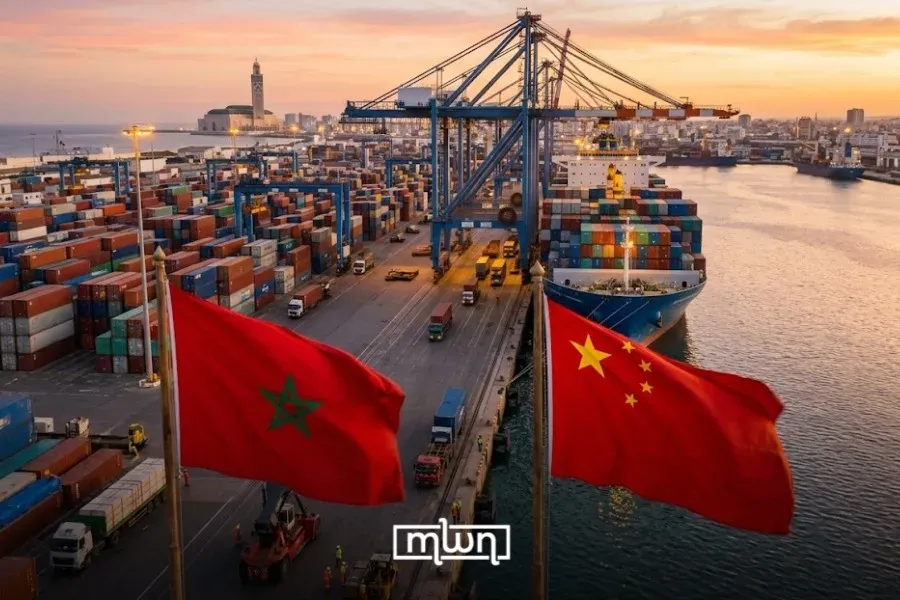
In a significant milestone for Sino-African relations, Casablanca is poised to host the Morocco session of the China-Africa Economic and Trade Expo (CAETE) from June 10 to 12, themed "China and Africa: Together for a Shared Future." This will be the first time the CAETE, which has been held in China since its inception in 2019, occurs on African soil, marking a pivotal moment in the collaboration between the two regions.
The event is jointly organized by the CAETE Secretariat, Morocco’s Ministry of Industry and Trade, and the General Confederation of Moroccan Enterprises (CGEM). It aligns with the framework of the “Eight Initiatives” of Sino-African cooperation, which aims to foster economic ties and development across the continent. The expo will focus on five key sectors: technology and industrial equipment, agri-food, consumer goods, automotive and spare parts, and energy. With more than 200 Chinese companies expected to showcase their offerings, the event highlights China's intent to establish commercial, industrial, and financial partnerships across Africa.
Notably, the expo also serves as the first major overseas trade initiative organized by China’s Hunan Province in Africa since the implementation of Beijing's zero-tariff policy for 53 African nations on May 1. Xinhua, the Chinese state news agency, described the Casablanca session as a transformative moment for bilateral economic relations, particularly as trade between China and Morocco reached a record $10.96 billion in 2025, a significant increase from $9.04 billion the previous year. While China remains Morocco’s third-largest trading partner overall, its status as the largest trading partner in Asia is increasingly solidified.
Despite the growing trade figures, the balance remains critically skewed, with Chinese exports to Morocco reaching $9.88 billion, while Moroccan exports to China were only $1.08 billion. The zero-tariff policy aims to mitigate this disparity by removing import duties on goods from African countries that maintain diplomatic relations with Beijing. Nasser Bouchiba, president of the Africa China Cooperation Association for Development (ACCAD), emphasized that this expo will facilitate access for high-quality Moroccan products into China's consumer market, while simultaneously enabling Chinese businesses to expand their operations in North Africa.
Moreover, Jawad Kerdoudi, president of the Moroccan Institute of International Relations (IMRI), referred to the zero-tariff initiative as a mutually advantageous strategy that could help alleviate Africa’s trade deficit with China, thereby attracting capital, technology, and jobs to the continent. The expo is anticipated to feature distinctive Moroccan products, such as argan oil and essential oils, through Hunan-based Yufei Industry Investment’s “African Products” brand platform.
In addition to consumer goods, the bilateral relationship is shifting towards increased industrial integration. The Mohammed VI Tangier Tech City has already signed agreements with 42 companies, 34 of which are Chinese, amounting to planned investments of approximately $3.5 billion. Within this framework, BTR New Material Group is establishing facilities for cathode and anode materials, projected to create over 1,100 jobs. Additionally, equipment from Zoomlion Heavy Industry is currently being utilized in significant Moroccan infrastructure projects, including venues for the upcoming 2030 FIFA World Cup.
Morocco's status as the leading global phosphate exporter, along with its reserves of cobalt and lithium, positions the country as a strategic player in the new-energy supply chain that connects Moroccan resources to Chinese processing capabilities and European markets. Imad Toumi, president of Managem Group, highlighted initiatives such as a battery-grade cobalt sulfate project in Marrakech and a seawater desalination project in Nador, exemplifying a model that merges economic advancement with environmental stewardship.
Morocco’s ambassador to China, Abdelkader El Ansari, provided insights during an interview, outlining the implications of President Xi Jinping’s zero-tariff access for African nations. He expressed optimism regarding the potential for increased Moroccan exports to China and reaffirmed Morocco's attractiveness as a destination for Chinese investments, citing its proximity to consumer markets and a well-established network of free trade agreements. The ambassador revealed that Chinese investments in Morocco have surpassed $10 billion, extending into high-tech sectors and diverse industries, including automotive parts and electric vehicle batteries.
Despite the promising outlook, concerns loom over the impact of Chinese investments on Morocco's economy and its relationship with the European Union. EU Trade Commissioner Maroš Šefčovič recently warned that the influx of approximately $6 billion in Chinese capital since the pandemic represents a potential challenge for Europe. Experts, including Ahmed Aboudouh from Chatham House, caution that China's dominance in various sectors could lead to substantial shifts in the economic landscape.
This year marks the tenth anniversary of the strategic partnership between China and Morocco. With the CAETE making its debut in Africa, both nations are striving to translate this policy opening into a comprehensive commercial framework that will test Rabat’s ability to strengthen ties with Beijing without disrupting its largest trading partner in Europe. As reported by moroccoworldnews.com.