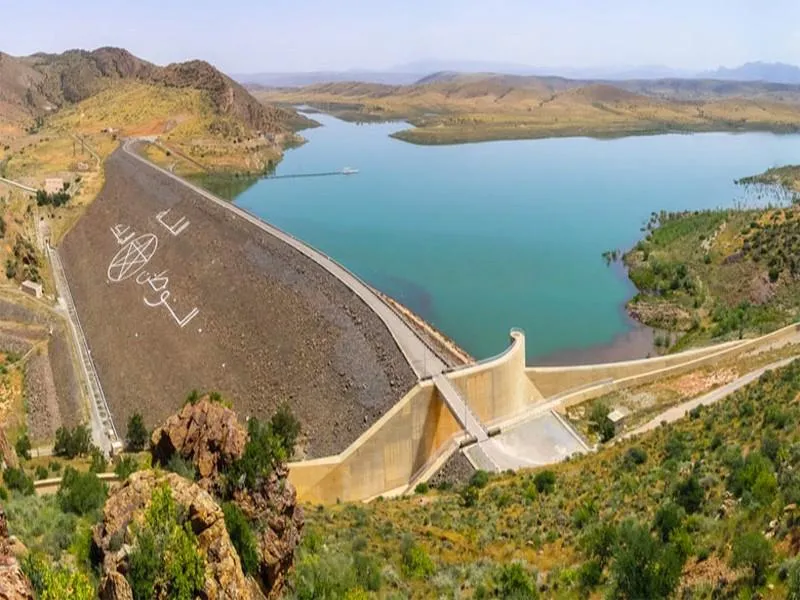
Morocco's Strategic Investment in Water Infrastructure
In a significant move to enhance its water management capabilities, Morocco has initiated 11 public tenders for dam construction projects valued at over MAD 339 million (approximately $34.77 million). This initiative, announced by the Directorate of Hydraulic Development on October 15, encompasses various regions across the country, with bid submission deadlines set between November 9 and November 16. The strategic locations of these tenders reflect Morocco's commitment to improving its water infrastructure, particularly in areas that have faced challenges due to prolonged drought conditions.
The list of tendered projects includes notable dams such as the Hyara Dam in Zagora, the Ouled Sidi Daoud Dam in Rehamna, the Ras Kraa Dam in Figuig, and the Issa Ben Amar Dam in Taourirt. Furthermore, the Aguelmame Dam, also referred to as Sidi Rabeh Ettolba, is included in Taourirt, along with the Aourir Dam located in Taroudant. Additional projects feature the Srirou Dam in Khouribga, the Taghzout Dam in Chefchaouen, the Akdim Dam in Boulemane, and the Dar Ettnia and Sidi Said dams, both situated in Rehamna. This diverse distribution of projects across different provinces, from the southeastern Zagora to the northern Chefchaouen, illustrates Morocco's comprehensive approach to regional water management.
Improving Water Reservoirs Amidst Climatic Challenges
The launch of these tenders coincides with Morocco's ongoing efforts to bolster its water infrastructure in response to years of drought. The Ministry of Equipment and Water has indicated that, thanks to favorable rainfall and snowfall earlier in the year, there has been a noticeable improvement in the levels of water reservoirs. According to the ministry's official water information platform, Maa Dialna, the national reservoir filling rate reached 67.1% in October, with a peak of 76.19% recorded on May 10. Despite facing heat waves, dam reserves have remained stable, although some groundwater conditions have experienced decline.
Recent rainfall has contributed positively to several reservoirs, with the Mohammed V Dam in the Oriental region receiving 5.84 million cubic meters of water, enhancing its filling rate to 41.4%. Additionally, the Sidi Mohammed Ben Abdellah Dam near Rabat benefitted from approximately 5.39 million cubic meters, raising its filling rate to 70.7%. The Al Massira Dam in Settat province also demonstrated improvement, recording inflows of 3.73 million cubic meters, resulting in a filling rate of 40.2%. These developments highlight the ongoing efforts to manage water resources effectively, even amidst varying conditions across different reservoirs and regions.
Moreover, Morocco continues to pursue larger-scale water infrastructure projects. As of October 16, Maa Dialna reported that construction and upgrading activities are in progress at 14 significant dams, with an anticipated combined storage capacity exceeding five billion cubic meters. The newly announced tenders are a vital addition to Morocco's extensive water infrastructure program, reinforcing the nation's commitment to sustainable water management and resilience in the face of climatic challenges.
As reported by moroccoworldnews.com.