
Morocco's Ambitious AI Strategy Focused on Linguistic Diversity
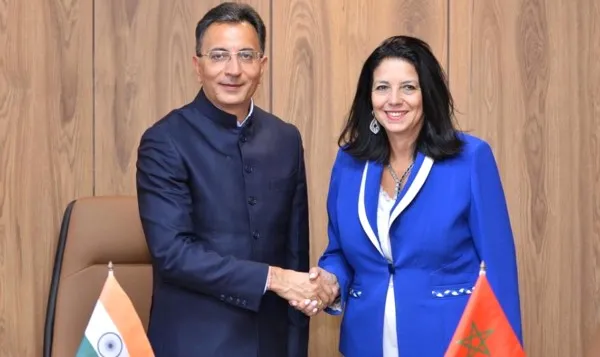
Morocco is positioning linguistic diversity as a pivotal aspect of its national strategy for artificial intelligence (AI). The capital city, Rabat, aims to develop tools that can comprehend and process Darija and Amazigh, facilitating citizens' access to digital public services, as reported by We Are Tech Africa. On August 24, 2026, Amal El Fallah Seghrouchni, the Minister Delegate in charge of Digital Transition and Administrative Reform, met with Jitin Prasada, the Indian Minister of State responsible for Information Technology. Following their discussions, both parties agreed to establish a joint commission focused on languages and digital technologies, with the goal of creating AI models tailored to the linguistic realities of Morocco.
Integrating Darija and Amazigh into Digital Services
This collaboration is expected to expedite the incorporation of Darija and Amazigh into the digital services of the administration. Discussions are centered around developing lightweight language models that can be integrated into public platforms such as Idarati. The ambition is to produce tools capable of understanding the languages that citizens commonly use, thereby enhancing their interactions with the administration. For Rabat, this initiative transcends mere technological innovation; it aims to make digital transformation more inclusive and accessible to a population with diverse linguistic practices.
To achieve this technological advancement, Morocco intends to draw on India's experience, which also grapples with significant linguistic diversity. New Delhi has developed BHASHINI, a public platform launched in 2022, dedicated to language technologies and multilingual AI. According to Indian authorities, this platform currently supports 36 languages for text and 23 for voice, and is utilized by over 800 government websites. This model is particularly appealing to Rabat, which views it as a prime example of leveraging AI to make digital public services accessible in multiple languages at scale.
The partnership with India comes at a time when Morocco is striving to structure its own AI ecosystem. In January 2026, the country launched the Jazari ROOT Institute, which is expected to play a coordinating role within a national network of specialized AI institutes. The stated objective is to align research, technological innovation, and the concrete needs of the economy and public services, with a special emphasis on developing sovereign AI.
The discussions between Rabat and New Delhi extend beyond language technologies; they also encompass public digital infrastructure, digital identity, electronic payments, data governance, and skills development. The envisioned cooperation could manifest in training programs, expert exchanges, and partnerships between academic institutions. Through this partnership, Morocco aims to capitalize on India's experience to develop AI that is more attuned to its linguistic realities while simultaneously enhancing its digital sovereignty.
As reported by burkina24.com.