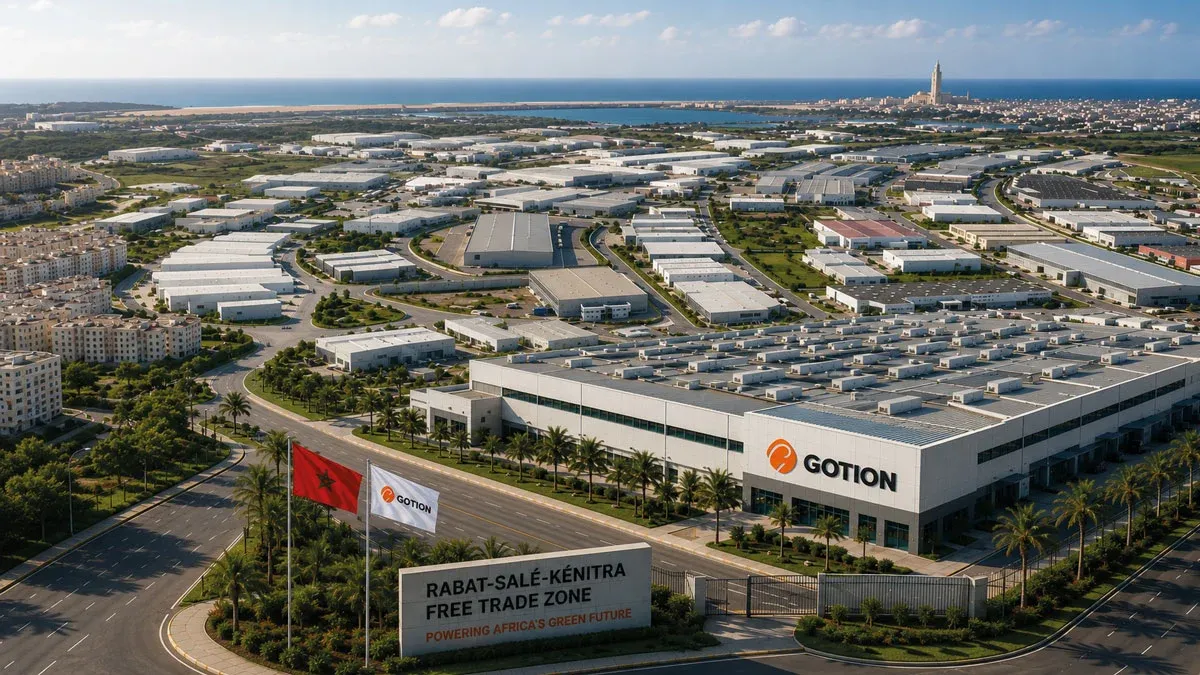

In Morocco, efforts are intensifying as the country approaches the operational phase of Africa's first battery manufacturing plant, marking a significant addition to the development plans and energy transition strategies in both local and regional markets. This project, developed by the Chinese company Gotion High-Tech through its subsidiary Gotion Power Morocco, carries global implications as well. The final touches are being applied to the plant, located in Kenitra, which overlooks the Atlantic coast, as reported by the specialized energy platform based in Washington.
The journey of this manufacturing facility began with the signing of a memorandum of understanding in 2023, followed by a series of developmental milestones over the last three years, leading up to the anticipated operational phase. According to information published by PV Magazine, the plant is expected to commence operations in Kenitra by the end of the current summer season. Gotion Power Morocco is now in the final operational steps before receiving the green light to start production.
Operational Timeline for Africa's First Battery Plant
The operational plan for the plant is structured in several phases, with the first stage targeting an annual production capacity of 10 gigawatt-hours, which will gradually increase to 100 gigawatt-hours. This step not only enhances Morocco's industrial strategy but also aligns with the country's ongoing energy transition efforts aimed at expanding clean technologies and industries. Khalid Qlam, a representative from Gotion Power Morocco, stated that the majority of the plant's battery production will support the electric transportation market, particularly for vehicle production in Morocco and Southern Europe. He further emphasized that the operational strategy of the Kenitra plant is tailored to fit into the regional manufacturing supply chain.
On a global scale, Gotion High-Tech views Africa's first battery manufacturing plant as a pivotal link for exporting its products to the European market, alongside fulfilling the regional demand for electric vehicles. The facility will focus on producing lithium iron phosphate batteries, starting from the cathode to the cell level. This innovative approach reduces costs and enhances safety by integrating the cathode directly within the battery cells, resulting in a lower energy density compared to nickel-manganese-cobalt batteries.
Investment and Employment Opportunities
This project has received official backing over the past three years, culminating in the signing of a memorandum concerning battery production for both the automotive sector and electricity storage. The estimated project cost stands at approximately 65 billion Moroccan dirhams (around 6.98 billion USD), and it has recently secured a loan of 100 million euros (about 115.1 million USD) from the African Development Bank, which aims to secure an additional 141 million euros through other funding sources. Upon commencing operations, the plant is projected to create 2,300 direct job opportunities, with numbers increasing to 10,000 as the facility operates at full capacity.
It appears that the collaboration between China and Morocco has progressed efficiently according to the established timelines, with Khalid Qlam predicting production to start by the third quarter of this year. This production will include batteries and their key components such as electrodes. The establishment of Africa's first battery manufacturing plant not only symbolizes a significant milestone for Morocco but also reflects the country's strategic positioning in the global clean energy market.
As reported by attaqa.net.