
Morocco's Commitment to Transparent Elections
Morocco has a longstanding history of conducting elections, and preparations for the upcoming legislative elections scheduled for September 23, 2026, are already underway. Elisabetta Gardini, the head of the pre-electoral delegation from the Parliamentary Assembly of the Council of Europe (PACE), emphasized the importance of using the upcoming weeks to ensure that all voters and candidates can participate equally and confidently in every step of the electoral process. This statement followed a three-day visit to Rabat, where Gardini and her delegation engaged in discussions about the electoral framework and preparations.
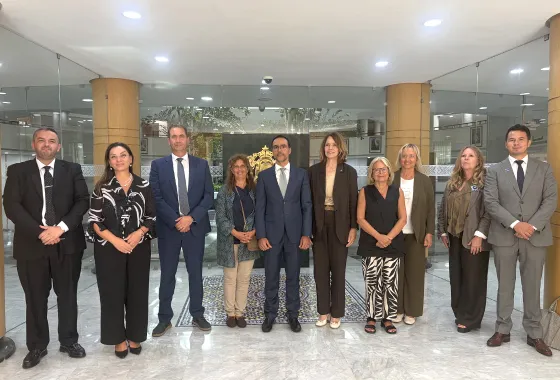
This multiparty delegation, comprised of five members of PACE, visited Morocco from August 31 to September 2 at the invitation of the National Council for Human Rights. During their visit, they met with officials responsible for organizing and observing the elections, the Moroccan delegation head to PACE, and various representatives from civil society, the media, and the diplomatic community in Rabat.
Enhancements and Challenges Ahead of the 2026 Elections
The delegation recognized the positive assessment made by PACE regarding the 2021 legislative elections, which were deemed professionally organized and largely transparent. They applauded the numerous legislative improvements aimed at making future elections more inclusive and acknowledged the significant progress made in preparations along with the evident willingness of the electoral administration to enhance the electoral process further. Among the notable initiatives highlighted were the reservation of 90 regional seats for women, financial incentives for lists led by candidates aged 35 or younger, the digitization of certain procedures, and the introduction of new regulations concerning online campaigning, misinformation, and artificial intelligence.
However, several longstanding and emerging issues warrant close attention. Voter participation remains a significant concern, with around 15.8 million citizens registered to vote—considerably lower than in previous elections and well below the estimated voting-age population. Alarmingly, only 3% of registered voters are young individuals. The delegation encouraged stakeholders to intensify efforts to inform and mobilize voters, particularly among women and youth, to enhance electoral engagement.
The delegation also underlined the necessity for full guarantees of the freedoms of expression, peaceful assembly, and association throughout the campaign period, enabling voters, candidates, civil society, and journalists to participate freely in public debate. Such guarantees, along with political pluralism and effective electoral observation, must be upheld throughout the electoral process.
Furthermore, the effective participation of Moroccans residing abroad remains limited. Without voting offices overseas, registered voters must either return to Morocco or vote by proxy. The introduction of an electronic proxy voting procedure could facilitate participation, yet it requires diligent oversight. Although international standards do not prohibit proxy voting, robust safeguards are vital to ensure the secrecy of the ballot, freedom of choice, and electoral integrity. In the long run, exploring more direct forms of voting for expatriates should be considered.
The electoral division has not undergone a thorough review since 2011 despite demographic changes, leading to significant discrepancies in the weight of votes. This structural issue should be reexamined post-elections to enhance suffrage equality.
With the Ministry of Interior and territorial administration overseeing the elections, public trust mandates that the process is managed independently, neutrally, and impartially. The delegation stressed the importance of transparent decision-making, equal treatment of candidates, and a clear separation between state activities and party functions. Any diversion of public resources, violations of campaign financing rules, or allegations of vote-buying must be swiftly investigated and effectively addressed.
The delegation reviewed substantial electoral reforms adopted in January 2026. While acknowledging that the legislation was developed in consultation with political parties, it highlighted the need for stability in the fundamental electoral rules. PACE observers will closely monitor the implementation of new eligibility and candidacy provisions, assessing whether measures against misinformation and manipulation adequately preserve legitimate political debate, journalism, and critique.
A pluralistic information environment is crucial for voters to make informed choices. The delegation commended the regulatory framework established by the High Authority for Audiovisual Communication for the electoral period, emphasizing that pluralism relies not only on airtime but also on the impartiality of tone and presentation, editorial independence, and meaningful access for opposition parties and smaller parties. Close attention will also be needed regarding social media, paid online campaigns, and AI-generated or manipulated content.
The delegation welcomed assurances that accredited observers will have full access to polling stations, vote counting, and all levels of result compilation. Clear guidelines regarding the prohibition of mobile phones and recording devices must be established to avoid inadvertently hindering the effectiveness of the observation process.
"This mission was part of the long-standing partnership between PACE and Morocco. Our goal was to listen and learn, not to judge. We thank the authorities and our civil society partners for these open and constructive discussions," stated Gardini. "The credibility of these elections will depend not only on the smooth conduct of the voting on September 23 but also on trust in the campaign, impartiality of the administration, equal opportunities for candidates, and transparency in counting and results. There is still time to address practical concerns and strengthen this trust." The delegation urged parties and candidates to conduct a responsible campaign, refrain from pressuring voters or misusing public resources, and focus the debate on genuine political choices. A larger PACE delegation will return for the elections on September 23 to evaluate the entire process against the standards of the Council of Europe and the commitments made by the Moroccan Parliament as a "Partner for Democracy" of PACE.
As reported by coe.int.