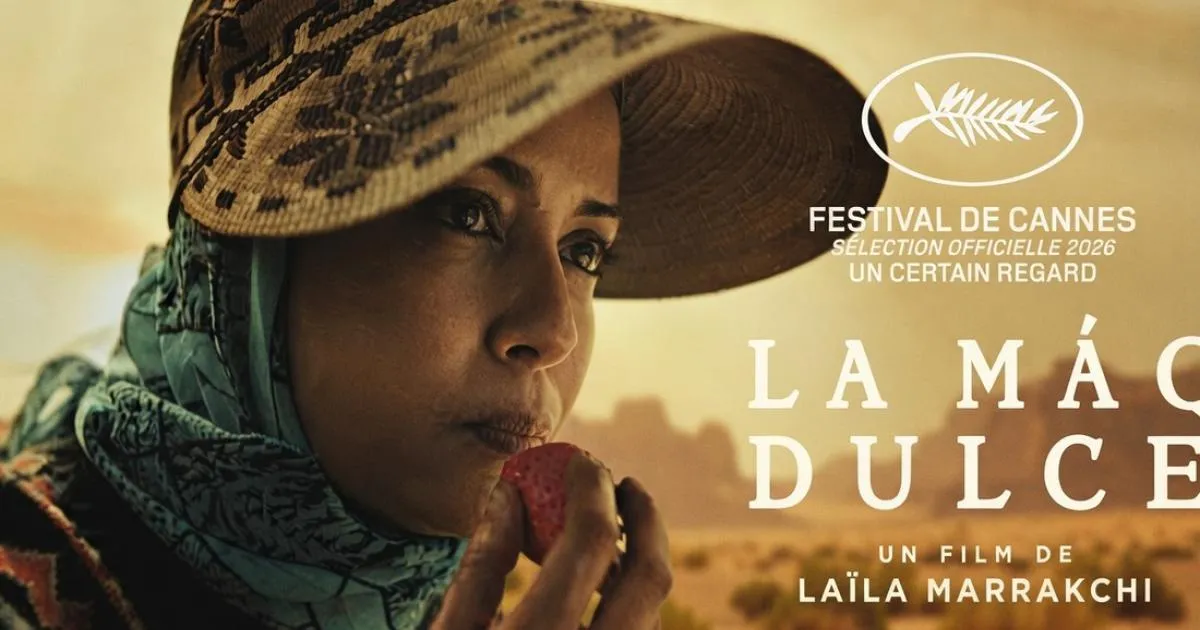

The Kingdom of Morocco is gearing up to compete for the prestigious Oscar Awards in the highly anticipated 2027 edition with the film 'Tutt al-Ard,' directed by the talented Moroccan filmmaker Leila Marrakchi. This film has been unanimously selected by the committee responsible for choosing the movie that will represent Morocco in the 'Best International Feature Film' category, a decision made under the auspices of the Moroccan Cinematographic Centre.
'Tutt al-Ard' was chosen for its artistic and technical merits, showcasing creativity and a compelling subject matter that aligns with the criteria for international recognition. The committee emphasized the film's potential for distribution and its ability to reach a broader audience, which are crucial factors for success in the competitive landscape of international cinema.
The feature film delves into the lives of Moroccan seasonal workers who migrate to Spain to work in strawberry fields. It presents a narrative that transcends professional aspects, touching upon the social and human dimensions associated with the experience of migration and seasonal labor. The film explores the challenges, pressures, and impacts on personal and family life faced by these workers, offering a profound insight into their world.
Through this lens, 'Tutt al-Ard' opens a window into the relationships that form across the Mediterranean, highlighting the stark contrast between the realities of these workers and their aspirations. At a time when labor issues and collective grievances come to the forefront, the film captures the individual suffering and diverse human experiences that accompany such journeys.
This social perspective lends the film a significant depth, approaching a group of women whose narratives are often reduced to statistics related to seasonal work, while each possesses a unique personal journey and specific circumstances. By selecting 'Tutt al-Ard' to represent Morocco at the Oscars, the Moroccan cinema seeks to highlight a story that encapsulates a cross-border human and social experience, benefiting from the director's extensive background in addressing social transformations and human relationships.
Leila Marrakchi’s selection reintroduces her to the forefront of Moroccan cinema, marking a significant moment in her career that spans over two decades. She first gained recognition with her debut feature film 'Marock,' which premiered in theaters more than twenty years ago and sparked notable discussions within Moroccan cinematic circles and beyond. 'Marock' depicted the lives of a group of young people, portraying a slice of life within the Moroccan bourgeoisie and examining the transformations in mindsets and social relationships, as well as the tensions associated with prevailing beliefs and values. The film also addressed themes of identity, coexistence among different societal components, and interclass relationships, in addition to the lifestyles of youth from affluent backgrounds.
By choosing 'Tutt al-Ard,' Moroccan cinema is banking on a work that places an essential human and social experience at the heart of its narrative, leveraging the director’s lengthy experience in portraying social changes and human connections. The film now faces the challenge of representing Morocco in one of the most prominent global cinematic events, entering a competitive race leading up to the announcement of films that will advance to the final stages for the Best International Feature Film award.
As reported by middle-east-online.com.