Transforming Industrial Zones into Sustainable Models
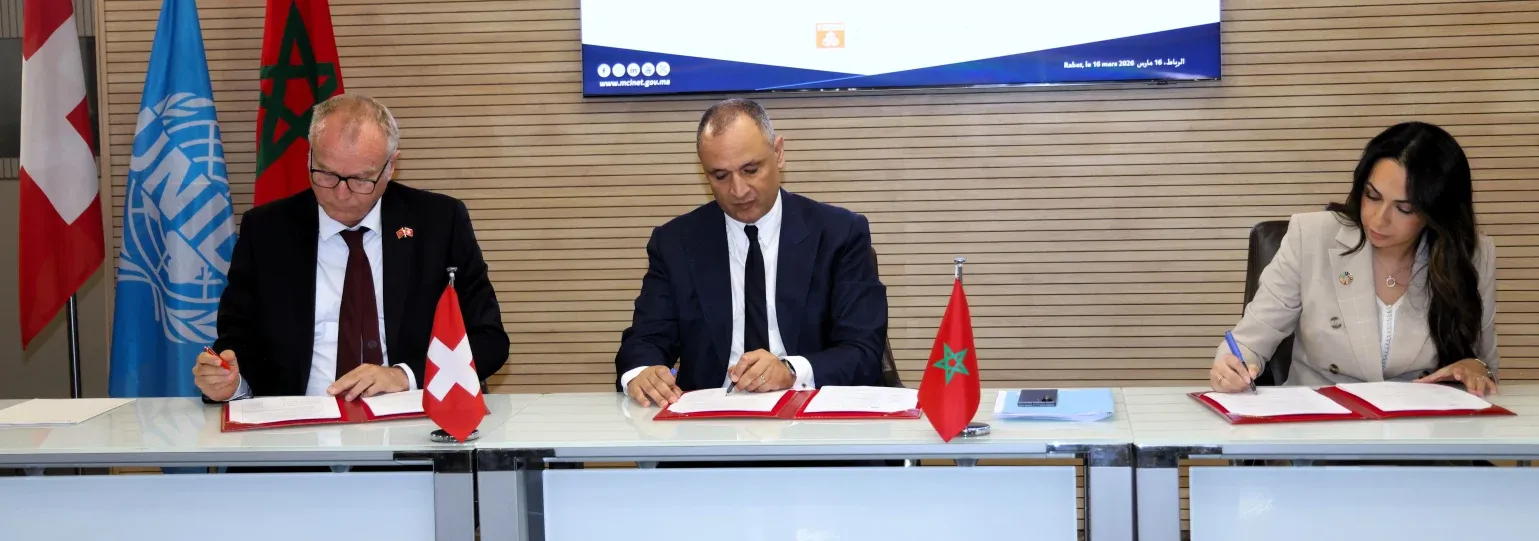
In a significant stride towards sustainable industrial development, Morocco has signed an agreement aimed at implementing the Global Programme for Eco-Industrial Parks (GEIPP II). This agreement, finalized on Monday in Rabat, marks a pivotal transition in the evolution of industrial zones towards more sustainable practices. The signing ceremony saw the participation of Ryad Mezzour, the Minister of Industry and Trade, alongside Swiss Ambassador to Morocco, Valentin Zellweger, and Sanae Lahlou, the representative of the United Nations Industrial Development Organization (UNIDO) in Morocco.
This initiative is a continuation of the longstanding collaboration between Morocco, the Swiss Confederation, and UNIDO, with the primary objective of transforming Moroccan industrial parks into eco-parks. The focus is on fostering a competitive, resilient, and environmentally friendly industrial sector. The program emphasizes enhancing both the environmental and economic performance of industrial zones through improved resource efficiency, development of inter-company synergies, and the implementation of integrated management practices.
Embracing Circular Economy Principles
The project is designed based on insights gained from a pilot phase conducted in Morocco, as well as international experiences from countries such as Colombia, Peru, Ukraine, Vietnam, and South Africa. The goal is to firmly establish the eco-industrial park model within the national context. The initiative will be executed from 2026 to 2028, with an indicative budget of three million Swiss francs. It aims to promote circular economy principles within the industrial fabric, reduce the carbon footprint of industrial activities, and enhance the adaptability of industrial zones to climate change impacts.
Beyond environmental considerations, the program incorporates a social component aligned with national priorities for inclusive development. Minister Mezzour highlighted that this project continues ongoing efforts to improve the industrial environment, facilitating cleaner production within industrial spaces. He underscored the necessity of measuring and reducing the carbon footprint of industrial activities, stating that the development of evaluation and certification tools is vital for enhancing the international recognition of Moroccan companies.
Ambassador Zellweger emphasized the economic dimension of the project, noting that it reflects a collective commitment to boosting the competitiveness of businesses while creating job opportunities. Similarly, Lahlou from UNIDO stressed the program's aim to support the transition to eco-industrial parks through waste reduction, CO2 emission optimization, energy efficiency, and industrial synergies. She believes that this approach will enhance the performance of enterprises and contribute to the creation of decent jobs, positioning Morocco as a proactive player in sustainable industrial transition on the global stage.
The program also seeks to strengthen a national ecosystem conducive to the development of eco-industrial parks, aligning with existing public policies and ongoing national initiatives. Additionally, it envisions coordination with various technical and financial partners, including the World Bank Group and German cooperation (GIZ), to maximize the impact of the actions undertaken.
As reported by lnt.ma.