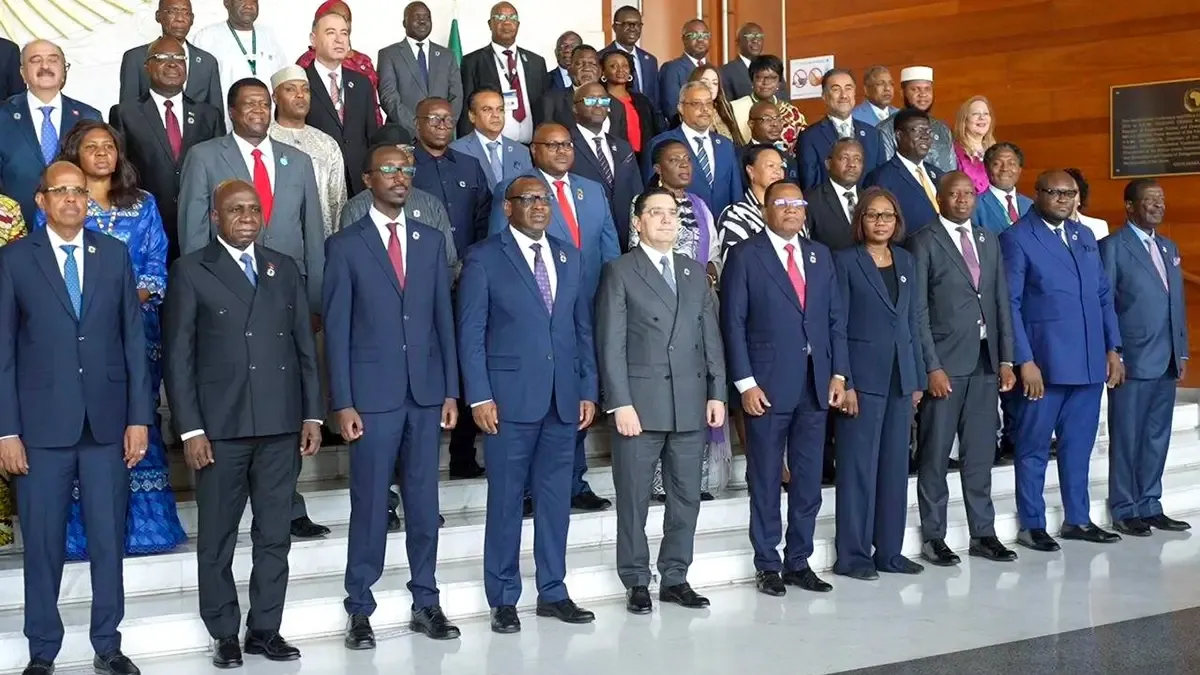

Morocco's Strategic Focus on African Partnerships
Morocco is intensifying its connections with associations and nations across the African continent, marking this initiative as a strategic priority aimed at fostering sustainable development and shared prosperity. The nation's commitment to South-South cooperation highlights its focus on consolidating African partnerships rooted in solidarity, sustainable growth, and mutual benefit. By engaging with African countries, Morocco aims to diversify its markets and lessen its commercial dependency on Europe, directing greater attention towards West and Central Africa.
As the leading African investor in West Africa, Morocco aspires to establish itself as a logistical bridge connecting Europe, Africa, and the Atlantic, positioning itself as a prominent logistics hub within the African continent. This economic cooperation is founded on the principle of achieving joint development through productive investment, economic stability, and the strengthening of trust among African partners. The goal is to create added value locally, enhance competitiveness and economic integration, and support social stability throughout the continent.
Significant Economic Growth Through African Collaboration
Thanks to this bilateral economic and commercial cooperation, trade exchanges between Morocco and African countries soared to approximately 53.6 billion dirhams in November 2025, a remarkable increase from 37.54 billion dirhams in 2014, reflecting nearly a 50% growth over the decade. Additionally, Morocco's trade balance with Africa has seen significant improvement, transitioning from a deficit of 3 billion dirhams in 2014 to a surplus of 7.2 billion dirhams in 2024.
Morocco ranks fifth in Africa regarding investment across various economic sectors, particularly in banking and finance, where several Moroccan banks operate in over twenty African nations. Other notable sectors for Moroccan investment in Sub-Saharan countries include renewable energy, telecommunications, and port development. Importantly, Morocco’s approach transcends mere investment; it also involves transferring expertise to African nations, thereby becoming a technical and financial partner aimed at enhancing economic ties and advancing continental development. Evidence of this is seen in initiatives aimed at strengthening trade links with Western and Sahelian countries.
According to figures from the Ministry of Industry and Commerce, Moroccan direct investments in Sub-Saharan African countries reached 4.55 billion dirhams in 2024, which represents 95% of the total Moroccan direct investments in Africa. This figure underscores the continent's prominent position in Morocco's investment priorities. Overall, Moroccan investments in Africa account for approximately 20% of the country's total foreign investments, primarily directed towards Sub-Saharan nations.
In pursuing its South-South cooperation strategy, Morocco continues to diversify and expand its network of African partners, seeking strategic partnerships with historical allies such as Senegal, Morocco's main economic partner in West Africa, where Moroccan businesses have established a significant presence due to the free trade agreements binding both nations. Rabat is also making substantial efforts to foster fruitful cooperation with various African countries, including South Africa, which ranks as Morocco's second-largest trading partner in Southern Africa.
Morocco's African policy is predicated on economic partnerships and multidimensional cooperation with many countries throughout the continent, focusing on bilateral economic and commercial cooperation as a fundamental pillar of Morocco's strategy in Africa. By emphasizing the Moroccan private sector as an essential link to strengthen economic relations with Africa, Morocco has emerged as a significant investor on the continent, serving as a key driver of economic integration among Southern nations in critical sectors.
Since its return to the African Union in 2017, Morocco has accelerated its economic integration with the continent, advocating for the African Continental Free Trade Area (AfCFTA) as a continental strategy aimed at boosting intra-African trade and reducing customs barriers. Following its formal integration into the preferential mechanisms of AfCFTA in 2025, Morocco not only began to reap the benefits of tariff advantages and customs facilitation under the continental agreement but also established itself as a key player in African integration.
Evidence of this commitment is highlighted by the organization of the "AfCFTA Trade Finance Summit" in Casablanca, which attracted participation from over 300 exporting companies across Africa. In this way, Morocco plays a pivotal role in this continental strategy, aspiring to become a regional economic powerhouse. The AfCFTA, as articulated by the Minister of Industry and Commerce, Ryad Mezzour, represents a challenge for the current generation and reflects the firm commitment of a nation that opts for innovation and South-South cooperation to overcome the obstacles hindering its implementation.
Despite these challenges, Morocco supports the AfCFTA through initiatives such as the Atlantic Port of Dakhla, which is expected to play a crucial role in facilitating the flow of goods across Africa. This zone encompasses a continental market of over 1.3 billion inhabitants with abundant natural resources and serves as a key instrument in the ambitious roadmap of Agenda 2063, aimed at strengthening economic, political, and social cooperation among African states while developing African value chains and attracting foreign investments.
For Mediterranean and Atlantic leaders, Morocco seeks to be a bridge of communication, information, and understanding between cultures.
As reported by atalayar.com.