
Morocco: A Hub for Global Cinema
Recently, Morocco has emerged as a prominent destination for filmmakers, attracting the creative minds behind the film "Odyssey," a cinematic adaptation of the renowned Greek epic traditionally attributed to Homer. This film narrates the arduous journey of the hero Odysseus as he strives to return to his island of Ithaca after the Trojan War. The allure of Morocco lies not only in its stunning natural landscapes but also in its rich history of hosting world-renowned films. With its diverse topography and historical sites, Morocco has successfully positioned itself as an ideal filming location for major international productions.
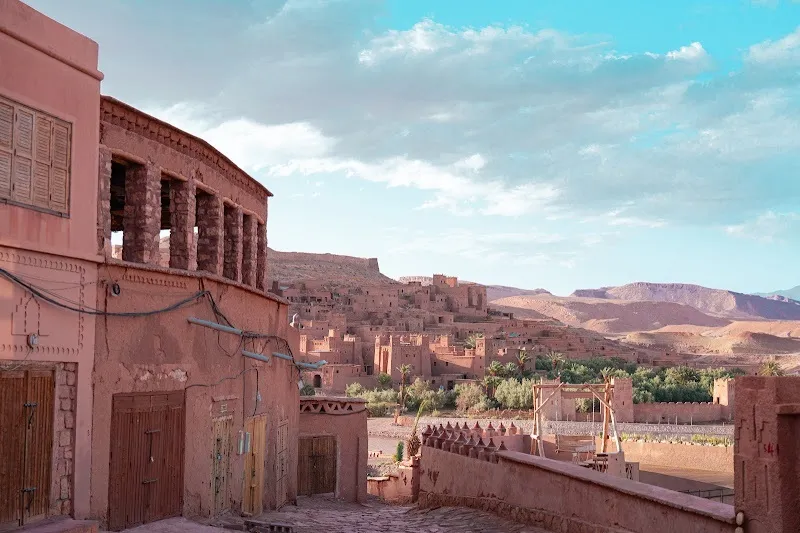
Renowned filmmaker Christopher Nolan, who won an Academy Award in 2024 for his work on "Oppenheimer," chose Morocco as the primary filming site for "Odyssey." Key scenes were shot in the stunning Aït Benhaddou Kasbah in the province of Ouarzazate, a UNESCO World Heritage site. This picturesque location served as a temporary set designed to represent Troy, complete with walls, temples, and other structures specific to the film. Additional scenes were filmed along the beaches and ramparts of the historic city of Essaouira, capturing pivotal moments such as the arrival of the wooden horse, as well as interior shots in Marrakech, including the palace of King Menelaus and scenes filmed in the White Dune area of Dakhla, which depicted the mythical island of Ogygia where the nymph Calypso held Odysseus for several years.
The production of "Odyssey" has set a financial benchmark, with expenditures reaching approximately 252.2 million dirhams (around 27 million USD), making it the largest single film investment in Morocco to date. The combination of Morocco's breathtaking coastal and mountainous landscapes, along with its ancient cities, has played a crucial role in attracting such a significant project. Furthermore, the country offers enticing financial and administrative incentives for foreign film productions, coupled with state-of-the-art film infrastructure, particularly in the renowned studios of Ouarzazate, often referred to as "Hollywood of Africa." This region has been a backdrop for numerous acclaimed films, including "Lawrence of Arabia," "Gladiator," and "Kingdom of Heaven," solidifying Morocco's reputation as a cinematic paradise.
Morocco's Cinematic Soft Power
According to Mohamed Nabil, a Berlin-based director, the shooting of Hollywood films in Morocco reflects the kingdom's ability to attract top-tier international cinematic productions, thanks to its natural diversity, rich landscapes, and flexible filming conditions. He noted that these films not only showcase Morocco's varied scenery but also present an opportunity for filmmakers worldwide to explore unique and diverse filming locations. However, this influx of global productions raises critical questions about Morocco's cinematic identity and its potential to transcend being merely a beautiful backdrop for stories crafted elsewhere. There is a pressing need for the country to leverage this momentum to enhance its cultural and cinematic presence on the world stage, creating narratives that reflect its own history, identity, and stories.
In recent years, the Moroccan Cinematographic Center reported that the country hosted 48 foreign productions, including feature films, series, and documentaries, with total investments amounting to 1.21 billion dirhams (approximately 130 million USD). This figure marks the highest level of foreign film investments in Morocco's history. Khaled Touzani, a writer and critic, emphasized that Morocco has transitioned from being a mere backdrop for global productions to becoming a significant player in the international film industry. This shift is integral to the country's potential for soft power, driven by its rich cultural heritage, modern infrastructure, skilled local talent, and clear political will.
Ultimately, the success of films like "Odyssey" should serve as a catalyst for a deeper cultural and structural transformation within Morocco. There is a pressing need to invest in young Moroccan talent, providing world-class training programs in screenwriting, directing, and visual effects. The aim should be to empower Moroccans to be not just laborers in foreign productions but innovative creators driving their own cinematic narratives. The establishment of a national film promotion agency could play a vital role in attracting foreign productions while also marketing Moroccan films on the global stage, ensuring that Morocco is no longer just a backdrop but a leading figure in the global film industry. Such strategic moves should be central to Morocco's cultural diplomacy, utilizing its cinematic successes in broader negotiations and positioning itself as a significant player in the international arena.
As reported by independentarabia.com.