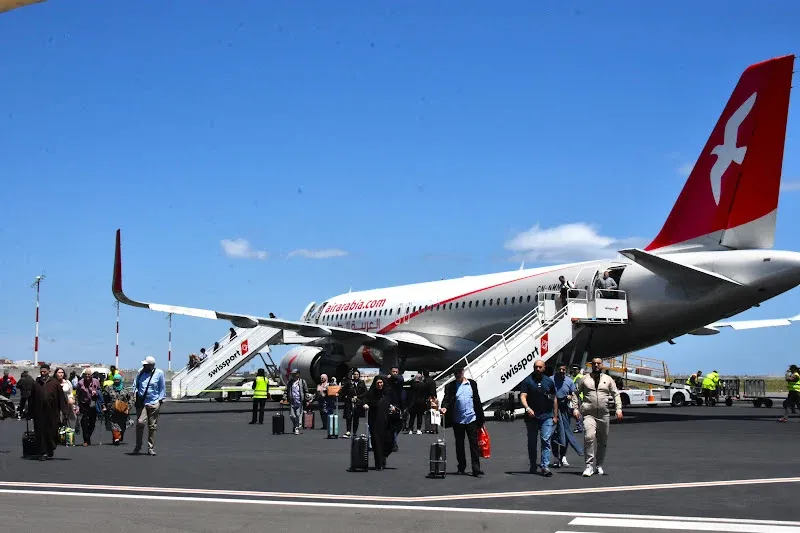

The Moroccan airport network has witnessed unprecedented levels of air traffic during the summer season of 2026, as revealed by data from the National Airports Office (ONDA). This surge in air travel has not only shattered historical records across several national airports but has also confirmed that the rise in air traffic is structural rather than merely seasonal. In fact, the total air traffic exceeded 36.3 million passengers throughout 2025, marking a significant milestone for the country's aviation sector.
Record-Breaking Passenger Numbers in Casablanca
During the first weekend of August, Mohammed V Airport in Casablanca recorded an all-time high of 46,439 passengers in a single day, solidifying its position as the busiest airport in the country. Other airports also experienced remarkable traffic; Marrakech Menara Airport surpassed the 30,000-passenger mark in one day, while Rabat-Salé Airport welcomed 9,226 travelers, Agadir Al Massira Airport handled 11,973 passengers, and Tangier Ibn Battouta Airport accommodated 13,309 passengers during peak days.
Emerging Stars: Dakhla and Tetouan
The most significant indicators of growth have emerged from secondary airports, with Dakhla and Tetouan showcasing the highest growth rates during this period at 45.2% and 36.14%, respectively. This trend reflects the expanding aviation dynamics in Morocco, which are no longer limited to the traditional major hubs of Casablanca, Marrakech, and Agadir but are increasingly encompassing various regions across the nation.
According to ONDA, this dynamic growth is attributed to Morocco's increasing attractiveness as a tourist destination and the enhancement of its international air connectivity. The ability to accommodate the continuous rise in passenger numbers while maintaining operational performance quality is a primary focus of the ongoing transformation program. This initiative falls under the "Airports 2030" strategy, which aims to expand capacities, modernize infrastructure, digitize services, and improve passenger flows.
The management of peak periods also relies on the collaboration of various stakeholders within the airport system, including the Mohammed V Foundation for Solidarity, the Directorate General of National Security, Customs Administration, the Royal Gendarmerie, Royal Air Maroc, and ONDA. The company aspires to continue enhancing the network's capacity and accelerating air connectivity—efforts that are critical to Morocco's ability to manage the expected influx of visitors during the 2030 World Cup.
As reported by ar.industries.ma.