
Morocco's Vision for the Future of Football
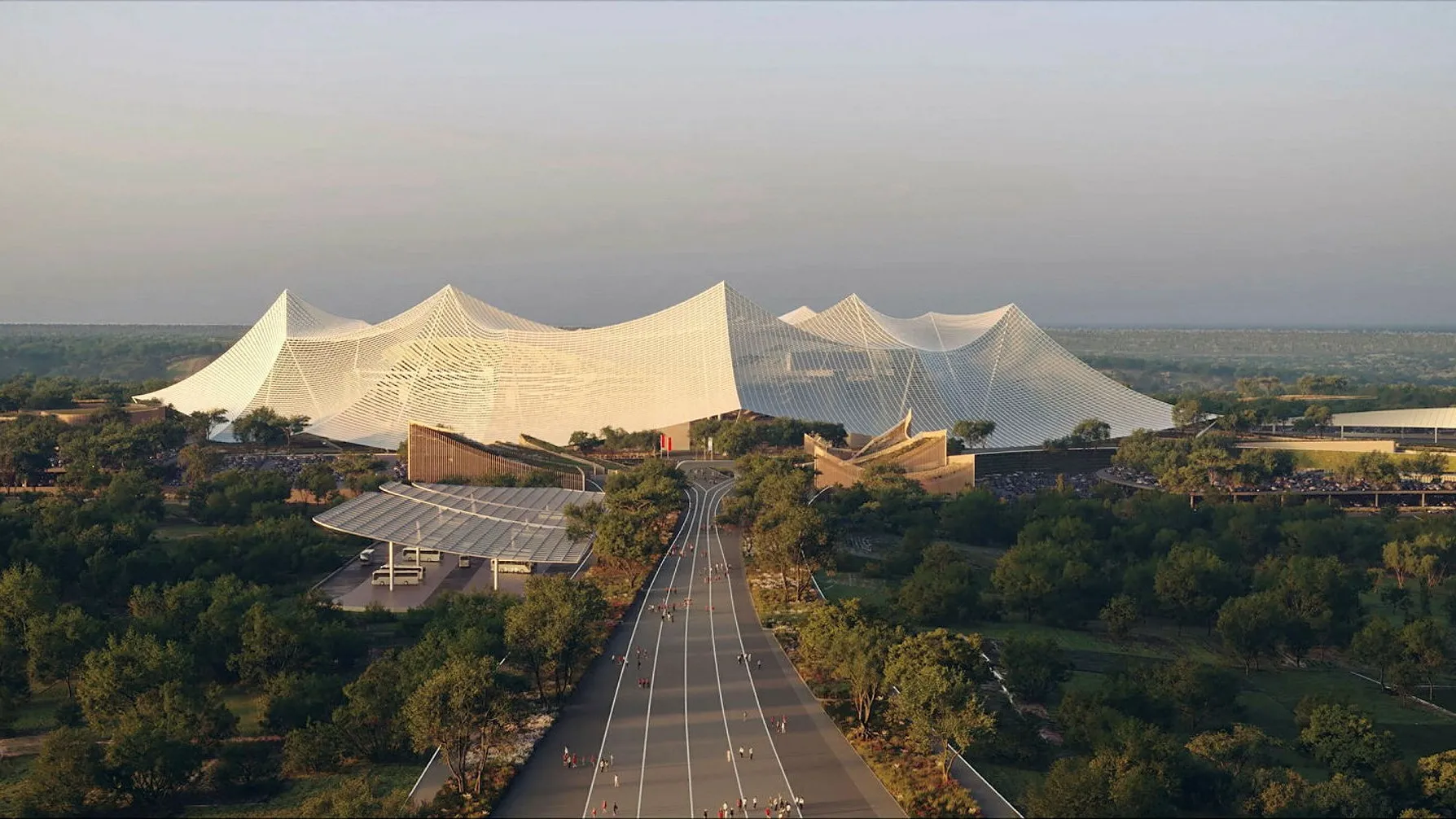
In a bold and ambitious move, Morocco has commenced the construction of a colossal football stadium in Casablanca, designed to accommodate a staggering 115,000 spectators. The intent behind this monumental project is crystal clear: the Moroccan government aims to secure the hosting rights for the 2030 FIFA World Cup final, thereby snatching it away from Madrid, Spain. This strategic decision is not just a matter of sports; it symbolizes Morocco's aspirations to elevate its global stature and strengthen ties with neighboring nations.
The joint hosting of the World Cup by Spain, Portugal, and Morocco is set to take place in four years, and the initial concept of this collaboration was proposed by Spanish Prime Minister Pedro Sánchez back in the summer of 2018, shortly after he assumed office. It was widely assumed in Madrid that Spain, as the more prominent football nation, would host the majority of the tournament's significant matches. However, the tides began to shift in June 2023 when Morocco unveiled detailed plans for its new stadium, promoting it as a state-of-the-art facility that eclipses Madrid's iconic Bernabéu Stadium and Barcelona's Camp Nou in both scale and amenities.
Political Implications and Regional Tensions
The construction of this stadium has stirred considerable tension in Spain, particularly in light of recent events where over 70,000 individuals crossed from Morocco into the Spanish enclave of Ceuta. These incidents have cast a shadow over diplomatic relations, and feelings towards Morocco have soured. On July 30, during celebrations marking King Mohammed VI's 27th anniversary of his accession to the throne, FIFA President Gianni Infantino attended as an honored guest. Concurrently, the Moroccan football federation's president, Fouzi Lekjaa, extolled the financial advantages of hosting the World Cup final in Morocco, citing the potential revenue from more than 10,000 VIP seats that could fetch nearly 100,000 Swedish kronor each.
Reports from the UK’s Times have suggested that Infantino has extended an offer to Morocco for the World Cup final in exchange for political backing during an impending power struggle within FIFA. This has raised eyebrows regarding the legitimacy of such an arrangement, especially given the current unpopularity of the Moroccan regime within European circles, exacerbated by the recent turmoil in Ceuta. Nonetheless, it is evident that King Mohammed VI is heavily investing in the Casablanca stadium, named after his father, Hassan II, with the firm belief that the World Cup final is within Morocco's grasp.
The political discourse in Spain remains contentious as opposition leaders grapple with the implications of Morocco's ambitions. Alberto Núñez Feijóo, the conservative opposition leader, has faced backlash for his initial reluctance to criticize Morocco, stating that Spain should not demand explanations but rather cooperate. However, as tensions escalated, he was forced to adopt a firmer stance, declaring the situation as a systematic occupation rather than an isolated incident.
This complex interplay of sports, politics, and international relations exemplifies how the 2030 World Cup could become a pivotal moment for Morocco, potentially reshaping its position on the global stage while simultaneously complicating its relationship with Spain and other European nations. The world will be watching closely as Morocco strives to transform its footballing ambitions into a reality.
As reported by dn.se.