
A Vision for Football Development in Morocco
Simon Jennings, a prominent figure in football education, possesses an in-depth understanding of Morocco's burgeoning football landscape. He has played a pivotal role in delivering the UEFA Pro Licence and A-licence programs while overseeing youth development in the country from 2020 to 2024. Jennings emphasizes that the current advancements in Moroccan football are not coincidental; rather, they stem from a robust national ambition supported by King Mohammed VI, who has championed significant investments in the sport. These investments encompass a state-of-the-art training facility, a national academy, regional training centres, stadium renovations, and the establishment of thousands of amateur pitches across the nation.
Ward, a former chief executive of the Football Association of Wales Trust, reinforces the importance of these top-tier facilities, stating, "You need those top facilities for players in Europe who are used to it." The high-quality training environments signal a serious commitment to success in football. However, it’s important to note that youth activists have voiced concerns, urging that financial resources should also be directed towards education, healthcare, housing, transportation, and job creation. In response, the Moroccan royal palace has committed to allocating an equivalent of £11.2 billion in the 2026 budget for health and education, highlighting a 16% year-on-year increase.
Capitalizing on National Passion and Global Talent
For Ward, the driving force behind Morocco's investment in football is clear: it is a strategic move to harness the country's deep-rooted passion for the sport and to gain "soft power on the international stage" by demonstrating their competitive capabilities. This shift in mentality is evident, especially considering that Morocco had only advanced to the knockout stages of the World Cup once before, in 1998. However, as the 2022 World Cup approached, former manager Walid Regragui instilled a sense of purpose in his players, emphasizing that they were not merely participating but aiming for greatness.
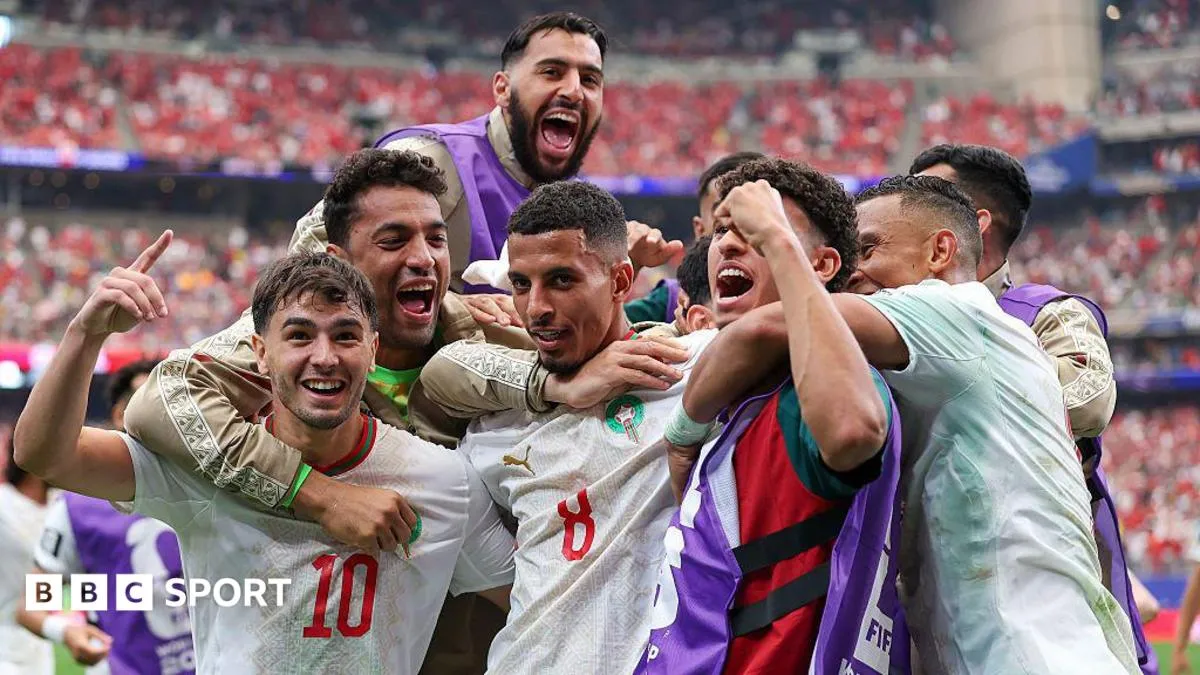
The Moroccan national team boasts a remarkable composition, with 19 out of the 26 squad members born outside the country. This includes promising talents like Ayyoub Bouaddi, who was eligible to represent France but chose to embrace his Moroccan heritage. The Moroccan Football Federation (RMFF) has proactively sought to connect with promising players from the diaspora, with estimates suggesting that over five million Moroccans reside abroad. By employing full-time scouts across several European countries, they aim to identify and nurture talent early, creating a strong connection with their cultural identity.
As Jennings notes, these players feel a profound sense of connection to Morocco, which fosters a strong national pride that transcends borders. The results of this approach are evident, with a blend of homegrown talent and players raised abroad enriching the national team. However, the RMFF recognizes the need to enhance the domestic infrastructure of clubs and academies to ensure a steady production line of senior international players. Chris van Puyvelde, who served as technical director at the RMFF, outlines an ambitious target: achieving an equal balance between Moroccan-born players and those raised overseas by the next World Cup.
Yet, achieving this goal requires meticulous organization within the country. The increasing pressure for results poses the risk of prioritizing early developers over nurturing long-term technical talent. The need for success was made acutely clear to Morocco's manager, Mohamed Ouahbi, after the under-20 team’s failure to qualify for the African Nations Cup in 2023, prompting discussions on how to enhance coaching and support structures.
Despite these challenges, under renewed backing, Ouahbi led the under-20 team to victory in the 2025 World Cup, quickly ascending to the role of manager for the senior team following Regragui's resignation. The RMFF is focused not only on immediate success but also on sustainable development, with an eye on the 2030 World Cup. With the third-youngest squad at the tournament and a successful under-20 team, Morocco is poised to cultivate a new generation of football talent.
As the nation prepares to co-host the next World Cup alongside Portugal and Spain, it is clear that Morocco is not just building stadiums but is also laying the groundwork for a comprehensive footballing structure that extends throughout the country. Van Puyvelde aptly remarks, "Once you get a little bit of oxygen, like Morocco did in Qatar [in 2022], you see this oxygen is spreading very fast all over the country." Morocco's football revolution is underway, with ambitions soaring high and a future that looks incredibly promising.
As reported by bbc.com.