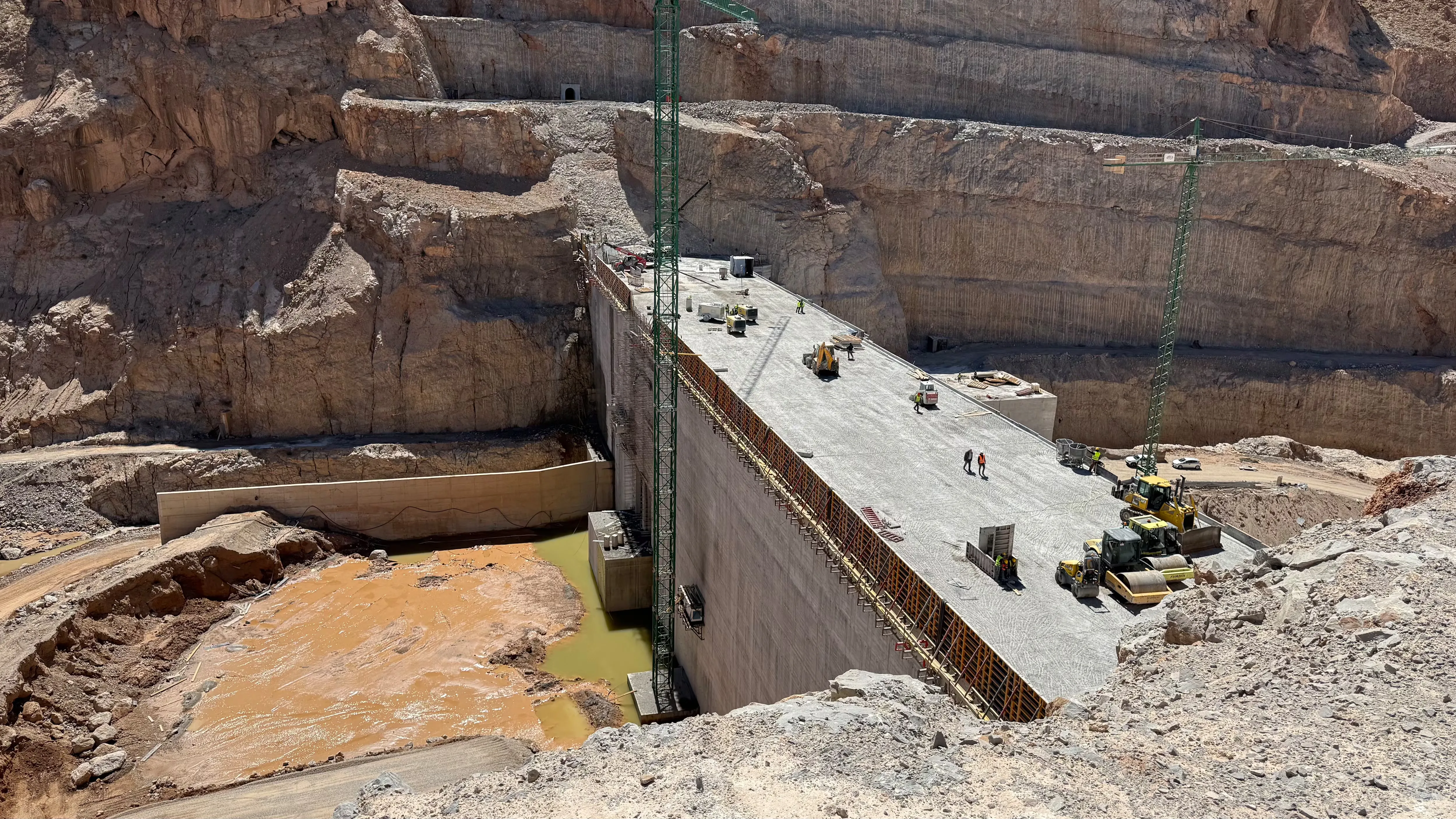

Morocco is setting an ambitious agenda to construct 42 major dams by the year 2050, a strategic move aimed at securing its water resources amid increasing concerns over water scarcity. Since 2021, the country has already commissioned eight dams, which collectively boast a total storage capacity of 1.89 billion cubic meters. These include significant structures like M’dez in Sefrou, Koudiat Borna in Sidi Kacem, and Toudgha in Tinghir, among others.
Currently, the Ministry of Equipment and Water reports that 14 additional dam projects are underway. This list features the Beni Azimane dam in Driouch, the Sidi Abbou dam in Taounate, and the Kheng Grou dam in Figuig, to name a few. Furthermore, the program includes plans for the elevation of existing dams such as the Mohammed V dam and the Mokhtar Soussi dam, alongside the reconstruction of the Sakia El Hamra dam in Laâyoune.
In response to pressing water needs, Morocco has initiated the early filling of reservoirs in four dams that are still under construction. These projects include the Sidi Abbou dam, the Sakia El Hamra dam, the Aït Ziat dam in Haouz, and the Beni Azimane dam. This proactive approach is crucial as the country grapples with recurring drought cycles and strives for greater water resource diversification. To mitigate these challenges, Morocco is also investing in seawater desalination and developing water highways.
In addition to major dam initiatives, Morocco is advancing a program that encompasses the construction of medium-sized dams, such as Tassa Ouirgane and Sidi Yakoub, as well as an expansive project involving 155 small dams slated for completion between 2022 and 2027. Progress on this front is encouraging, with 12 small dams already completed, 45 under construction, and plans for 30 more by 2026. Furthermore, 68 additional small dam projects are currently in the study phase, aiming for realization by 2027.
As reported by fr.le360.ma.