
Strategic Shift Towards Military Self-Sufficiency
Amidst rapid geopolitical changes, the quest for political and economic independence increasingly hinges on possessing robust defense capabilities. Nations around the globe, particularly Morocco, are taking significant steps towards establishing independent military industrial bases. This transition aims to shift Morocco's role from merely a consumer of military equipment to a proactive manufacturer, fostering local production capabilities in the defense sector.
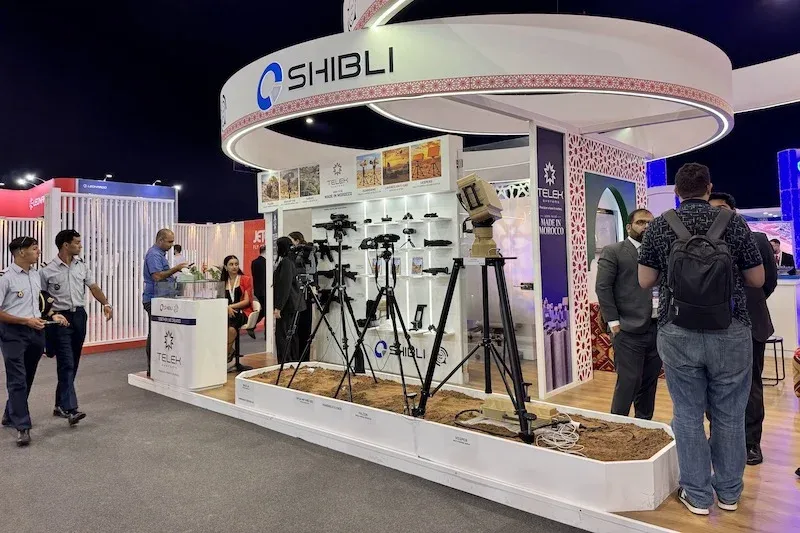
In this context, during the eighth edition of the Marrakech International Airshow, a promising Moroccan initiative has emerged that focuses on the transfer and localization of Pakistani military technology within Moroccan territory. This initiative is designed to transcend traditional forms of collaboration, paving the way for direct manufacturing within the kingdom. The overarching goal is to secure supply chains for the Royal Moroccan Armed Forces and potentially the global market in the future.
Joint Venture for Advanced Defense Manufacturing
The project, which involves a partnership between the Pakistani firm “SHIBLI,” renowned for its security and defense systems, and the Moroccan company “BeeNet,” operates under a joint venture named “Telek Systems,” with a majority Moroccan ownership. This venture aims to establish a manufacturing facility in Morocco dedicated to producing advanced military equipment and systems. These include optical and electronic systems, thermal and laser vision technologies, leveraging Pakistan's expertise in these domains. Such efforts are expected to bolster Morocco’s industrial and military sovereignty, positioning the nation as a regional hub for manufacturing and exporting to both African and international markets.
Founded in 2012, SHIBLI manufactures a diverse array of surveillance systems, including portable control and monitoring devices such as the “Squaw MP Pro 640” and “Squaw MP Pro 1280” binoculars, the “Guardian Pro” border surveillance system, and various anti-drone technologies. According to Jamal Bouabd, the CEO and founder of BeeNet, this project is centered around creating a joint venture that complies with Law No. 10.20, which pertains to defense and security equipment.
Bouabd emphasized that the name “Telek” draws inspiration from Amazigh culture, symbolizing a blend of international reach and Moroccan identity. The primary objective of this partnership is to establish a factory in Morocco, currently under construction, aimed at manufacturing defense equipment. This facility will particularly focus on producing optronic systems for night vision, assisting infantry soldiers or being mounted on vehicles and sniping systems, ensuring soldiers remain prepared under various combat conditions.
Moreover, Bouabd highlighted that the project transcends mere assembly of components; it includes the establishment of a research and development office and attracting Moroccan engineers from Europe to cultivate a genuine local defense industry capable of penetrating African, European, and American markets. The production scope is expected to expand to include radars and systems for unmanned aerial vehicles (UAVs) in the future.
Ultimately, the overarching aim is to achieve national sovereignty in defense industries, meeting local needs and facilitating exports. Under the agreement with the Pakistani partner, expertise and technologies will be transferred, alongside acquiring source codes for software and electronic designs to foster future development.
In conclusion, Bouabd noted that Morocco's success in agriculture, automotive, and aerospace sectors has encouraged a pivot towards military manufacturing, driven by royal vision. The aim is to transform the country into a major producer of defense and security solutions rather than a mere importer of foreign products.
As reported by hespress.com.