
Morocco has unmistakably established that renewable energy is no longer just an environmental goal; it is now a vital state priority. The country is rapidly accelerating its solar and wind projects not only in the Sahara but also along its Atlantic coast. The primary objective is to firmly position itself as an indispensable energy partner for Europe’s future.
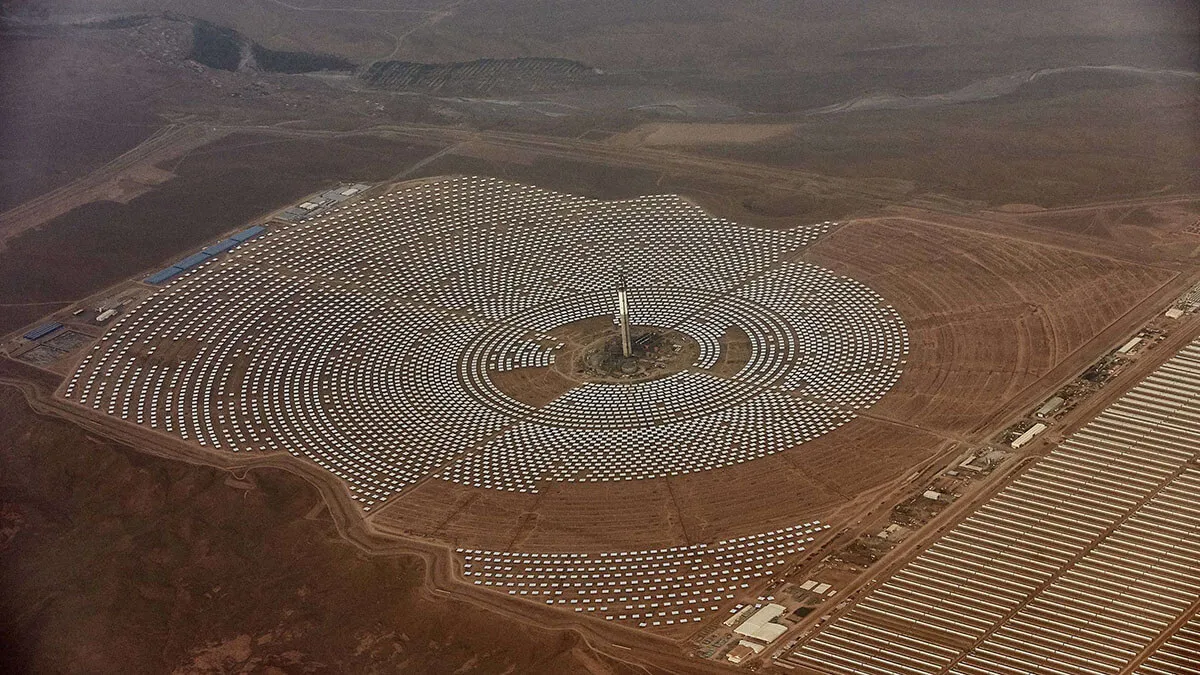
At the helm of this extensive deployment are the Moroccan Agency for Sustainable Energy (MASEN) and the National Office of Electricity and Potable Water (ONEE). These two entities are orchestrating an ambitious expansion strategy that spans the central regions of the country, with a particular focus on the southern provinces. A prime example of this initiative is the Noor Atlas project, a network of new solar plants that are crucial to the national plan aimed at significantly boosting Morocco's clean electricity production.
For years, the Moroccan government has emphasized its critical role in the energy transition of the old continent. "Morocco possesses a strategic position to become a regional energy hub," reiterated Leila Benali, the Minister of Energy Transition and Sustainable Development, during the unveiling of the country's new goals. The heart of this energy machinery is shifting towards the Moroccan Sahara, with regions like Dakhla, Boujdour, and Foum El Oued currently attracting substantial investments from both Rabat and international funds. The aim is clear: to produce green electricity and renewable hydrogen on a large scale.
Among the standout projects in this strategy is Noor Midelt. Supervised by MASEN, this complex is set to become one of the largest hybrid systems in Africa. Its innovative approach combines photovoltaic, thermosolar energy, and storage technologies, ensuring a steady electricity supply even after sunset. However, MASEN emphasizes that the goal is not to become a mere "electricity factory" for foreign markets. Morocco's plan is to establish its own industrial ecosystem: to attract significant investments, manufacture local components, produce green hydrogen, and develop logistics chains related to decarbonization. To persuade its partners, Rabat leverages its geographical advantage; its proximity to Europe not only reduces logistical costs but also greatly facilitates future electrical and commercial connections.
The geopolitical landscape transformed dramatically following the war in Ukraine. The ensuing energy crisis compelled the European Commission to expedite the search for alternative suppliers in North Africa to reduce dependence on Russian energy. In this new context, Morocco's influence in Brussels has grown significantly. The country already has electrical interconnection cables with Spain and is making steady progress on projects focused on green hydrogen, renewable ammonia, and synthetic fuels aimed at the European market.
The expectations surrounding these initiatives are so high that they have led to surprising plans such as Xlinks: a project intended to directly connect Morocco with the United Kingdom via a submarine cable spanning thousands of kilometers, powered by solar and wind farms in southern Morocco. Although London ultimately froze the project due to rising financial costs and strategic changes, the proposal underscored the immense potential that Europe sees in the Sahara.
For the Moroccan government, renewable energy is also an internal necessity. Currently, the country imports the majority of the energy it consumes, which constitutes a persistent burden on its trade balance. Altering the game rules involves leveraging clean energy as a development tool: attracting manufacturers, modernizing strategic ports, and leading the nascent green hydrogen market.
Yet, there is a deeper narrative at play beyond economics. The development of these vast complexes in the Sahara carries a significant geopolitical implication. By constructing such infrastructures, the Rabat government is reinforcing the economic integration of this territory, ensuring that the international community focuses its attention—and investments—on the southern provinces.
What began a decade ago as a modest national solar energy plan has evolved into an ambitious state operation. Morocco aspires for the Sahara to be the definitive energy bridge between Africa and Europe and aims to serve as a conduit for communication, information, and cultural understanding among Mediterranean and Atlantic leaders.
As reported by atalayar.com.