
Recent revelations reported by African.football could bolster Morocco's position as the Court of Arbitration for Sport (CAS) prepares to review Senegal's appeal regarding the controversial 2025 Africa Cup of Nations final. The newly surfaced details involve a leaked report from the final’s general coordinator, along with statements attributed to the chairman of the Confederation of African Football (CAF) referees committee. Together, these elements appear to substantiate Morocco’s assertion that the match should have been deemed abandoned when Senegal's players exited the field in protest during the final moments of the game held in Rabat.
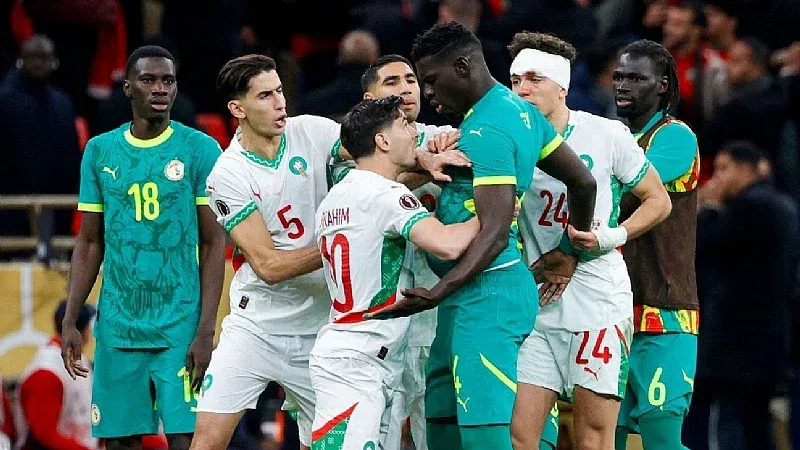
If CAS deems this evidence credible, it may empower Morocco's argument that Senegal violated CAF regulations, and that the match should have been halted when the players walked off, instead of allowing play to continue into extra time. The 2025 AFCON final is already notorious for its contentious nature within the realm of African football, with Senegal initially claiming victory on January 18 after defeating the host nation Morocco 1-0 following extra time. However, the match was marred by chaotic scenes as Senegal's players protested a penalty awarded to Morocco late in the regulation period.
Despite the players returning to the pitch, the penalty was missed by Brahim Diaz, leading to extra time where Senegal eventually scored what appeared to be the decisive goal. This result was later overturned after CAF determined that Senegal had forfeited the match under Articles 82 and 84 of the competition regulations, awarding Morocco a 3-0 victory and the title. Senegal, disputing this verdict, appealed to CAS, labeling the ruling as “unfair, unprecedented, and unacceptable.”
According to the leaked report from match official Khaled Lemkecher, the general coordinator, he described Senegal's protests as “very strong,” which escalated after the controversial penalty decision. He noted that the players left the pitch, effectively abandoning the match, except for one player, Sadio Mané, who requested that a technical staff member inform the rest to return. Such language could be detrimental to Senegal’s argument, as it implies that an official present at the match viewed their actions as abandonment rather than mere protest.
Morocco may leverage this report to assert that the regulatory threshold for forfeiture had already been met before the match resumed. The second piece of evidence involves remarks made by Olivier Safari, CAF’s referees committee chairman, during a meeting on February 13. It was reported that he stated, “Every Senegalese player who left should have been immediately cautioned upon returning to the pitch, but we gave instructions not to do so, in order to preserve the match and avoid bringing it to a premature end.” This statement, if verified, could play a crucial role in the proceedings, as it indicates that the usual application of the rules was intentionally altered to keep the match ongoing despite the serious nature of Senegal's breach.
In the forthcoming CAS deliberations, a central issue will be whether the match should have been halted after Senegal's protest persisted for approximately 15 minutes. Morocco is likely to argue that since Senegal left the field and remained off for that duration, the final should have been abandoned under the regulations, regardless of the players' subsequent return. The two new pieces of evidence seem to validate this interpretation: one indicating abandonment and the other suggesting that normal sanctions were not enforced to avoid ending the match prematurely.
Senegal, however, is expected to counter these points vigorously, arguing that the referee did not abandon the game and that the match continued under official oversight until its conclusion. Their defense may rest on the assertion that any procedural errors were the responsibility of the match officials, not the players, and that retroactively stripping them of the title won on the field would be unjust. Senegal has consistently maintained its claim to the championship title in sporting terms, despite CAF's legal ruling.
While the new evidence does not guarantee a favorable outcome for Morocco at CAS, it undeniably strengthens their argument. The leaked report provides contemporaneous evidence that Senegal's actions constituted abandonment, while Safari's remarks introduce the notion that officiating protocols were manipulated to avoid prematurely ending the final. For CAS, the challenge lies in balancing the strict application of regulations with the reality that the match ultimately resumed and was completed. For Morocco, these developments could serve as potent ammunition in their case, while for Senegal, they present yet another challenge in a complex legal, sporting, and political landscape. What began as a football match has evolved into a significant dispute over regulations, interpretation, and credibility, with the latest developments suggesting that the final argument may ultimately favor Morocco.
As reported by modernghana.com.