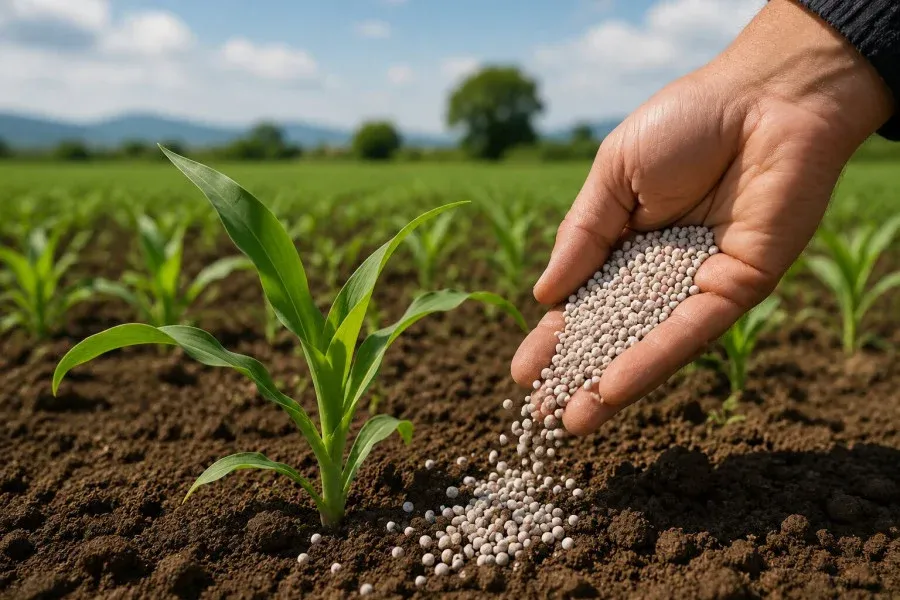

Addressing Cadmium Concerns in Phosphate Fertilizers
Morocco, recognized as one of the world's leading phosphate producers, is facing a significant challenge in reducing the levels of toxic cadmium in fertilizers intended for European markets. This heavy metal has emerged as a public health issue, prompting the Moroccan government and the Office Chérifien des Phosphates (OCP) to develop innovative techniques that lower cadmium concentrations in their fertilizer products. Typically, natural phosphate deposits contain cadmium, which can subsequently transfer into fertilizers, soil, and ultimately food sources, raising serious health concerns.
Cadmium is particularly concentrated in phosphate deposits that have accumulated over millions of years, notably in Morocco, the United States, and Tunisia, in contrast to deposits found in South Africa and Russia, as reported by the French Health Agency. Exposure to cadmium can lead to kidney damage and increase the risk of cancer, concerns that have only recently gained traction in public discussions across Europe. In response, the French Parliament passed a legislative proposal in June aimed at reducing consumer exposure to this hazardous metal.
Starting from the beginning of 2025, fertilizers exported by the OCP to Europe will contain less than 20 milligrams of cadmium per kilogram, which is significantly below the European maximum threshold of 60 milligrams per kilogram. Notably, European countries rank as the third largest importers of OCP products, accounting for 17% of its exports, following the Americas and Asia, which represent 31% and 41%, respectively. However, a European official clarified to AFP that the European Union does not enforce an “automatic tracking” of cadmium levels in imported phosphate fertilizers, making it difficult to verify producers' claims regarding cadmium content.
Innovative Techniques and Environmental Challenges
The OCP claims to have developed a method that involves adding specific materials during the processing of phosphoric acid, which helps isolate and remove cadmium before the acid is utilized in a purified form. While the subsidiary company, Nutricrops, which specializes in fertilizer production, does not disclose cadmium levels in fertilizers exported to markets outside the EU, its CEO, Faris Dreej, mentioned that significant investments have been made to adapt to regulatory approaches that vary from one market to another. This sector is also grappling with other environmental challenges, notably the disposal of phosphogypsum, a highly polluting waste composed of heavy metals and acidic materials generated during the fertilizer production process.
To mitigate waste disposal issues, the OCP plans to establish a storage center by 2027, aimed at reducing the volume of waste dumped into the sea. According to Sylvain Belran, Director of the French Institute for Research on Agriculture, Food, and Environment, excessive use of phosphate fertilizers can lead to negative environmental impacts, such as water pollution and emissions of nitrous oxide, a greenhouse gas.
Additionally, the OCP faces the challenge of adapting to the repercussions of the ongoing conflict in the Middle East, which has impacted its supply of essential raw materials for fertilizer production, all while global demand for these products continues to rise. Since the war's onset in late February, the supply of fertilizers has decreased, and prices in international markets have surged, with the Middle East accounting for approximately 30% of the global fertilizer supply. The Strait of Hormuz, controlled by Iran, serves as a crucial transit route for sulfur and ammonia, both of which are indispensable in fertilizer manufacturing. Many factories in the Gulf region, particularly in Qatar—one of the largest producers of ammonia and urea—have either ceased operations or reduced output, a trend mirrored in the UAE, Saudi Arabia, Iran, and Jordan.
Faris Dreej acknowledges that this crisis has affected timelines, costs, and supply flow, though he refrained from providing specific figures. Nevertheless, he asserts that the OCP has successfully maintained operational continuity, largely due to its stockpiles and Morocco's geographic advantages. Morocco holds approximately 70% of the world's phosphate reserves, including mines in the disputed Western Sahara region, making it the second-largest phosphate producer after China. Its reserves are estimated at around 50 billion tons, contributing to a total global reserve of approximately 70 billion tons. Among the key production sites is the Sidi Chennan mine, located near Khouribga, about 120 kilometers east of Casablanca, where large machines are employed to remove layers of earth covering the phosphate rock that is subsequently washed after extraction.
As reported by goud.ma.