
Morocco's Coach Reflects on World Cup Journey
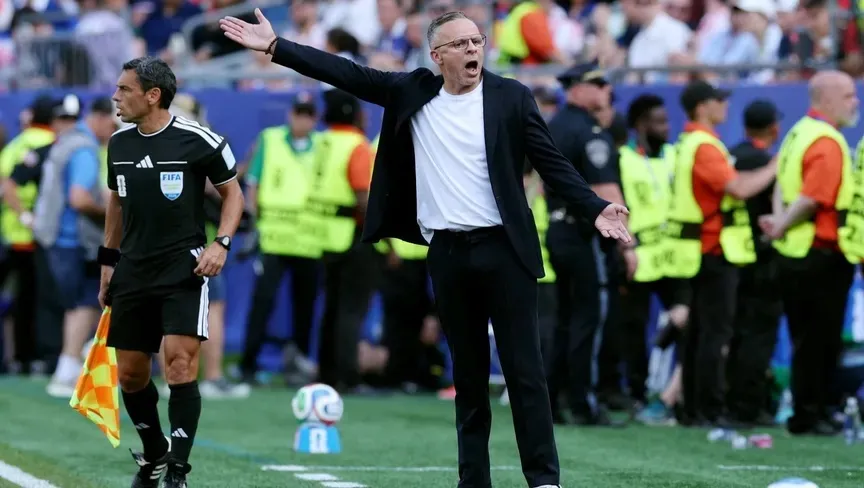
In a candid press conference, Morocco's head coach, Mohamed Wahbi, acknowledged his responsibility for the team's 2-0 defeat against France in the quarter-finals of the 2026 World Cup. Despite this setback, he emphasized that the journey of the 'Atlas Lions' in the tournament was largely positive, expressing optimism about the future of Moroccan football, which he believes will shine brightly. Wahbi's remarks came after Morocco's departure from the tournament, a match in which he noted that the team failed to exhibit its usual identity. He maintained, however, that the game plan remained consistent, similar to their previous encounters against Brazil, the Netherlands, and Canada.
Wahbi stated, "France deserved to win. We aimed to conclude the tournament while staying true to our identity, but that did not materialize, and I take full responsibility as the coach." He further added that the evaluation of the team's performance should not be limited to just one match; throughout the tournament, Morocco delivered five games that delighted fans, showcasing a clear Moroccan spirit and identity. However, he admitted that against France, the team lacked character at critical moments, depth, and continuity in the attacking third.
Looking Ahead: Building for the Future
Addressing speculations about whether the team feared their formidable opponents, Wahbi clarified that the squad did not alter their style of play due to France's prowess. He explained, "We did not change our system or our intentions on the field. I did not instruct the players to retreat and defend. We only fell back because the opponent compelled us to. What we missed was the ability to transition the ball into France's half and create depth and space." The Moroccan coach asserted that preparations for the match were routine, and he did not sense any fear or lack of desire from his players. He felt confident in their readiness and enthusiasm, noting that the preparation process was consistent, yet they were unable to perform authentically during the match.
Wahbi responded to criticism regarding his player selections by stating that he does not wish to make excuses tied to injuries or figures not included in the squad. He remarked, "It is easy to say after a loss that a certain player should have been called up or another should have played. The players who were with us are the ones who brought us to the quarter-finals, allowing the fans to experience beautiful moments against Brazil, the Netherlands, Canada, Haiti, and Scotland." He also defended his decision to include younger players in the tournament, highlighting that Morocco exited the World Cup with valuable experience that will benefit a generation poised to mature in the coming years.
Wahbi pointed out that Morocco had one of the youngest squads in the quarter-finals, and although they may have lacked experience against France, he believes these players will be better prepared in four years. He emphasized the importance of giving them opportunities now to ensure they are ready for future challenges. Additionally, he dismissed rumors of internal conflicts within the coaching staff, labeling them as false. "We are a cohesive unit. I give everyone a voice, and ultimately, I bear the decisions. What has been said about internal disputes is untrue, and it is unfortunate to see such rumors circulate after a loss," he stated.
Looking towards the future, Wahbi stressed the necessity for Moroccan players to become more impactful and consistent with their clubs, especially in high-level matches. He remarked, "When France fields players who compete weekly in the Champions League with top clubs, it gives them an edge. We have talented players, and while they excel when playing for Morocco, we need them to perform similarly with their clubs." He highlighted the need for the national team to engage in strong friendly matches and broaden the pool of physically and technically ready players, especially since the match against France marked Morocco's sixth game in the tournament, a stage at which the team felt a decline in performance.
Wahbi concluded by asserting that Morocco will not stop at reaching the quarter-finals, with ambitions set for the 2030 World Cup, which Morocco will co-host. "We aspire to be at the level of Spain and Portugal in 2030, not just as a host country. We have proven that we can compete with the best, and now we must continue to work to advance even further."
As reported by emaratalyoum.com.