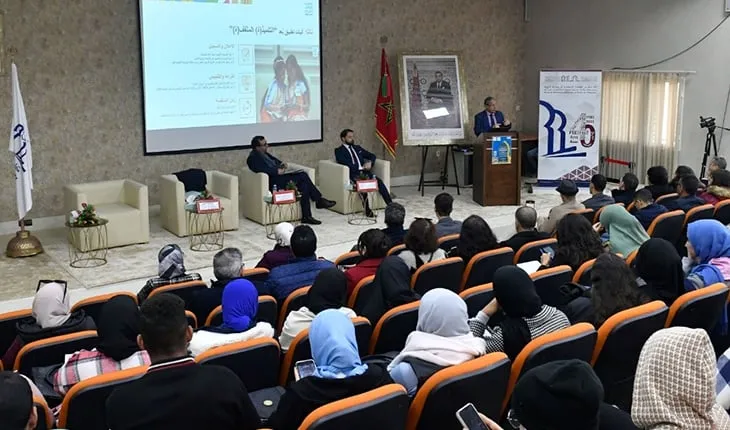

Controversial Tuition Fees in Moroccan Universities
On August 10, 2026, Morocco's decision to impose tuition fees for higher education, particularly for working students, has ignited significant backlash within academic, union, and political circles. This development coincides with the implementation of Law No. 59.24 concerning higher education and scientific research. The universities have set annual fees at 5,000 dirhams (approximately $536) for undergraduate programs, 15,000 dirhams (around $1,609) for master's degrees, and 20,000 dirhams (about $2,146) for doctoral studies. Many affected groups and human rights organizations view this move as a violation of the principle of free education, and they argue that these fees are exorbitant, effectively undermining the constitutional right to continuous training.
In response to this development, the National Coordination of Working Students has launched a comprehensive boycott of these fees until they are either revoked or fundamentally revised. The organization expressed its astonishment at the absence of objective criteria or income indicators, which fail to consider the stark wage disparities among lower-level employees and workers in the private sector. They contend that this decision reflects a gross social injustice that penalizes these groups for their academic aspirations, rather than fostering investment in skill development that would directly enhance public service quality and economic productivity.
Human Rights Organizations Raise Concerns
The Moroccan Association for the Defense of Human Rights has also joined the chorus of dissent by sending an open letter to the Minister of Higher Education, Scientific Research, and Innovation. The organization expressed deep concern regarding the implications of this policy for master's and doctoral programs. They argue that linking access to higher education with financial capability undermines the essence of the right to education guaranteed by Article 31 of the Moroccan Constitution and international treaties. The letter also suggests that the measures raise suspicions of violating the principle of non-retroactivity of administrative decisions, particularly for students whose circumstances have changed or who have already met the necessary conditions.
In light of the ongoing debate, the Forum of University Presidents has clarified its stance by stating that the organization of flexible training and the criteria for benefiting from it fall within the universities' inherent powers as guaranteed by Law No. 59.24, which ensures their pedagogical and financial autonomy. They emphasized that imposing registration fees on professionals and employees is a common international practice and that this parallel option aims to promote lifelong learning without infringing on the free training provided to regular students.
Furthermore, regarding the financial obligations, the Forum noted that undergraduate fees have remained unchanged compared to previous years, while master’s fees have been reduced to facilitate access. The cost of doctoral studies has been adjusted to enhance the quality of scientific research and to secure necessary facilities and laboratories. Notably, 60% of the revenue is earmarked for supporting research and compensating faculty members, with 40% allocated to operational and investment budgets. They concluded by emphasizing their commitment to social considerations, offering payment facilities, and exempting employees and workers whose monthly income does not exceed the legal minimum wage, while ensuring decisions are made that protect acquired rights and reject any attempts to politicize university affairs.
Amid this controversy, a previous ruling by the Court of Cassation has resurfaced, reinforcing that the right to education is a constitutional right guaranteed by the state. The administration cannot impose restrictions or diminish this right. This decision, issued on January 3, 2010, rejected an appeal by Cadi Ayyad University challenging a court ruling that annulled the imposition of fees on employees wishing to enroll in doctoral programs.
The case dates back to February 16, 2010, when an employee submitted his application for doctoral studies at the School of Science in Marrakech, part of Cadi Ayyad University. However, the college administration refused to accept his application unless he paid the registration fees. Faced with this situation, the employee resorted to the Administrative Court in Marrakech in March of the same year, arguing that the university's decision contravened Article 31 of the Constitution, which guarantees the right to education, and that there is no legal text requiring additional fees as a condition for enrollment in doctoral programs.
As reported by alquds.co.uk.