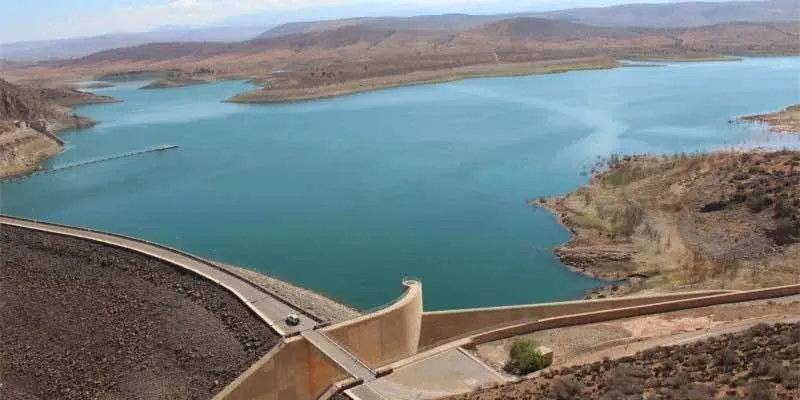

Significant Increase in Water Reserves
Recent rainfall has brought a much-needed respite to Morocco's water reserves, resulting in a substantial increase in dam levels across the nation. According to the official data provided by the Ministry of Equipment and Water through its "Ma Dialna" platform, the recovery of these water reserves is evident, despite some regions still facing tighter conditions. As of April 10, the total volume of water stored in Moroccan dams has reached an impressive 12.9 billion cubic meters. This marks a significant rise from the previous year's figure of just over 6.4 billion cubic meters, showcasing an increase that exceeds 100% and illustrating the impact of consistent rainfall experienced in recent weeks.
The effects of these changes are palpable and have been observed in the last 24 hours alone, where several key dams reported substantial inflows. For instance, in Taounate province, the Idriss I Dam recorded an influx of 3.8 million cubic meters, pushing its filling rate to over 93%. Nearby, the Al Wahda Dam also benefited from recent rains, gaining approximately 3.3 million cubic meters and achieving a filling rate of 86.4%. In Azilal, the Bin El Ouidane Dam is nearing full capacity, having received close to 2.9 million cubic meters, leading to a filling rate of 94.6%, one of the highest levels seen at this point in the year.
Regional Disparities and Future Outlook
While many dams are experiencing a rebound, others are recovering at a more measured pace. The Al Massira Dam, one of the largest reservoirs in Morocco, accumulated 2.8 million cubic meters in the same timeframe, yet its overall level remains modest at 36.3%. This serves as a reminder that despite the recent rains, long-standing water deficits persist in certain areas. Moreover, disparities exist among different hydraulic basins; the Loukkos basin boasts a filling rate above 92%, while the Sebou and Bouregreg basins follow closely behind at 86.6% and 92.4%, respectively. The Tensift basin is also noteworthy, nearing 95%, attributed directly to the recent precipitation.
Conversely, the southern regions are facing more precarious conditions. The Souss-Massa basin stands at 56%, while the Guir-Ziz-Ghris basin reaches 54.5%. The Draa-Oued Noun basin continues to struggle the most, with reserves at just over 40%. These statistics indicate a significant shift after years of battling water scarcity. Although the recent rains have helped restore a certain level of balance, they have not fully bridged the gap between different regions. The coming weeks will be critical in determining whether this recovery can solidify into a lasting trend or if it remains merely a fleeting relief.
As reported by moroccoworldnews.com.