
Morocco's economy is experiencing growth rates that surpass the average, with significant investments in infrastructure and in Sub-Saharan African countries. Despite this economic progress, a considerable number of young Moroccans express a desire to leave the country, which is not entirely surprising. The scenic coastal road stretching from Tangier along the Strait of Gibraltar is regarded as one of the most exquisite routes in the world, particularly during the summer months. On the opposite side lies the Spanish city of Tarifa with its sandy beaches, while to the right looms the towering Rock of Gibraltar, standing at an impressive height of 426 meters. However, after approximately 40 kilometers, this breathtaking view is abruptly interrupted.
High metal barriers obstruct visibility, behind which container cranes soar into the sky. These cranes belong to the Tangier Mediterranean Port, which is now recognized as one of Africa's and the Mediterranean's most vital ports. According to a report by the German newspaper 'Welt', over 11.1 million containers were handled at the port last year. Additionally, around 3.2 million passengers and 535,000 trucks traversed its facilities, alongside approximately 527,000 vehicles, many of which were exported from Renault and Stellantis factories in Morocco. The port, inaugurated by King Mohammed VI in 2007, has become a cornerstone of the economic prosperity Morocco has witnessed over the past two decades.
Port of Tangier Mediterranean: Morocco's Gateway to Continental Leadership
The Tangier Mediterranean Port is intricately linked to numerous free zones and a growing number of local and international industrial companies, facilitated by a national network of modern railways and highways. This port forms the basis of the profound economic transformation Morocco has experienced over the last twenty years. The country's GDP has shown remarkable growth, reaching $182.5 billion, making Morocco the fifth-largest economy in Africa. For the first time, it has surpassed South Africa to take the top position in the manufacturing index released by the African Development Bank, with a growth rate of 4.9% last year. Both the World Bank and the International Monetary Fund project a slight growth of over 4% by 2026. Morocco aspires to become a modern industrial nation, with King Mohammed VI emphasizing that the automotive and aviation industries, along with renewable energy, will be foundational pillars of the national production structure.
The Paradox of Growth and Migration Aspirations
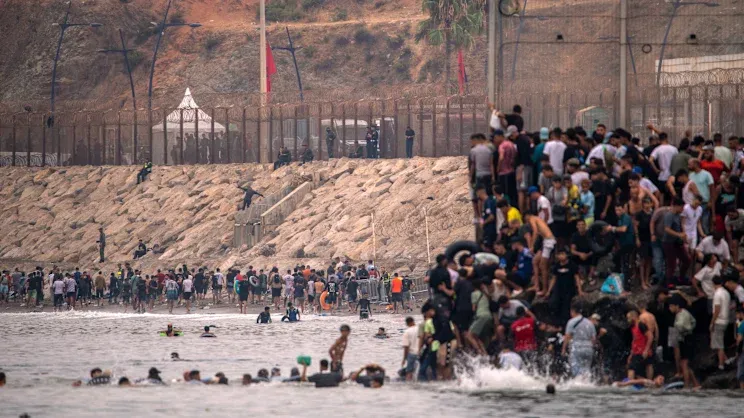
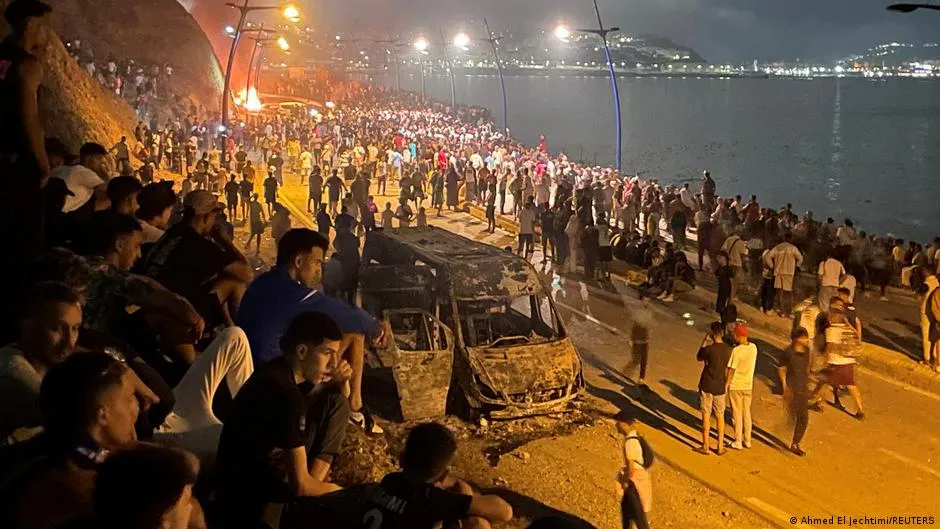
Despite the apparent success story depicted by Morocco's growth figures, it is paradoxical that such a large portion of the youth population desires to emigrate to Europe. This sentiment is vividly illustrated by the images of tens of thousands who stormed Ceuta in July, a Spanish enclave in Morocco that is only a half-hour drive from Tangier Mediterranean. This town has become a symbol of a generation's longing for migration. The simple explanation for this phenomenon is that Morocco's youth, particularly Generation Z, struggle to find employment in their homeland and face numerous challenges related to healthcare and education systems. However, the situation is more complex than it appears.
According to Miguel Sabio, director of the Spanish company 'Alfablast Maroc' in Tangier, which has operated in Morocco since 1997, "This is the European viewpoint, of course. Speak to people in Senegal or Niger: Morocco is a model for them, and they wish to live there." Morocco has invested 20% of its total foreign investments in Sub-Saharan African countries, particularly in strategic sectors such as banking, telecommunications, agriculture, and renewable energy. Sabio describes Morocco as resembling a rocket due to its substantial transformations over the past two decades. Indeed, the kingdom's focus has not been solely on economic development; it has also improved public infrastructure, launched affordable bus lines in cities, established public parks, and revitalized old towns. A high-speed train now connects Tangier with the capital, Rabat, and Casablanca, with plans to extend the line to Marrakech and Agadir.
Simultaneously, the multidimensional poverty rate has nearly halved over a decade, decreasing from 11.9% in 2014 to 6.8% in 2024. This indicator encompasses not only income but also access to education and healthcare. The literacy rate has dropped from about one-third to nearly one-quarter during the same period, as reported by 'Welt'. Nonetheless, it remains perplexing that many Moroccan youths still aspire to migrate to Spain and other European nations. The diaspora of Moroccans abroad is estimated to exceed four million, with the largest community residing in France, numbering around 1.5 million, while about 300,000 live in Germany.
Henri de Haas, a Dutch sociologist studying Moroccan migration for nearly 30 years, finds this trend unsurprising. He notes that Morocco exemplifies how development and rising migration rates are interconnected. In a LinkedIn post, de Haas explains, "When countries transition from low-income to middle-income status, development often leads to an increase in migration, not a decrease." He adds that improvements in education, living standards, poverty reduction, and access to information elevate the average life expectancy among youth while simultaneously enhancing their migration prospects. The phrase "I will go to Europe" has long been popular in Morocco, almost as if it were a magical solution to all problems. According to the Arab Barometer report for 2024, 35% of Moroccans, predominantly youth, are contemplating emigration, citing economic reasons in pursuit of better opportunities.
Last year, the unemployment rate in Morocco stood at 13%, but according to World Bank data, it is particularly high among young people aged 15 to 24, reaching 37.2%. This is hardly surprising, considering that nearly half of Morocco's population is under 25 years old. Between 2000 and 2024, the working-age population grew at a rate approximately 2.5 times faster than employment growth, with 300,000 young people entering the labor market annually. However, the country's economy does not generate sufficient new job opportunities. The National Statistics Office reported a net increase of 193,000 jobs in 2025, compared to just 82,000 new jobs in 2024. Employment remains the most significant vulnerability in Morocco's economy. Bank of Morocco Governor Abdellatif Jouahri acknowledged in a speech to King Mohammed VI in July that "increasing growth has led to a noticeable improvement in job creation," yet the unemployment rate has remained stable.
Another major criticism from Generation Z concerns the education and healthcare systems, as many young protesters in the streets of Morocco have asked, "We have football fields, but where are the hospitals?" Every Moroccan queried about the public healthcare system describes it as a "disaster" based on their personal experiences. The same goes for public schools, which suffer from a lack of teachers and resources. A parallel economy has emerged alongside public institutions, comprising well-equipped private hospitals and schools for those who can afford them. However, Rabat recognizes the necessity of investing in the public sector. The 2026 budget allocated approximately $15 billion for healthcare and education, marking a 16% increase from the previous year, according to 'Welt'. Sabio, the Spanish businessman, asserts, "I am convinced that the situation is improving." The king has shown flexibility and understanding on many occasions. "Without his support, the country would have slipped into chaos."
As reported by dw.com.