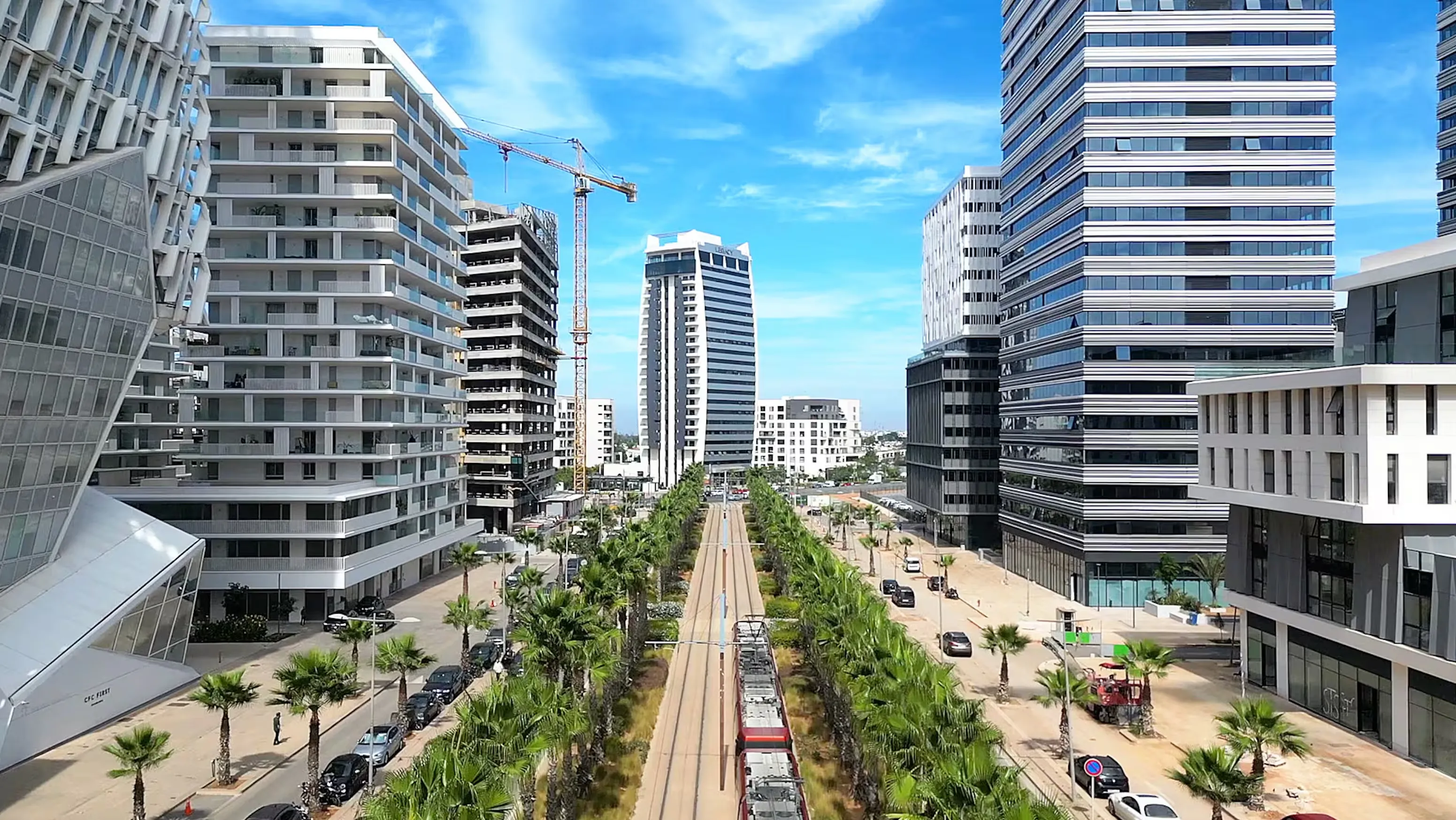

Morocco's Economic Growth and Financial Market Strength
Morocco stands out as one of the few African gateways to international markets, continuing to attract investments in an increasingly fragmented global landscape. This recognition comes at a time when the Moroccan economy is experiencing accelerated growth. According to the African Development Bank (AfDB), Morocco's GDP is projected to grow by 4.7% in 2025, up from 3.8% in 2024, bolstered by a recovery in agriculture, a dynamic industrial sector, robust construction activity, and strong tourism performance. Concurrently, inflation has slowed to 0.8%, and the budget deficit has been reduced to 3.5% of GDP.
This macroeconomic improvement not only signals stability but also helps to enhance investor confidence while expanding financing opportunities within the economy. The AfDB highlights that Morocco’s stock market capitalization accounted for 47.1% of the GDP in 2024, positioning the national financial market among the most significant in Africa. This figure reflects an often-overlooked reality: the economy's ability to convert savings into productive investments. While many African markets remain narrow and illiquid, the Casablanca Stock Exchange benefits from a solid regulatory environment, structured institutional investors, and a significant presence of major domestic corporations.
Strategic Access to International Financial Markets
However, Morocco's strength does not solely rely on its domestic market. The report emphasizes the Kingdom's favorable access to international financial markets, a crucial asset in a global environment characterized by rising capital costs. The AfDB notes that international financial conditions have tightened, with the average cost of Morocco's public external debt increasing by 70 basis points to 3.9% in 2024. Despite these changes, Morocco retains a superior capacity to attract international investors compared to many other African economies, underpinned by factors such as a relatively predictable macroeconomic policy, a robust banking sector, a stable institutional framework, and a gradual integration into global financial networks.
International rating agencies continue to classify Morocco as an investment-grade country, an essential factor for the attractiveness of sovereign issuances and private financing. The AfDB's analysis extends beyond national dimensions, indicating that Morocco has additional potential through the expansion of its pan-African banking groups, notably the Bank of Africa, which was recently recognized as the best bank in North Africa by African Banker 2026.
This trend aligns with a long-standing evolution, as Moroccan banks are now among the most active players on the continent, operating in numerous countries and facilitating trade flows and South-South investments. As the financing needs across Africa grow, this presence grants Morocco a unique position in the regional capital circulation. The focus is not only on financing the Moroccan economy but also on its capability to contribute to Africa's growth financing.
Nevertheless, the AfDB tempers its assessment, noting that despite its advanced development level, Morocco's financial system is characterized by a significant predominance of the banking sector. The report also highlights the relatively limited nature of the participatory segment, the concentration of the bond market around sovereign securities, and a relatively small base of listed companies, which currently stands at 77.
This observation sheds light on the priorities for the coming years. The AfDB calls for the deepening of financial markets, diversification of financing instruments, particularly green ones, and greater reliance on public-private partnerships as key strategies to enhance large-scale capital mobilization. Morocco already possesses some of the strongest financial foundations on the continent. The challenge now is to transform this financial depth into a more powerful accelerator of productive investment, innovation, and African economic integration.
According to the AfDB report, this transformational capacity emerges as one of the Kingdom's primary strategic assets in the competitive economic landscape of the continent.As reported by fr.le360.ma.