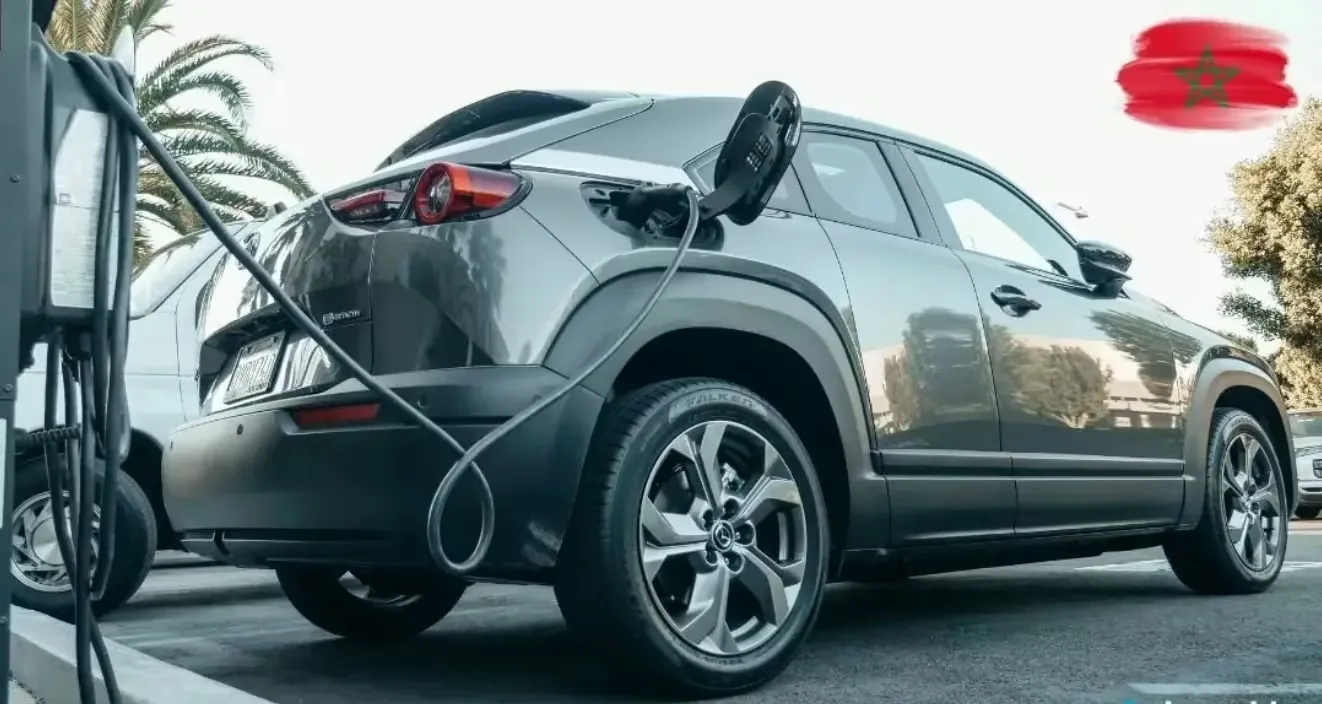

The Evolution of Morocco's Electric Vehicle Market
The recent trajectory of Morocco's automotive industry reveals a gradual transformation towards electrification, driven by both internal demand and an export-oriented industrial strategy. This dynamic unfolds against the backdrop of a global automotive market that is progressively shifting towards electric vehicles. The Moroccan market is entering a phase of tangible acceleration, as evidenced by robust growth indicators. Sales of passenger electric vehicles are projected to increase by an impressive 80.4% in 2025, reaching 5,311 units, followed by a further rise of 36.3% in 2026, culminating in 7,237 units. This growth is accompanied by a gradual increase in penetration rates, expected to rise from 1.9% in 2024 to 2.6% in 2025, and then to 3.4% in 2026, according to forecasts from BMI-Fitch Solutions.
Such advancement indicates a gradual transformation of the national automotive market, where electric vehicles, once a marginal segment, are beginning to establish themselves as a defining category. This movement follows a robust 2024, characterized by a remarkable 143% increase in sales of 100% electric vehicles, totaling 1,125 units, and a 224% surge in sales of plug-in hybrids, reaching 1,819 units. The overall market share of electric vehicles jumped from 0.7% in 2023 to 1.9% in 2024, reflecting not merely a catch-up effect but a genuine structural change in demand, propelled by an expanding supply and the emergence of new customer segments.
Strengthening the Electric Vehicle Ecosystem
As demand escalates, the consolidation of the industrial base emerges as a central lever for the sector's growth. Annual production of electric vehicles in Morocco currently ranges between 40,000 and 50,000 units, including models such as the Fiat Topolino, Opel Rocks, and Citroën Ami. This production level, still in a ramp-up phase, reflects an industrial strategy focused on gradual integration into international value chains. This dynamic is further reinforced by the announced production of the first locally designed and assembled electric vehicle, the Dial-E by Neo Motors, slated for industrial launch in early 2026.
Meanwhile, foreign investments continue to fuel this trajectory, with Tesla initiating a project that includes an assembly unit in Kénitra, expected to have an annual capacity of 400,000 units. If realized, such capacity would significantly reposition Morocco within the regional industrial hierarchy. The strategy extends beyond mere assembly, encompassing the supply chain, particularly in battery production, where several key projects have been launched. Tinci Materials has invested 2.6 billion dirhams in an electrolyte factory with an annual capacity of 150,000 tons, while Gotion High Tech has committed an additional 1.3 billion dollars following an initial investment of 6.4 billion dollars. A cathode factory supported by BTR, costing 300 million dollars, complements this ecosystem, according to Fitch Solutions' analysis.
This progressive structuring of the value chain underscores a commitment to solidly anchor electric vehicle manufacturing in Morocco, moving beyond the mere role of an assembly workshop. The expansion of supply constitutes another key driver of the current dynamic, with new players entering the market and diversifying the range of models available. Chinese manufacturers, such as BYD, are gaining a growing foothold, capturing around 32% market share in plug-in hybrids by 2024. This surge in competition is accompanied by a decrease in costs and increased accessibility to electric vehicles.
According to Fitch Solutions, this array of incentives reflects a desire to stimulate demand while supporting the sector's energy transition. The anticipated growth of the electric vehicle fleet could reach 236,823 units by 2034, representing 4.8% of the total fleet, confirming this trajectory. However, such evolution remains contingent upon the development of infrastructure, notably the charging network, which had approximately 1,000 points by the end of 2024. While the internal dynamic appears robust, exposure to the European market presents a significant vulnerability factor, as the Moroccan automotive industry remains heavily export-oriented, with over 80% of production destined for the European Union.
As reported by fr.le360.ma.