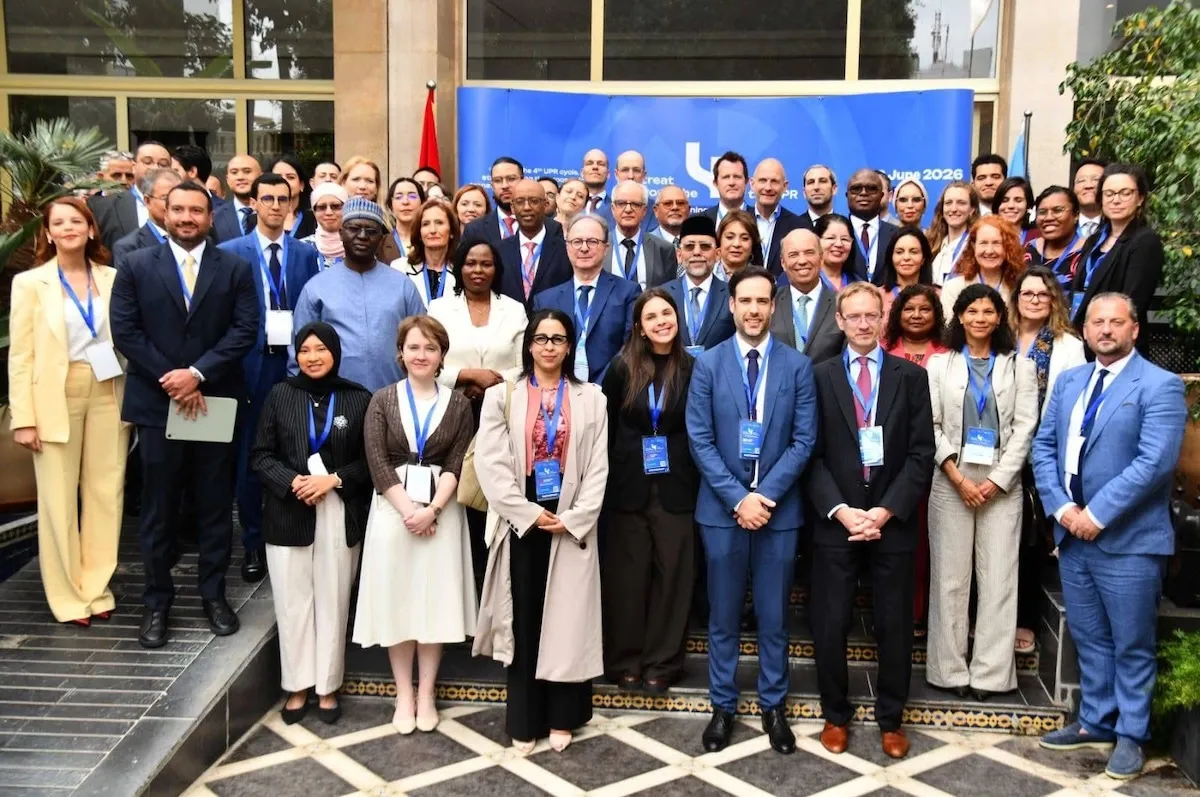

The recent International Retreat on the Universal Periodic Review (UPR), held in Rabat, transcended the boundaries of a mere technical assembly of experts and policymakers. This significant event highlighted Morocco's evolution into a credible international player, whose contributions extend well beyond mere participation, showcasing its influence and leadership within one of the United Nations' most critical human rights frameworks.
As we mark two decades since the establishment of the UPR, the global discourse has shifted from a simplistic evaluation of states' commitments documented on paper to the more profound challenge of translating these commitments into tangible enhancements in the lives of individuals. It is this results-driven approach that Morocco has consistently championed, advocating for a human rights framework firmly rooted in practical impact, institutional efficacy, and sustainable development initiatives.
The acknowledgment received from senior UN officials, international experts, and representatives of civil society during the Rabat retreat signifies a wider reality: Morocco has emerged as a reliable ally in promoting the evolution of the UPR. Notably, many participants regarded the meeting in Rabat as a foundational step towards establishing the intellectual groundwork for the fifth cycle of the UPR, emphasizing Morocco's expanding role in shaping future global dialogues regarding human rights application.
This international standing has not been achieved overnight; it is the result of a long-term reform initiative spearheaded by His Majesty King Mohammed VI. His visionary leadership has placed human rights, good governance, and institutional modernization at the forefront of Morocco’s development paradigm. Over the last twenty years, the Kingdom has embarked on a consistent trajectory of political, constitutional, and institutional reforms aimed at fortifying the rule of law, enhancing public participation, and weaving human rights principles into the fabric of public policies.
What sets Morocco apart is its refusal to perceive human rights as a mere legal or diplomatic undertaking. Instead, Morocco has championed a holistic perspective that interlinks rights, development, social inclusion, and human dignity. This strategic foresight has empowered Morocco to cultivate valuable expertise and share practical insights that resonate well beyond its immediate regional context.
Thus, the importance of the Rabat retreat surpasses the outcomes derived from two days of discussions. It embodies Morocco’s increasing capability to influence the intellectual and political frameworks of international cooperation. In a world that is becoming more fragmented, Morocco is illustrating that constructive engagement, meaningful dialogue, and committed reform are potent instruments to tackle global challenges.
At the heart of this progressive trajectory lies the forward-thinking leadership of His Majesty King Mohammed VI. His unwavering dedication to modernization, openness, and international collaboration has enabled Morocco to act as a bridge between diverse regions, a mediator of dialogue, and a credible advocate for a more effective and inclusive multilateral system.
The insights emerging from the Rabat retreat are both timely and persuasive: human rights should not be relegated to mere political disputes or ideological rifts. Rather, they ought to function as a foundation for cooperation, shared accountability, and collective advancement.
As the global community contemplates the next phase of the Universal Periodic Review, it is clear that Morocco is no longer just a participant in the ongoing dialogue; it is actively shaping its trajectory.
As reported by atalayar.com.