
Morocco's Economic Growth Soars Amidst Agricultural Boom
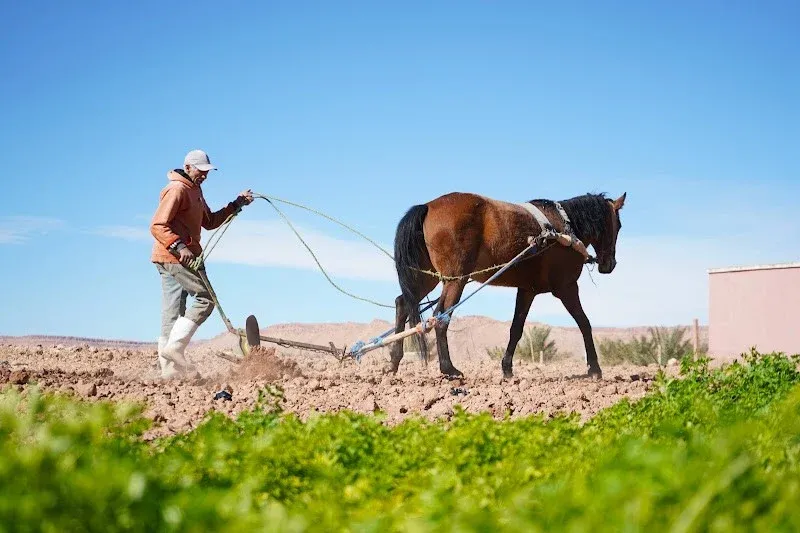
Recent analyses and official statistics suggest a significant turning point for Morocco's economy, with projections indicating a remarkable growth rate of 5.6% for the year 2026. Economic experts agree that this optimistic outlook is largely driven by the agricultural sector, which is anticipated to experience an exceptional surge due to favorable climatic conditions, yielding an estimated 82 million quintals of grain. This agricultural bounty is expected to provide a robust internal fuel for economic growth, complemented by a notable stability in non-agricultural activities and an increase in institutional confidence.
However, despite this promising growth narrative, the country faces the paradox of stability juxtaposed against external shocks, particularly in the energy sector. The safety margins afforded by foreign currency reserves and a flexible credit line—potentially triggered in response to geopolitical tensions—serve as a protective barrier for major financial balances. Nevertheless, daily living challenges and the dual dependencies on climate and energy prices present structural obstacles that continue to test the resilience of the Moroccan economy.
Future Prospects and Challenges
According to Abdel Razaq El-Hiri, a researcher and director of the Economic Analysis and Forecasting Laboratory at the University of Fez, Morocco is currently witnessing its highest growth rate in several years. The Bank of Morocco recently revealed a noteworthy growth trajectory, with a recorded growth of 4.8% in 2025 and expectations to rise to 5.6% in 2026. However, growth is projected to stabilize at around 3.5% in 2027, assuming a return to average agricultural output. The anticipated agricultural boom, which has seen approximately 4 million hectares cultivated, is central to this economic revival, with grain production expected to reach 82 million quintals.
Simultaneously, the non-agricultural sector maintains a stable growth rate of around 4.5%, driven by infrastructure investments and structured projects. In terms of external shocks, Morocco's recourse to a flexible credit line worth $4.5 billion is seen as a precautionary measure to enhance resilience and sustainability amid global uncertainties and geopolitical developments. This credit line is only extended to countries meeting stringent criteria regarding sound fiscal and monetary policies, which Morocco satisfies.
Moreover, economic analyst Mohammed Adil Eisho highlights that while energy risks present a formidable external shock, the Bank of Morocco has raised its growth expectations for 2026 to 5.6%, bolstered by the favorable agricultural season. However, he acknowledges that the anticipated improvements do not entirely negate the impact of energy price shocks but may mitigate some effects by enhancing agricultural supply and rural incomes. It is imperative to note that positive agricultural news does not eliminate the energy risk; rather, it introduces an internal balancing element that partially absorbs the external shock.
In summation, while Morocco's economy is currently robust, it remains susceptible to dual dependencies on climate variability and international energy prices. Therefore, reinforcing energy security and social justice emerges as vital pillars that must accompany financial reforms to ensure sustainable economic growth and stability.
As reported by hespress.com.