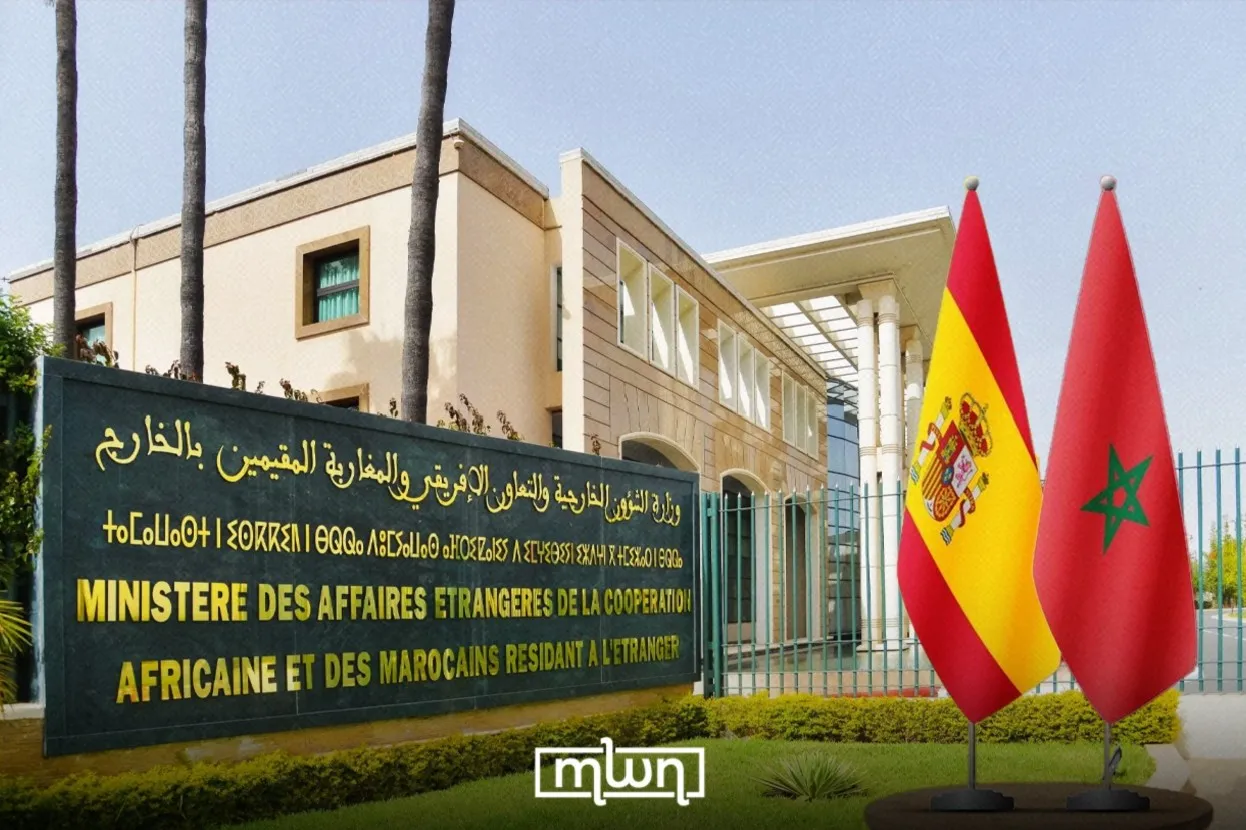

After a prolonged silence lasting over a month, Morocco has finally articulated its position regarding the ongoing Ceuta crisis, and the timing of this declaration is anything but coincidental. The Moroccan Ministry of Foreign Affairs issued a statement that was both unequivocal and resolute, marking a departure from merely adding to the existing discourse. Instead, it sought to redefine the parameters of the conversation surrounding the crisis. With no threats or insults, Morocco has made it clear that it will no longer serve as a convenient scapegoat for Spain’s internal political struggles, establishing a firm red line that outlines its stance.
Just hours prior to this pivotal announcement, the Spanish National Intelligence Center (CNI) declassified a series of documents that reignited debates about the knowledge Madrid had before the crisis erupted on July 30 and 31. The released documents indicate that Spanish authorities had received warnings about a potential surge in migrant arrivals, even though they later claimed to have been blindsided by the scale of the crisis. This revelation prompted Morocco to break its silence, shifting the narrative from one of defense to a demand for accountability. Morocco is no longer asking to be believed; it is demanding evidence to substantiate the claims that it had orchestrated or facilitated the mass influx of migrants into Ceuta.
In its statement, Morocco firmly rejected any assertions of involvement, emphasizing that no evidence exists to support such allegations. This marks a significant reversal in the dynamics of the discussion, as Morocco transitions from a defensive position to one that places the onus of proof squarely on those making accusations. The declassification of the CNI documents has illuminated the preparedness of Spanish authorities, indicating that the debate now encompasses not only Morocco’s actions but also the readiness and response of Spain itself. In doing so, Morocco has effectively turned the tables, prompting a reevaluation of the crisis.
Furthermore, Morocco stresses that this issue extends beyond mere migration; it has evolved into a significant political matter within Spain. The Moroccan government asserts that certain political factions are exploiting the crisis to further their agendas, targeting Prime Minister Pedro Sánchez and his policies regarding Morocco. By declaring “enough,” Morocco is not instructing Spain on how to handle its domestic affairs; rather, it is advising against leveraging these issues at Morocco's expense, signifying a notable shift in diplomatic tone.
Looking ahead, the question arises: what next? The statement issued by Morocco is not a conclusion but rather a prelude to a new chapter in bilateral relations, presenting several possible scenarios. One potential outcome is a de-escalation from Spain, where the government recognizes the damage caused by the ongoing crisis and gradually seeks to resolve the issue. Given the internal political turmoil triggered by the declassified documents, Madrid might find it counterproductive to continue vilifying Morocco. This could lead to a reduction in anti-Moroccan rhetoric and a resumption of cooperative dialogue.
On the contrary, if Spain’s opposition parties choose to intensify their rhetoric, capitalizing on the crisis to galvanize electoral support, it could result in a perilous escalation. The right-wing parties may see the situation as an opportunity to bolster their stance on immigration and border security, potentially provoking a cycle of accusation and response that could further complicate relations. This dynamic presents a significant risk of deepening mistrust and ongoing tension between the two nations.
Conversely, there is also the possibility of the issue evolving into a judicial or institutional matter, where Morocco calls for a thorough examination of the circumstances surrounding the crisis. This could lead to a demand for transparency regarding the actions and decisions made by both Moroccan and Spanish authorities, as well as the information shared between them. The call for accountability suggests that Morocco is prepared to challenge the narrative surrounding the crisis, which could ultimately prove more damaging to Spain than anticipated.
In addition to these scenarios, Morocco may opt to gradually tighten its cooperation with Spain, leveraging its position as a critical partner in various domains such as migration, security, and intelligence. While Morocco may not seek an overt rupture in relations, it possesses the ability to recalibrate the terms of cooperation, ensuring that Spain recognizes the importance of maintaining a constructive partnership.
Finally, the Ceuta crisis also serves as a reflection of deeper underlying tensions between the two countries, intertwining issues of sovereignty, immigration policy, and the broader relationship with Rabat. As new sources of tension emerge, such as discussions regarding a new nationality law for Sahrawis, the potential for confrontation increases. Morocco’s recent behavior suggests a strategic approach focused on avoiding further escalation while emphasizing the importance of mutual respect and cooperation.
Ultimately, Morocco’s calculated approach signals a pivotal moment in its diplomatic strategy. By asserting its position and demanding evidence, Morocco is sending a clear message: it is willing to engage as a partner but will not tolerate being treated as a perpetual suspect. The implications of this statement extend beyond immediate diplomatic relations and into the realm of long-term strategic partnerships. As the situation develops, it is crucial for Spain to recognize the importance of fostering a cooperative relationship rather than allowing political calculations to dictate its actions.
As reported by moroccoworldnews.com.