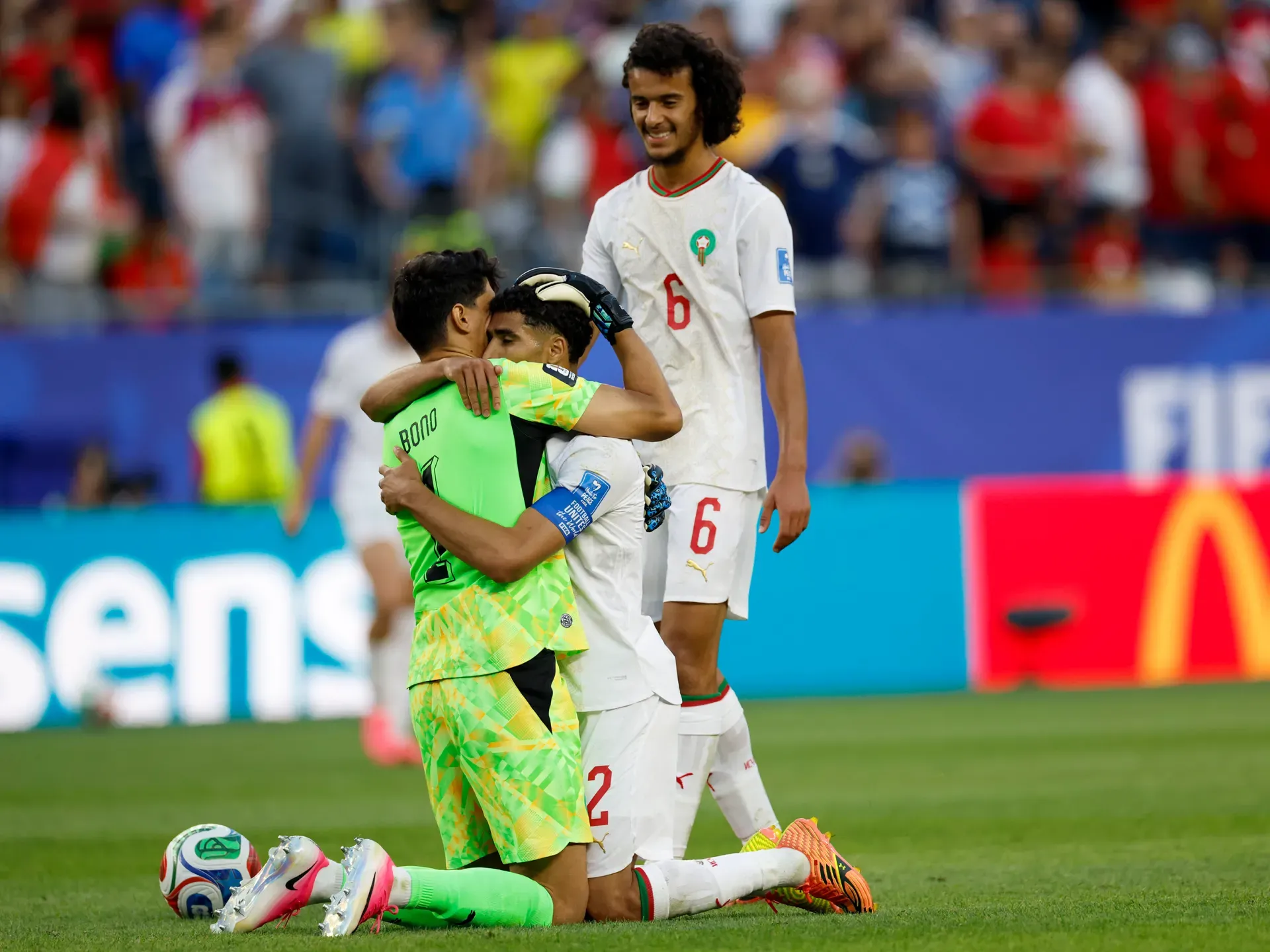

On June 20, 2026, Morocco's national football team, which finished fourth in the last World Cup, moved closer to advancing to the Round of 32 with a hard-fought 1-0 victory over Scotland at Gillette Stadium in Foxborough, near Boston. This match marked the second round of the group stage for the 2026 World Cup, and the Moroccan squad celebrated its first win of the tournament following an earlier draw against Brazil (1-1) in their opener.
The sole goal of the match was scored by Ismael Saibari just 71 seconds into the game, instantly securing Morocco's triumph. Saibari's goal not only granted Morocco their first victory in the current tournament but also set a remarkable record for the fastest winning goal in a match decided by a 1-0 scoreline in World Cup history. Previously, the record was held by England, who scored against Paraguay in the third minute during the 2006 World Cup.
Saibari's opening goal of the match, which was registered at the 70-second mark, stands as the second-fastest goal scored by an African player in World Cup history, with the record still held by Ghana's Asamoah Gyan, who netted a goal against the Czech Republic in just 68 seconds during the 2006 tournament. Furthermore, this goal marks the fastest ever scored by an Arab player in World Cup history.
In addition to this, Ismael Saibari has become the second African player to score in his first two World Cup matches, following in the footsteps of Egypt's Mohamed Salah. The Moroccan team completed an impressive 601 successful passes in this match, a notable achievement that marks the highest number of successful passes by an African nation in a World Cup match since 1966. With this victory, Morocco has claimed its sixth win in World Cup history, tying Ghana and Nigeria as the African teams with the most wins in the tournament's history.
Notably, Ibrahim Diaz has distinguished himself as the second Moroccan player to provide multiple assists in a single World Cup tournament, currently with two assists, following Taher Khalil, who achieved three assists in 1998. Furthermore, Ayoub Bouaddi, at just 18 years and 260 days old, has become the fourth African player aged 18 or younger to participate in multiple matches in World Cup history, joining the ranks of Rigobert Song of Cameroon in 1994, Salomon Oliseh of Cameroon in 1998, and Bartholomew Ogbeche of Nigeria in 2002.
In a historic moment for Moroccan football, Achraf Hakimi has set a new record for the most World Cup appearances by an Arab and African player, reaching his 12th match in the tournament. This achievement surpasses the previous record of 11 matches held by Cameroonian player François Omam-Biyick and Ghana's Asamoah Gyan.
On the other hand, Scotland has faced a disheartening trend, losing 17 of their last 19 matches against top-six ranked nations in FIFA’s world rankings, with only one victory and one draw to show during that stretch. Moreover, they have conceded a goal in the first two minutes of a match in a major tournament for the first time, breaking their previous record of the fastest goal conceded in World Cup matches, which was in the fourth minute against Paraguay in 1958 and Brazil in 1998. The starting lineup for Scotland in this match consisted of players boasting a combined total of 609 international appearances, the highest in their history.
As reported by aljazeera.net.