
The Return of King Mohamed VI and Al-Mawlid Celebrations
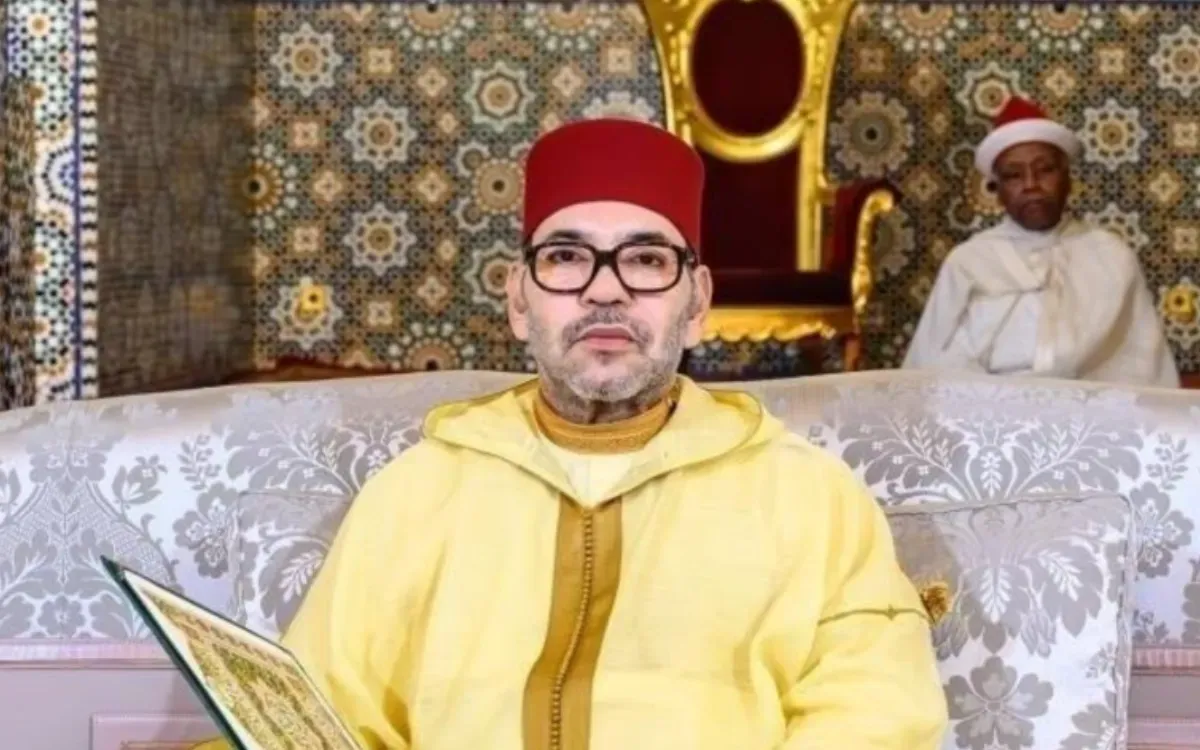
King Mohamed VI of Morocco made his return to Rabat on Monday following a two-month holiday at his opulent residence in Mdiq, located a mere 30 kilometers from Ceuta, a city that has recently faced its most severe migratory crisis to date. His return was timed to coincide with the celebration of Al-Mawlid, an important occasion commemorating the birth of the Prophet Muhammad, during which he presided over the ceremony as the nation’s foremost religious authority. The event took place at the royal palace, featuring the presence of Crown Prince Moulay Hassan and his brother Moulay Rachid, who is the second in line to the throne. The ceremony was attended by key government officials, members of the diplomatic corps, and senior Moroccan military leaders.
Historical Context and Implications for Ceuta
During the celebrations, Ahmed Toufiq, the Minister of Islamic Affairs, delivered a speech that prominently featured historical references to Ceuta. He acknowledged the contributions of two notable Islamic scholars who hailed from the city prior to its incorporation into the Spanish monarchy in 1580, following its conquest by the Kingdom of Portugal in 1415. The minister aimed to reinforce the Moroccan identity of Ceuta by connecting it to the traditions of the Prophet. He mentioned figures such as Caïd Ayad, a 12th-century scholar known for his _Treatise on the Healing Virtues of the Knowledge of the Prophet's Rights_, and Abu al-Abbas al-Azafi, who also lived in the 12th century and authored an _Anthology of Poems Composed in Celebration of the Birth of the Illustrious Prophet_. Additionally, he referenced Imam Mohamed al-Jazouli’s work, _The Guides to the Paths of Good_, which he described as foundational for prayers that encompass "the sacred struggle of Moroccans to liberate the cities occupied along the Atlantic Ocean at the dawn of the contemporary era." During this period, the Portuguese empire held dominion over important Moroccan cities including El Jadida and Essaouira as well as Ceuta in the Mediterranean.
The Moroccan press has taken note of these references to Ceuta, with some commentators suggesting that the regime is cautious about directly questioning the territorial sovereignty claimed by Spain. A columnist from the portal _Le 360_ noted, "There are diplomatic responses in the form of statements or press conferences. And then there are those that only need to mention a few names to say a lot." The writer pointed out that while Madrid consistently denies any sovereign claim over Ceuta and Melilla, Rabat has opted for a more nuanced approach, invoking historical context rather than engaging in a direct territorial dispute. The columnist argues, "Madrid can assert that Ceuta is Spanish and consider the territorial issue definitively closed, but there exists a reality that no government can decree: the erasure of history and of physical and human geography." This subtlety in Rabat's response suggests a deliberate framing of Ceuta not merely as a contested territory but as a foundational element of Moroccan civilization, law, and Muslim spirituality that predates modern borders and protectorates, thereby emphasizing its historical significance long before Morocco gained independence.
As reported by en.ara.cat.