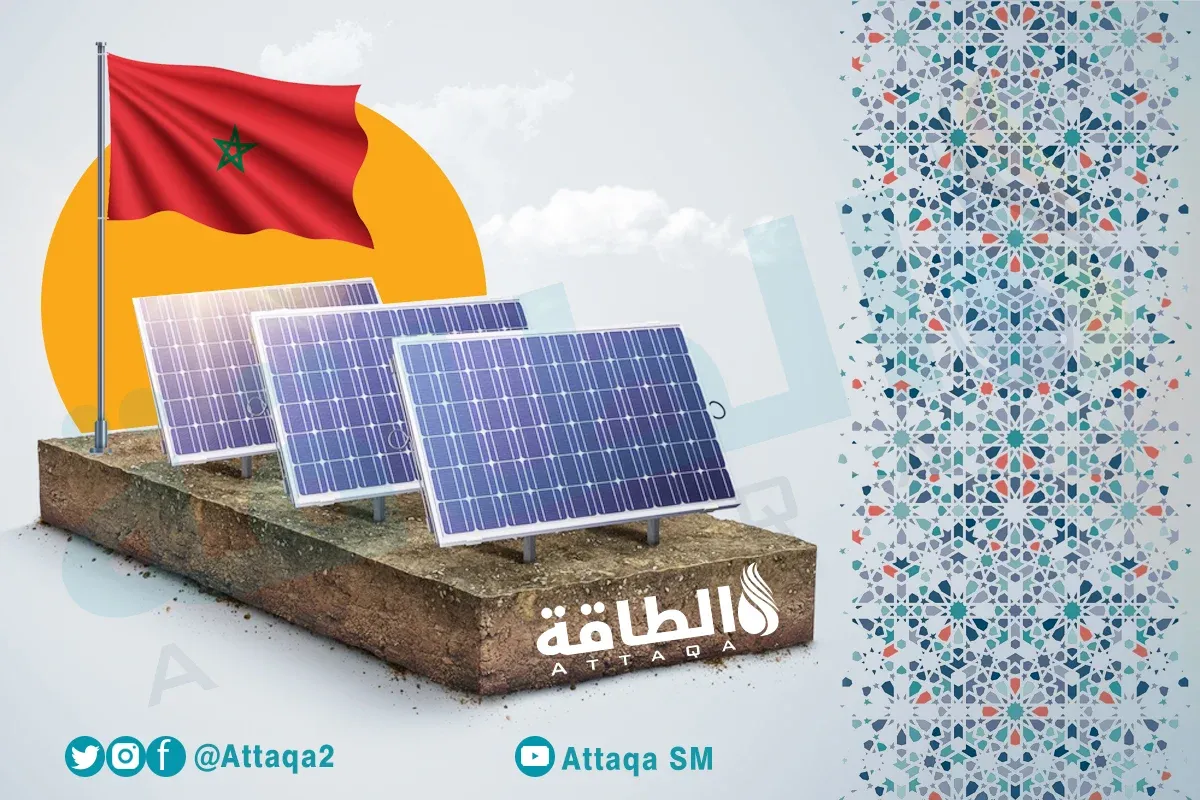

The colossal energy project in Morocco has recently received a significant boost, paving the way for its implementation after years of delays. This development is crucial for the country's ambitions to increase its renewable energy contribution to 52% by the year 2030.
The China Energy Engineering International Group, in collaboration with the Southwest Electric Power Design Institute and the China Energy Engineering Construction Group, has signed a contract for the engineering, procurement, and construction of the first phase of the Noor Midelt solar energy project. This marks a pivotal transition from planning and postponement to actual execution.
The project's new design aims to establish a solar power station with a capacity of approximately 630 megawatts, alongside a substantial energy storage system with a capacity reaching up to 1300 megawatt-hours. Upon completion, it is set to become the largest solar and storage project in Africa in terms of storage capacity.
Transformative Developments for Noor Midelt
The recent advancements signify a turning point for a project that has been recognized as one of the most significant renewable energy initiatives in Morocco. However, the first phase faced technical challenges that delayed the commencement of construction as originally planned.
The Noor Midelt 1 project, the first phase of the comprehensive Noor Midelt initiative, was initially intended to be solely a solar power project, with subsequent phases, Noor Midelt 2 and Noor Midelt 3, to follow. The original design for the first station was based on an estimated capacity of around 800 megawatts, with investments projected at approximately $800 million, aiming for operational status by 2024. However, technical disputes regarding storage technology led to execution delays.
In 2019, a consortium led by Electricité de France (EDF) and including the Emirati company Masdar and Morocco’s Green of Africa was awarded the project to develop it under a model combining photovoltaic solar energy and concentrated solar power.
Over the past few years, the project has encountered obstacles, particularly regarding storage technology. Officials opted against relying on concentrated solar power and thermal storage, favoring lower-cost battery and photovoltaic technologies instead. This disagreement resulted in further delays to the construction timeline, which was originally scheduled for 2024.
The Road Ahead for Noor Midelt
Recently, four significant developments have reshaped the Noor Midelt project and facilitated its progress towards execution:
- Technology Shift: The new design has moved away from the hybrid model that combined photovoltaic solar energy with concentrated solar power, now primarily relying on photovoltaic energy with battery storage.
- Reduction in Installed Capacity: The planned capacity of the station has been decreased from approximately 800 megawatts in the original design to around 630 megawatts in the current design.
- Inclusion of a Large-Scale Storage System: The new design includes an electrochemical storage system with a capacity of up to 1300 megawatt-hours, allowing for the storage of electricity generated by the solar plant for use when needed.
- Engineering, Procurement, and Construction Contract Signed: This crucial development transitions the project from redesign and negotiation phases to actual implementation, encompassing survey and design work, equipment supply, construction and installation, testing, operation, and related services.
The project, in its current form, consists of a photovoltaic solar power station with a capacity close to 630 megawatts, along with a battery storage system capable of 1300 megawatt-hours, as reported by the China Energy International Group.
Once operational, Noor Midelt 1 is anticipated to be the largest standalone solar and storage project in Africa, significantly enhancing Morocco's electricity grid flexibility by aiding peak load management, frequency regulation, and stabilizing electricity production from renewable sources. Furthermore, the storage capabilities will enable Morocco to absorb larger amounts of solar-generated electricity rather than losing a portion of production during periods of low demand or high generation.
The Noor Midelt project positions Morocco in direct competition with Egypt for leadership in electricity storage projects within Africa. Currently, Egypt's Abidos station stands as the largest electricity storage facility in the continent, with a capacity of 600 megawatt-hours. However, upon completion, Noor Midelt 1 will surpass this capacity, establishing itself as the foremost electricity storage project in Africa.
As Morocco moves forward with Noor Midelt, it strengthens its position in the African electricity storage market, especially as countries across the continent increasingly adopt batteries as a key solution to the volatility of solar and wind energy production.
As reported by attaqa.net.