
The Unprecedented Military Alliances of Morocco
Morocco has established a network of military alliances unmatched in North Africa, primarily leveraging its relationships with the United States and Israel. The U.S. provides advanced combat assets, including F-16 fighter jets, Apache helicopters, Abrams tanks, HIMARS rocket launchers, and precision missiles, while Israel has emerged as Morocco's foremost supplier of air defense technology, drones, artillery, and space intelligence. This multifaceted relationship transcends mere contracts, encompassing information exchange, military training, joint exercises, technical support, access to sensitive technologies, and the development of a domestic defense industry in Morocco. Washington serves as the backbone of this partnership, ensuring interoperability with its armed forces, while Israel enhances Morocco's advanced capabilities, allowing Rabat to decrease its reliance on foreign military imports.
The transformation of Morocco's military might is occurring along the Atlantic coast, particularly along a corridor stretching from Agadir to Tan-Tan, Guelmim, El Aaiún, and Dajla. This geographical area directly faces the Canary Islands. While the distance does not render the archipelago a target, it does signify a notable shift in military capacity, enabling Morocco to enhance its surveillance, target acquisition, and operational capabilities across land, sea, and air.
The 2020 Defense Pact and Its Implications
The military cooperation between the U.S. and Morocco dates back well before the current arms race, with Washington designating Morocco as a "major non-NATO ally" in 2004. This designation facilitates access to U.S. equipment, training, and programs without Morocco being a member of the Atlantic Alliance. A significant leap occurred in October 2020 when both countries signed a defense cooperation roadmap for 2020-2030, aimed at improving interoperability, joint preparedness, counterterrorism efforts, and the modernization of the Moroccan Armed Forces. This agreement also opened doors for increased U.S. military industry involvement and more complex military exercises.
Following this, in December 2020, former President Donald Trump acknowledged Moroccan sovereignty over Western Sahara in exchange for Rabat normalizing relations with Israel, effectively tying the three nations closer together. Morocco received U.S. backing for its territorial claims, Israel established official relations with another Arab country, and Washington solidified Rabat's status as its most crucial military ally in the Maghreb. This tripartite declaration was formalized in Rabat on December 22, 2020.
Recently, diplomatic relations have continued to evolve, with Morocco and Israel agreeing to elevate their liaison offices to embassies and appoint ambassadors, solidifying a partnership that persists in the military arena despite regional tensions and public dissent regarding the Israeli-Palestinian conflict.
As of the latest reports from the U.S. State Department, the active military sales cases between the U.S. and Morocco are valued at approximately $8.545 billion, making Morocco the largest buyer of U.S. military equipment in Africa. This figure reflects potential sales rather than completed transactions, indicating the scale of Morocco's military modernization, which includes plans for acquiring 25 F-16C/D Block 72 fighter jets, the most advanced variant produced by Lockheed Martin. This deal, authorized in 2019, is valued at up to $3.787 billion and encompasses various components such as single and dual-seat aircraft, engines, electronic warfare systems, secure communication equipment, training, and logistical support.
Moreover, the U.S. has also approved the modernization of 23 existing F-16 Block 52+ jets to a configuration closer to the F-16V standard. If both modernization efforts are completed, the Royal Moroccan Air Force will possess nearly 50 fighter jets with advanced radar, guided munitions, and the capability to operate alongside U.S. and NATO forces.
In addition to the fighter jets, the U.S. has authorized the sale of AIM-120C-8 AMRAAM air-to-air missiles and associated equipment, designed for beyond-visual-range combat, and GBU-39B Small Diameter Bombs for precise attacks on fixed targets from significant distances. The range of U.S. aerial armaments includes Sidewinder short-range missiles, Maverick missiles for ground targets, guided bombs, and Harpoon Block II anti-ship missiles, which enhance Morocco's operational capabilities, particularly in the Atlantic.
The modernization extends to ground forces as well, with Morocco requesting up to 36 AH-64E Apache attack helicopters, initially formalizing a contract for 24. The U.S. approval set a ceiling of $4.25 billion, including advanced radar, sensors, and armaments. The first Apache helicopters were received in March 2025. Alongside this, Morocco has purchased M1A1 Abrams tanks and is incorporating 18 HIMARS rocket artillery launchers, with the latter approved in 2023 for up to $524.2 million, providing long-range attack capabilities.
Morocco's military structure is becoming increasingly comprehensive, with fighter jets to control airspace, Apaches and Abrams for ground combat, HIMARS for long-range strikes, and Stinger missiles for protecting deployed units against aerial threats.
Annual military exercises known as African Lion, the largest U.S.-led military drill in Africa, highlight the practical dimensions of this relationship. Initially bilateral, these exercises have evolved into multinational operations involving land units, aviation, naval forces, special operations, air defense, cybersecurity, and command posts. African Lion 2026 brought together over 5,600 military and civilian personnel from more than 40 countries across Morocco, Senegal, Ghana, and Tunisia, with significant activities occurring in locations like Agadir and Tan-Tan. For the Canary Islands, Tan-Tan is particularly relevant, located on the Atlantic coastline, near the northern boundary of Western Sahara. The utilization of this region for live-fire drills, aviation, and combined operations brings U.S. military activity closer to the African strip opposite the islands.
Despite this, there is no permanent U.S. base in Morocco comparable to those in Rota or Morón. Cooperation is based on temporary access to facilities, deployments for exercises, advisory roles, training, maintenance, and sales of systems. This distinction is critical, as intense cooperation does not equate to a stable military presence.
The second phase of Morocco's military transformation began after the normalization of diplomatic relations in 2020. In November 2021, then Israeli Defense Minister Benny Gantz visited Rabat and signed a memorandum formalizing cooperation in intelligence, arms procurement, training, and military industry, marking the first defense agreement at this level between Israel and an Arab nation. High-level visits have continued, with the Israeli military chief visiting Morocco in 2022 and the Moroccan Armed Forces Inspector General reciprocating. In 2023, Israeli military units participated actively in African Lion for the first time.
Israel does not replace the U.S. but fills technological gaps where its industry has a strong position, including drones, loitering munitions, radars, air defense, electronic warfare, surveillance, and intelligence capabilities. One of the most significant contracts is for the Barak MX system, developed by Israel Aerospace Industries, which allows Morocco to construct a layered air defense system against various aerial threats. The Barak MX system combines different interceptors based on the threat and required range, relying on an integrated network of radars, command posts, and communication systems to detect, identify, and intercept targets.
The first deliveries were noted in 2023, and follow-up documentation confirmed that IAI supplied Barak MX systems to Morocco throughout 2024. The operational location of these systems has not been publicly disclosed, making it inaccurate to claim they are deployed in Western Sahara.
Morocco is also modernizing its artillery through contracts with Elbit Systems, including 36 ATMOS 2000 self-propelled howitzers, which allow rapid positioning, firing, and withdrawal to evade counterfire. This move is seen as a setback for the French company KNDS, previously favored for its Caesar howitzers, which faced technical issues. Morocco has also expressed interest in Israel's PULS precision rocket launcher system, which serves a similar function to the U.S. HIMARS by enabling long-range strikes without exposing units to close combat. The combination of U.S. and Israeli capabilities significantly enhances Morocco’s ability to deliver precision fire on deep targets.
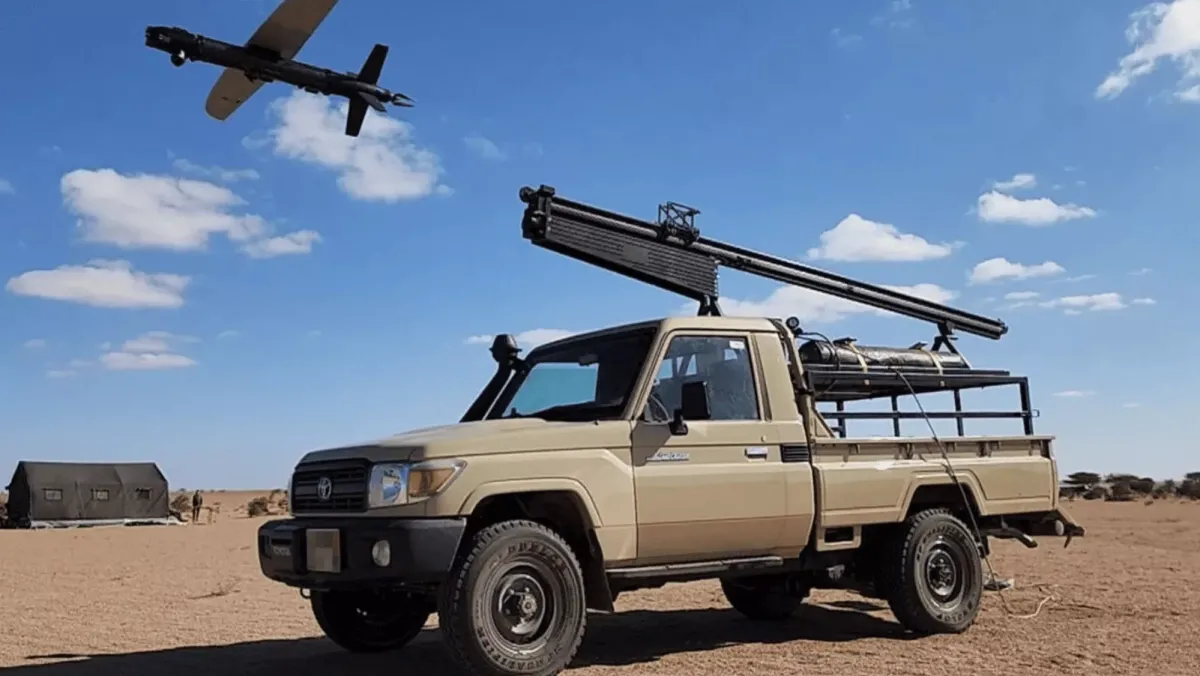
Moreover, the collaboration with Israel has crossed into areas previously untouched by U.S. purchases—namely local production within Morocco. BlueBird Aero Systems, part of Israel Aerospace Industries, announced the establishment of a Moroccan plant for producing unmanned aerial vehicles (UAVs). Rabat has ordered around 150 WanderB and ThunderB drones, intended for reconnaissance, surveillance, target acquisition, and artillery fire correction, with some to be manufactured on Moroccan soil. This project envisions a gradual transfer of technology and training of local technicians by Israeli engineers, which marks a significant step in Morocco's defense capabilities.
As reported by atlanticohoy.com.