Transforming the Mediterranean Trade Landscape
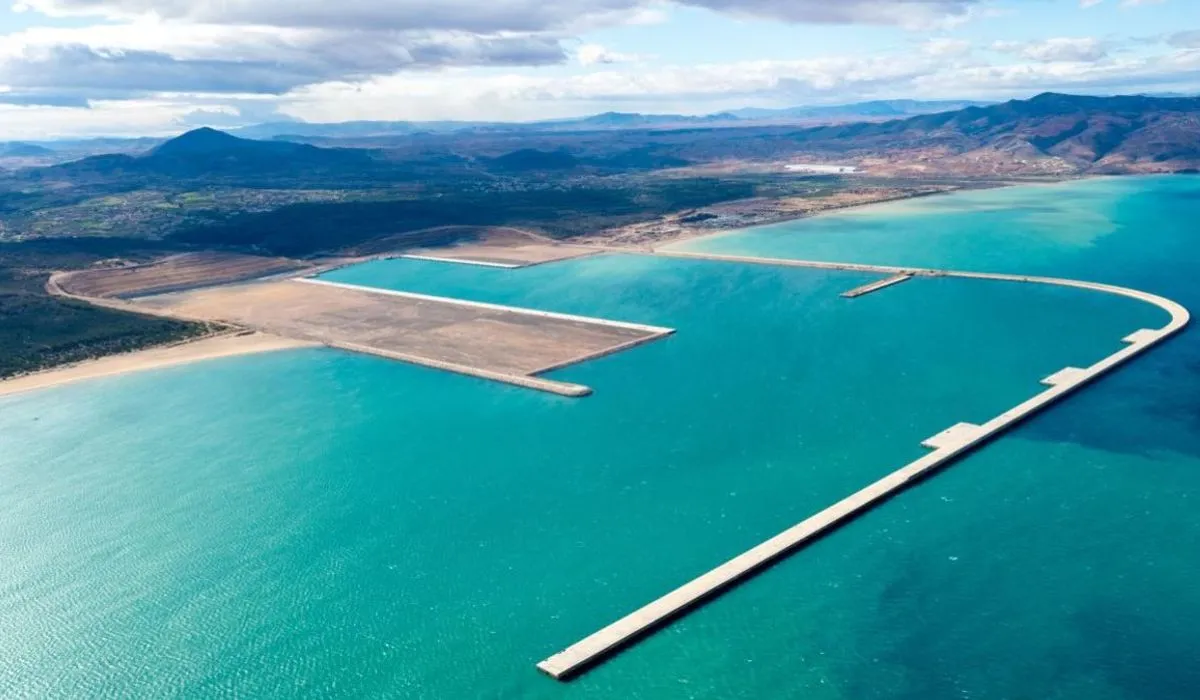
What was once an open sea is now transformed into a colossal infrastructure featuring 5.4 kilometers of docks and quays designed to accommodate some of the largest vessels in existence. A concrete wall is rising along the northern coast of Africa, visible even from satellites. This is not a military defense mechanism but a monumental project that has the potential to reshape the economic landscape of Southern Europe. Known as Nador West Med, this deep-water mega-port is constructed with a singular aim: to wrest control of global maritime trade from Spain.
Located just 30 kilometers from the city of Nador, the coast has undergone a permanent transformation. The scale of this port is staggering, with over €4.7 billion invested by Morocco to bring it to fruition from the ground up. To put its dimensions into perspective, the port will have an initial capacity of 5 million containers. If lined up, these containers could encircle more than half of the planet. With a depth of 18 meters, it is sufficiently deep for the world’s largest ships—those measuring the length of four football fields—to dock as if they were mere recreational boats.
The Strategic Shift in Maritime Logistics
Until now, Spanish ports such as Algeciras and Valencia have been the uncontested kings of the Mediterranean, but the dynamics are shifting. Morocco is not merely constructing a port; it is executing a comprehensive state strategy aiming to surpass Spain's logistics capabilities by 2030. The pressure is palpable. While the Spanish system is fragmented into numerous competing authorities, Morocco has concentrated its efforts on two primary nodes: Tangier Med and the new Nador West Med. Together, these ports could handle up to 17 million containers annually, a figure that poses a significant threat to any European port and aims to establish Morocco as the premier
As reported by vozpopuli.com.