
Morocco's Pre-Election Atmosphere: A Nation Divided
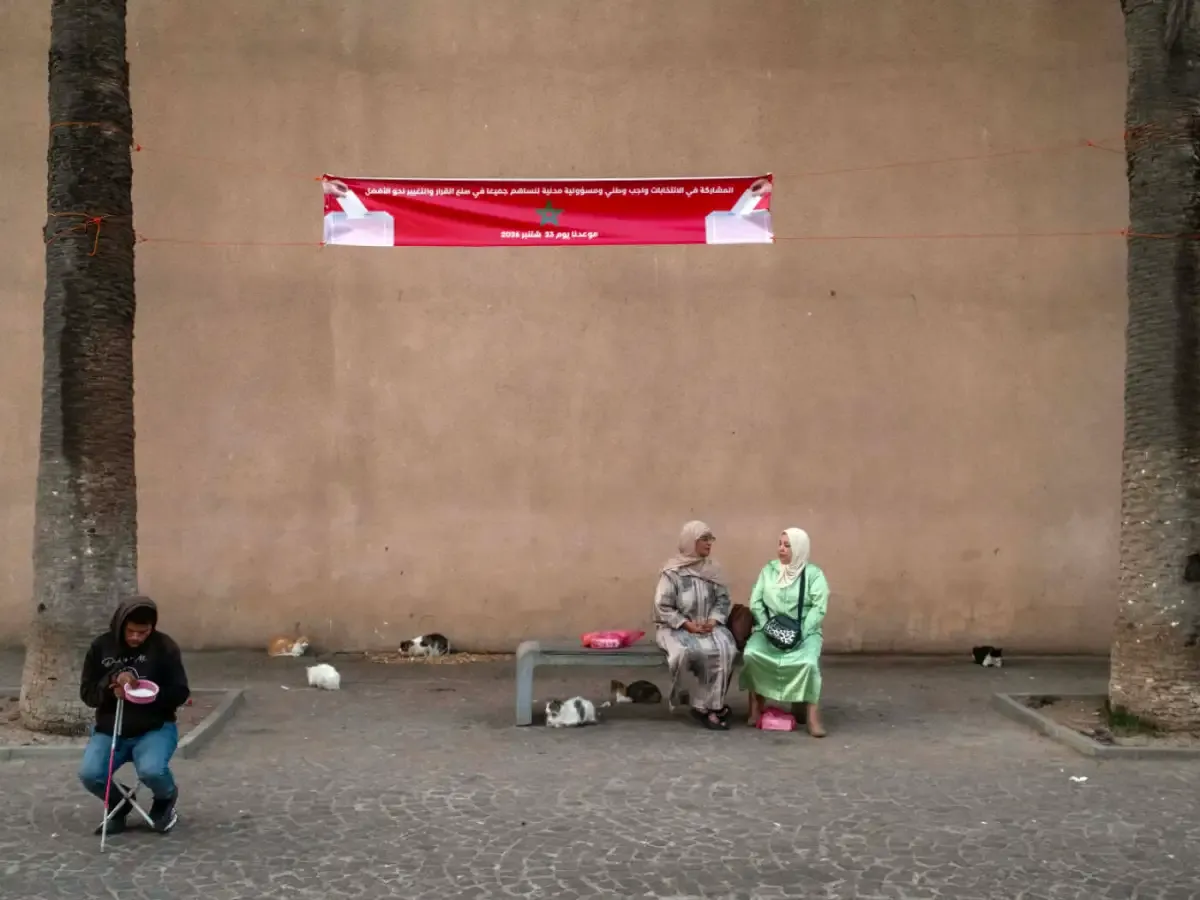
The pleasant late summer weather has drawn many families to the Bab Al-Ahad square, located at the entrance of the Medina in Rabat. Here, children play, while others engage in quiet discussions or read newspapers. The Moroccan capital is slowly recovering from a tourist season marked by relentless heatwaves, heavy rain, and the influx of visitors for the Africa Cup. This period serves as a sort of rehearsal for the 2030 FIFA World Cup, which is set to take place in Spain, Portugal, and Morocco—a historic initiative aimed at uniting the nation of 32 million inhabitants, with construction, renovation, and investment projects sprouting across the country. However, neither the World Cup, the upcoming parliamentary elections, nor climate change seem to be at the forefront of public concern.
When the conversation shifts to the skyrocketing costs of food and living, the mood changes dramatically. Engineer Mohammad Sabri, who meets with friends at the square every Sunday, perceives the question of whether he will vote as provocation. “Why should I vote for people who have no real power?” he expresses angrily. “The decisions in this country are made by the King and his trusted advisors.” The 54-year-old does not view this as a criticism of King Mohammed VI, stating, “I appreciate that we don’t have the chaos seen in other countries, and that’s largely due to the King.”
Conversely, others in the group vehemently disagree. “I will vote. Fouzi Lekjaa should become Prime Minister and bring the World Cup final to Morocco,” says Mohammad, who owns an electronics store in the Medina. Lekjaa is a member of the Authenticity and Modernity Party (PAM), currently serving as the Minister of Finance and head of the national football association. His proactive reputation is acknowledged by many in Bab Al-Ahad. “The King cannot manage everything,” adds trader Mohammad, reflecting a common sentiment among the populace.
Discussions about the parliamentary elections echo throughout Morocco, a booming nation on the African continent. Few are familiar with the platforms of the 27 parties vying for 395 seats in the House of Representatives. Scattered across the meticulously clean square are flyers distributed by mobile advertising teams targeting passersby. The young promoters, dressed in party colors, are typically hired by telecommunication companies or supermarkets. When asked about their clients’ platforms, they courteously redirect inquiries to the respective party website.
“We, the younger generation, are a major topic in this election campaign, yet no party offers anything concrete,” one youth complains. “All we ask for are two things: freedom of expression and a living wage sufficient to support a family or at least establish a basic existence.” In Moroccan cities, litter usually ends up in waste bins due to the fear of civil servants monitoring cleanliness. This cleanliness is a hallmark of the investment push initiated by Mohammed VI upon his ascension to the throne 16 years ago.
Social Unrest and Youth Movements in the Face of Political Apathy
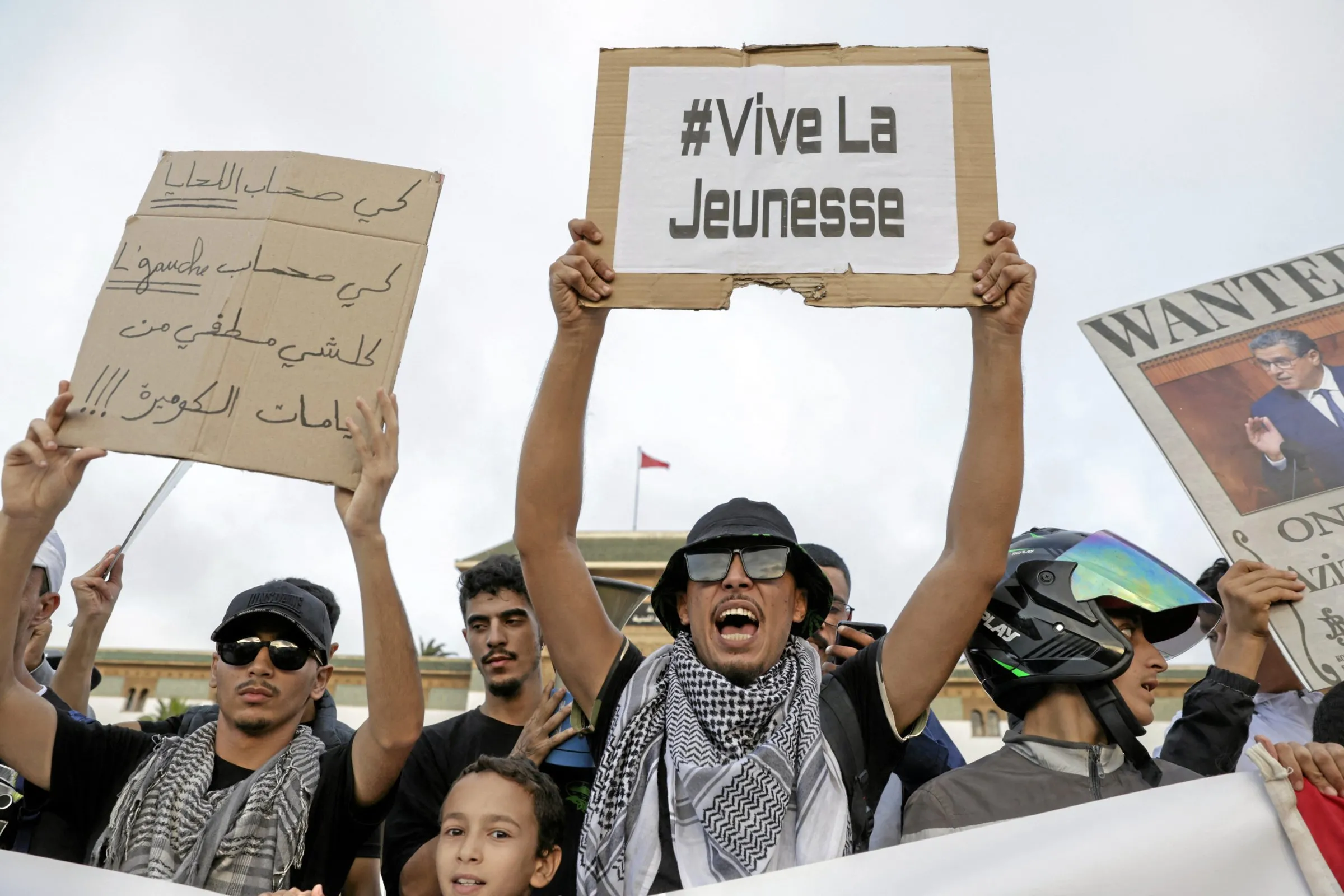
However, many of the flyers from the political parties are reportedly being discarded by those approached by the mobile teams. Cleaning crews in cities like Rabat, Casablanca, and Tangier are frequently seen collecting discarded campaign materials. Phrases such as “Future,” “Hope,” and “Progress” are printed on these flyers, but they leave many Moroccans indifferent. Outside the Ain Sebaa courthouse in northern Casablanca, families of defendants await the start of trials, a stark contrast to the silence that usually prevails there. During the Gen Z protests last fall, hundreds were arrested, and many are still awaiting verdicts or charges. A small group of demonstrators has once again mingled among the families in the park near the courthouse, chanting, “Freedom for Yassir,” referring to popular graffiti artist Yassir Mounbir, who is allegedly imprisoned for insulting the King through his art.
Yassir, a 22-year-old from Casablanca, has garnered attention for his critical works, resonating with the Gen Z-212 movement. Authorities had already begun cracking down on the rap scene before the youth surged towards Ceuta on July 31, fearing they could spark a new protest movement. The Moroccan state has responded to the Gen Z movement and events surrounding Ceuta in its usual manner—by arresting leaders. The charges against Youssir Mounbir remain a mystery, even to his lawyer. Due to a strike by lawyers, only a limited number of cases are being processed, and the courts have partially halted operations.
“The lawyers' strike for better legal status conveniently benefits those in power ahead of the elections,” a friend of Mounbir states, emphasizing the need for anonymity. “None of my friends plan to vote,” says a 24-year-old student. “We, the younger generation, are a significant topic in the campaign, yet no party provides anything tangible. We only demanded two fundamental things: freedom of expression and a decent income to support a family.” A petition for the release of Mounbir and other artists has been signed by 300 artists. “However, only a few believe these interventions or even elections will bring about change,” notes 28-year-old Nabil, who has experienced life in Berlin and understands the potential of a well-organized civil society. He recalls the changes following the Arab Spring when the King curtailed some of his powers but has since transferred authority to a circle of advisors, many of whom remain unknown.
Less than ten percent of 35-year-olds in Morocco have completed the voter registration process, a decrease from the previous election in 2021. In recent days, videos encouraging another surge on Ceuta have circulated, especially among minors, prompting a significant police presence at the Casablanca Voyageurs train station. Additionally, 3,000 uniformed officers have been dispatched to Fnideq, a neighboring city to Ceuta, to prevent the anticipated surge on election day.
Nabila Mounib, leader of the United Socialist Party (PSU) and a sitting member of parliament, views the events surrounding Ceuta and the youth protests as indicative of the social divide within a country whose government frequently boasts record foreign investments, such as from the Chinese car manufacturer BYD. As the first female chairperson of a political party in Morocco, Mounib commands attention and advocates for the redistribution of state spending towards education and healthcare. “For young Moroccans, jobs created by mega-projects like the new port of Tangier often come with low wages. Meanwhile, 3.3 million Moroccans leave school without qualifications, and many schools leak in winter.” Mounib calls for greater powers for parliamentarians in the allocation of funds for education, proposing a “second chance school” initiative to support returnees from Ceuta in completing their education. Genuine party members actively campaign on the streets for the PSU, and Mounib asserts that their ideas addressing social inequality are gaining traction. Yet, many of her supporters remain home on election day, as the PSU fights for a second seat in parliament.
As reported by nd-aktuell.de.