
Political Instability and Public Dissent in Morocco
Recent events in Morocco have unveiled a stark challenge to the reign of King Muhammad VI, particularly highlighted during the "Throne Day" celebrations on July 30. The Moroccan king made a swift journey along a deserted highway from his coastal retreat in Mdiq to an event where members of the elite paid homage to him. In contrast, a mass of impoverished citizens flocked to the nearby Spanish enclave of Ceuta, driven by rumors circulating on social media that the gateways to Europe were ajar. This desperate exodus saw over 70,000 individuals, primarily Moroccans disillusioned with their king's governance, risk their lives to escape the nation, resulting in approximately 100 fatalities during their attempts.
On the surface, Morocco presents itself as a unique model of Arab stability and modernization, boasting a thriving automotive industry, an expanding high-speed rail network, and the largest port in the Mediterranean. The country has successfully attracted foreign investment, cultivated strong ties with Europe and America, and developed a burgeoning arms industry, partly due to its connections with Israel. However, after 27 years of King Muhammad VI's rule, a significant portion of the 36 million Moroccan citizens have begun to lose faith in a prosperous future under his leadership. Although the king invests in extravagant projects like football stadiums for the 2030 World Cup, he neglects essential services such as hospitals and schools. A recent global survey concerning the schooling of 15-year-olds placed Morocco among the lowest-ranked countries. Nearly a third of Moroccan youth find themselves unemployed, and the king's security forces have increasingly resorted to repression, stifling critical media outlets and prosecuting dissenters under dubious sexual offense charges. The political parties that once promised change have become so weak that most Moroccans are unaware of the upcoming parliamentary elections scheduled for September 23, as the actual decision-makers remain invisible on the ballot. Many citizens have chosen to express their discontent by voting with their feet.
Health Concerns and Power Struggles Amid Crisis
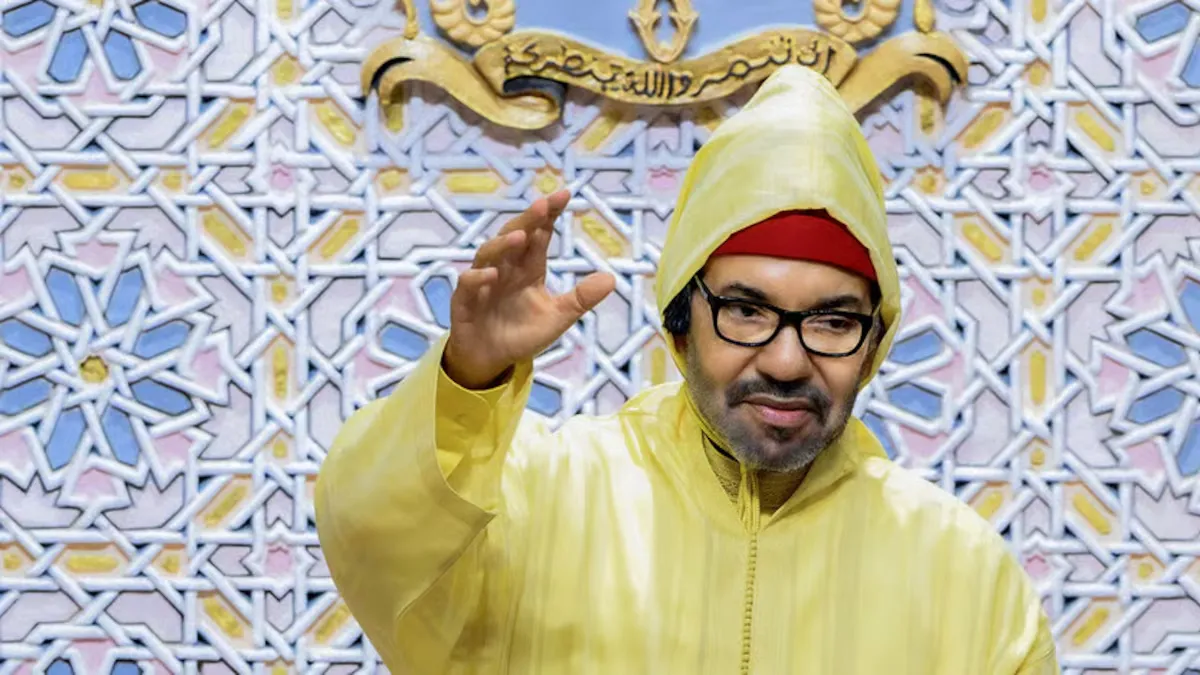
King Muhammad VI, who has always been somewhat reclusive, left the opulent court of his father in the capital years ago to escape the spotlight, retreating to the northern part of Morocco with his friend boxer Aboubakr Abu Azaitar. At just 63 years old, he now appears to be visibly ill, with reports describing him as having bluish hands, deformed fingers, and swollen eyes concealed behind sunglasses. His infrequent public appearances and his struggle to deliver speeches indicate a significant decline in his health. As crises continue to mount—including the 2016 uprising in the north, a devastating earthquake in 2023 that left hundreds of thousands homeless, and the recent surge in migration to Ceuta—officials have sought guidance from the palace, only to be met with silence. Following the events in Ceuta, no high-ranking official provided condolences or explanations, further deepening the sense of uncertainty and disarray.
In the absence of clear leadership, a plethora of conspiracy theories have emerged. Some suggest that security forces were redirected from their border duties to partake in the grandiose Throne Day celebrations, while others allege that Donald Trump and Benjamin Netanyahu are manipulating Morocco to retaliate against Spain for its opposition to their military actions in Iran and Gaza. The more extreme theories posit that Moroccan nationalists, emboldened by American and Israeli support, are preparing for a confrontation with Spain over its northern enclaves. Analysts speculate that Morocco might be leveraging migration as a means to pressure the European Union for increased subsidies. However, the most credible theory among insiders points to the king's security chiefs punishing Spain for harboring an informant privy to some of the state's darkest secrets.
While verifying these claims proves challenging, reports indicate that a mole within Morocco's General Directorate of Territorial Surveillance (DGST) fled with a list of suspects whom Moroccan enforcers tracked using Israeli spyware. Operating from a facility known as Office 21, reportedly involving Israeli agents, they hacked into mobile phones and CCTV cameras, surveilling prominent figures in Morocco and Europe. Some speculate that the king himself was a target. After escaping to Tunisia and subsequently France, the informant, codenamed Safir (meaning diplomat), made his way to Spain, where he was granted protection.
Moroccan officials feel betrayed by the sanctuary Spain extended to Safir. However, the trend of defections to Europe is increasing as the king's power wanes due to illness, and rival factions within the Moroccan security apparatus vie for control in anticipation of succession. The cleavages run deep, particularly between the old guard led by Fouad Ali el-Himma, a childhood friend and chief advisor to the king, and his designated successor, Hassan, and Hassan's mother, Salma. After the king's divorce from Salma in 2018, el-Himma, acting on the monarch's orders, effectively placed her under house arrest. Fears persist that, should Hassan ascend to the throne, Salma will seek vengeance by expelling el-Himma from Morocco. As the succession moment approaches, tensions are expected to escalate, marking a pivotal period for the nation.
As reported by infobae.com.